

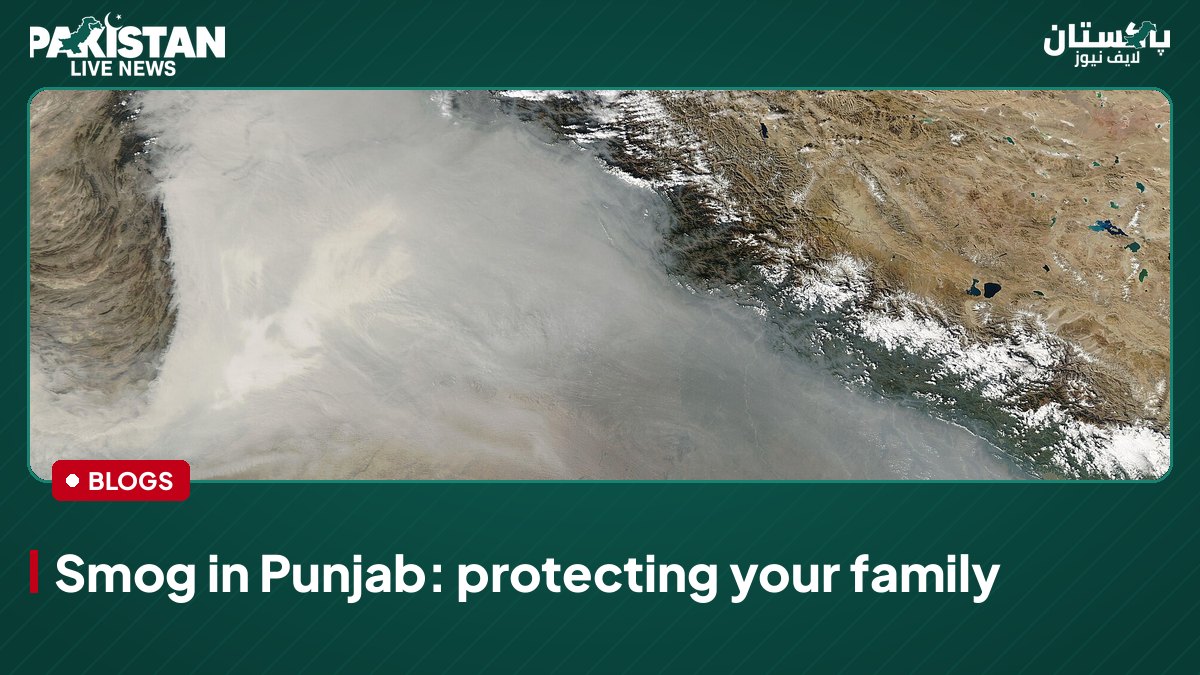
- Smog in Punjab is often worst from late autumn through winter, when cold, still air can trap pollution close to the ground.
- The tiny particles known as PM2.5 are a main health concern because they can reach deep into the lungs.
- A well-fitted N95 or FFP2-type mask, a cleaner indoor space and fewer outdoor hours on bad days can help reduce exposure.
- Children, older people, pregnant women and those with asthma or heart conditions need extra care.
If you live in Lahore, Faisalabad, Gujranwala, Multan or many other parts of the province, you will know the feeling: scratchy eyes, a dry throat and a sky that looks washed out even at midday. Smog in Punjab has become a regular part of the cold-weather calendar, and many families now plan around it much as they plan around the monsoon or the summer heat.
In this article
The good news is that there is a lot a household can do. You cannot clean the whole province's air, but you can reduce how much of it your family breathes. This guide explains what smog is, how to make sense of air quality readings and which simple habits matter most.
| AQI range | Category | Sensible household action |
|---|---|---|
| 0-50 | Good | Normal activities are fine. |
| 51-100 | Moderate | Unusually sensitive people should consider limiting long outdoor exertion. |
| 101-150 | Unhealthy for sensitive groups | Children, elders and people with lung or heart conditions should cut down time outdoors. |
| 151-200 | Unhealthy | Everyone should reduce hard outdoor activity; wear a fitted respirator if you must go out. |
| 201-300 | Very unhealthy | Stay indoors where possible, keep windows closed and avoid outdoor exercise. |
| 301 and above | Hazardous | Avoid going outside unless essential and follow official emergency advice. |
What drives smog in Punjab
Smog is a mixture of smoke, dust, vehicle exhaust, industrial emissions and gases that react in the air. It is not one single pollutant from one single source. In Punjab, commonly cited contributors include traffic, factories, brick kilns, the burning of waste and the burning of crop residue after harvest.
Weather then decides how bad it gets. In the cooler months the air near the ground can become cold and heavy, with little wind to disperse it. A layer of warmer air above can act like a lid, so pollution stays trapped. This is why the worst readings often appear in the early morning and late evening, and why a good gust of wind or rain can bring welcome relief.
It also helps to know the difference between fog and smog. Fog is water droplets; smog carries pollutants. They often appear together in winter, which is why a thick morning haze can look harmless while still being unhealthy to breathe.
Reading the air quality numbers
Most air quality apps and websites show an Air Quality Index, or AQI, along with a reading for PM2.5. These are fine particles smaller than 2.5 micrometres, far thinner than a human hair. Because they are so small, they can travel deep into the lungs and are linked with breathing and heart problems.
Different apps use slightly different scales and data sources, so do not worry if two readings do not match exactly. What matters is the trend and the category. The table below shows the widely used US-style AQI bands as a general guide. For official local advisories, follow the provincial environmental authorities and your local administration.
Protecting the air inside your home
Your home can be a helpful refuge, especially if you look after it. On days when the outdoor air is poor, keep windows and doors closed, particularly in the early morning and evening. If the air looks clearer in the afternoon, a short burst of ventilation may be reasonable, but check the reading first.
Avoid adding smoke indoors. Smoking, burning incense, mosquito coils and wood or dung fires all add particles to the air your family is already struggling with. If you cook with a traditional stove, ventilate the kitchen as well as you can and keep children away from the smoke.
Clean with a damp cloth or wet mop rather than sweeping dry, which can send settled dust back into the air. Sealing gaps around doors and windows with simple draught strips can also help.
If you can afford an air purifier, choose one with a HEPA filter that is suitable for the size of the room, and place it in the room where your family spends most time, such as a bedroom. Check the manufacturer's guidance on changing filters. A purifier can be helpful, but it is not essential, and it works best alongside closed windows.
Going outside: masks, travel and school runs
Not every mask protects you from fine particles. Thin cloth masks and many loose surgical masks are not designed to filter PM2.5. A well-fitted N95, KN95 or FFP2-type respirator can do a much better job, but only if it seals snugly around the nose and cheeks. A mask with a gap at the sides offers far less protection.
Children's faces are smaller, so adult masks often fit badly. If you cannot find a properly fitting child-sized respirator, the safer choice is usually to limit their time outdoors on bad days rather than to rely on a loose mask. Never put a mask on a very young child who cannot remove it or who has trouble breathing.
On days with poor readings, consider postponing jogging, cricket practice and other hard exercise outdoors. Heavy breathing pulls more pollution into the lungs. If you ride a motorcycle, a snug respirator and protective glasses or a visor may help with both particles and eye irritation.
Smog and fog can also cut visibility sharply on highways and motorways. Drive slowly, keep a safe distance, use low-beam and fog lights, and avoid unnecessary early-morning trips. Road closures and schedule changes can happen at short notice, so check the latest official advisories before a long journey.
For school, follow the instructions issued by the education authorities and your school. If your child must walk or wait outside, a respirator that fits properly, a short route and indoor waiting areas where possible are sensible measures.
Who needs extra care, and when to see a doctor
Some people feel the effects sooner and more strongly. This includes infants and children, older adults, pregnant women, and anyone with asthma, chronic bronchitis, other lung conditions, heart disease or diabetes. If someone in your family is in one of these groups, treat moderate readings more seriously than you might for everyone else, and keep their prescribed medicines and inhalers within easy reach.
Common smog symptoms include itchy or watery eyes, a sore throat, coughing, a runny nose, headaches and tiredness. Rinsing the face, drinking enough fluids and resting indoors can ease mild discomfort.
Some signs should not be ignored. Difficulty breathing, wheezing that does not settle, chest pain, a racing heartbeat, fainting or a child who seems unusually drowsy or is struggling to breathe all need prompt medical attention. Do not wait for the haze to clear. Speak to a doctor or pharmacist before starting or changing any medicine, and do not use leftover prescriptions.
A simple household routine for smog season
It is easier to cope if you decide your routine in advance. Pick one trusted air quality source and check it each morning, just as you would check the weather. Agree as a family what you will do on poor days: windows closed, outdoor games moved inside, masks by the door, and a plan for who collects the children.
Stock up before the worst weeks begin. Keep a few good-quality respirators, any regular medicines, a thermometer and the numbers of your doctor and the nearest hospital. Check on elderly neighbours and relatives, who may not use apps and may not realise how bad the air is.
Finally, remember that your habits matter beyond your own front door. Avoid burning rubbish or leaves, keep your vehicle well maintained, and switch off engines while waiting. Individually these steps are small, but across many households they can add up. Smog in Punjab is a shared problem, and families who prepare early, stay informed and look out for each other are well placed to get through the season in good health.
Questions and answers
Are cloth or surgical masks enough against smog?
Usually not. Ordinary cloth and loose surgical masks are not designed to filter the fine PM2.5 particles in smog. A well-fitted N95, KN95 or FFP2-type respirator offers much better protection, provided it seals properly around the face.
Should I keep my windows closed during smog season?
On days when air quality readings are poor, yes, particularly in the early morning and evening when pollution is often highest. If the reading improves later in the day, a short period of ventilation may be reasonable. Check your chosen air quality source first.
When should I take someone to a doctor?
Seek prompt medical help for difficulty breathing, persistent wheezing, chest pain, fainting, a very fast heartbeat, or a child who is unusually sleepy or struggling to breathe. People with asthma or heart conditions should also follow their doctor's advice and keep their prescribed medicines handy.
Image: MODIS Land Rapid Response Team, NASA GSFC / Wikimedia Commons, Public domain


