

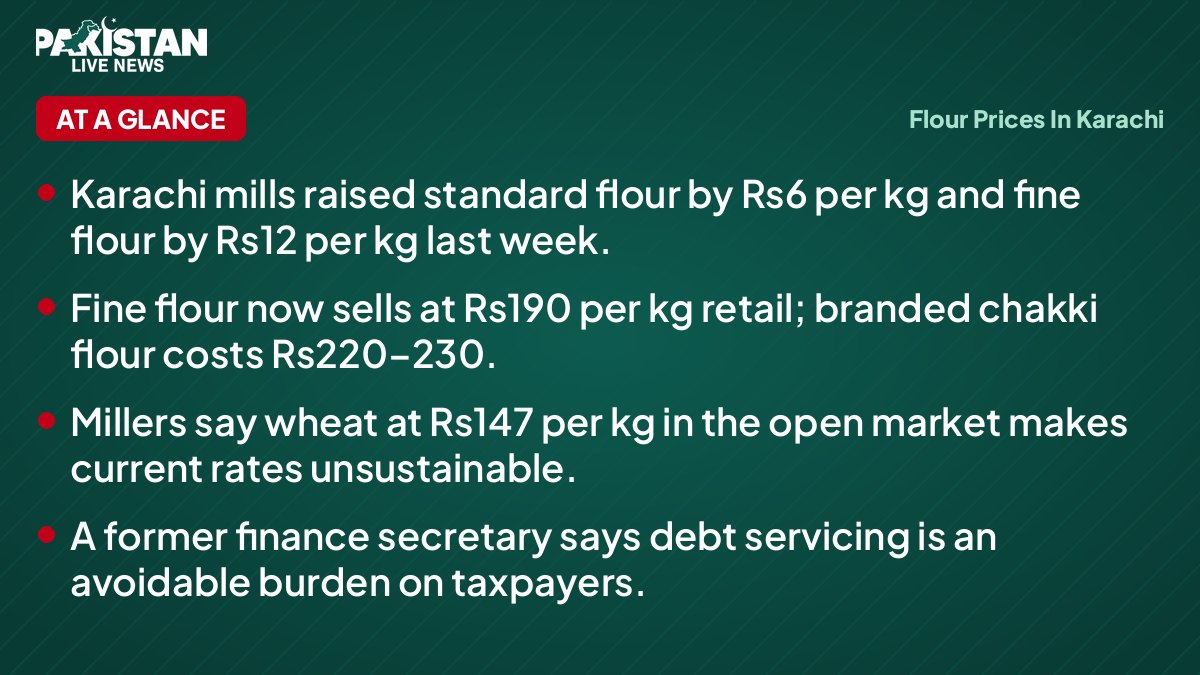
- Karachi mills raised standard flour by Rs6 per kg and fine flour by Rs12 per kg last week.
- Fine flour now sells at Rs190 per kg retail; branded chakki flour costs Rs220–230.
- Millers say wheat at Rs147 per kg in the open market makes current rates unsustainable.
- A former finance secretary says debt servicing is an avoidable burden on taxpayers.
Flour mills in Karachi have raised their rates once again, adding to the burden on households already struggling with rising prices. Last week's increase was Rs6 per kilogram for standard flour and Rs12 per kilogram for fine flour (fine atta).
In this article
The rise has revived fears that low-income families may find it harder to afford even basic bread and naan.
Flour prices in Karachi after the latest hike
After the increase, standard flour sells at Rs163 per kilogram in the wholesale market and Rs170 per kilogram at retail. Fine flour is priced at Rs183 per kilogram wholesale and Rs190 per kilogram retail.
Branded chakki flour is more expensive still. It costs Rs200 per kilogram wholesale, and retail prices range from Rs220 to Rs230 per kilogram.
Public irritation is growing over inflation and the steady rise in staple food prices. Many people say managing monthly finances has become increasingly difficult.
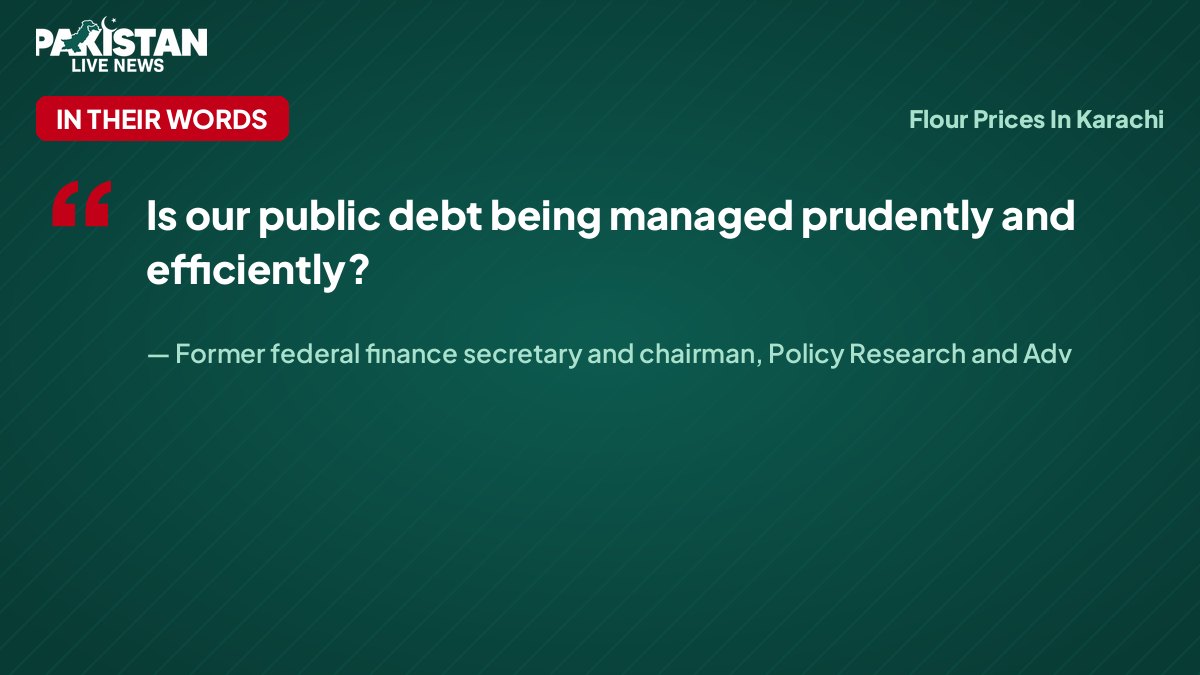
Is our public debt being managed prudently and efficiently?
Former federal finance secretary and chairman, Policy Research and Advisory Council
Why millers say they raised rates
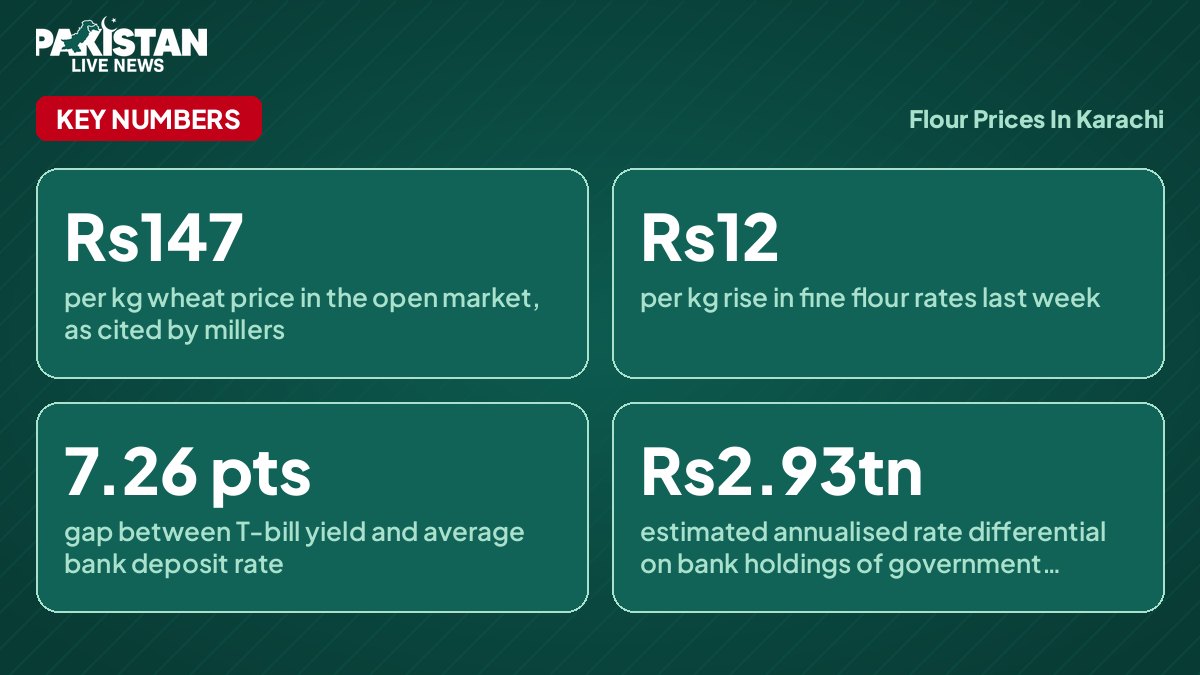
Mill owners link the increase to the cost of raw material. They say wheat is now trading at Rs147 per kilogram in the open market.
At that price, they argue, it is no longer sustainable to buy expensive grain and sell flour at comparatively lower rates.
The wider burden: debt servicing and taxes
The squeeze on household finances is also the subject of a separate commentary by a former federal finance secretary, who now chairs the Policy Research and Advisory Council. The writer argues that citizens should not be asked to carry costs that are largely avoidable.
According to the writer, debt servicing consumes 125 per cent of the FBR taxes retained by the federal government. It also accounts for 68.5 per cent of total federal revenues and is nearly three times the defence budget. These are the writer's assessments, not an official statement.
The commentary points to a gap between what banks pay depositors and what the government pays banks. The State Bank of Pakistan data cited shows banks paid an average of 5.53 per cent on total deposits in September 2026. In October 2026, the government was borrowing through 12-month treasury bills at 12.79 per cent, a difference of 7.26 percentage points.
Current accounts, which pay no interest, held Rs15.3 trillion by June 2026. That was nearly 40 per cent of all deposits, up from 37 per cent a year earlier. Commercial banks held Rs40.36 trillion in government securities in September 2026, and the writer estimates the annualised rate differential on those holdings at about Rs2.93 trillion.
| Variety | Wholesale | Retail |
|---|---|---|
| Standard flour | 163 | 170 |
| Fine flour (fine atta) | 183 | 190 |
| Branded chakki flour | 200 | 220–230 |
Proposals to ease the load
The writer proposes a law capping the interest paid on government securities at 1–2 percentage points above banks' average deposit cost. Subject to debt maturities and repricing, this could generate estimated gross annual savings of Rs2,100–2,500 billion. The writer adds that it would cut the State Bank's annual interest earnings by about Rs118 billion, a small fraction of the savings.
The commentary also calls for quarterly reports from the Ministry of Finance and the State Bank on government borrowing, interest paid and banks' cost of funds. It says the savings should go to taxpayers rather than higher government spending.
Suggested uses include lowering the Petroleum Development Levy and General Sales Tax on electricity bills, and doubling the income-tax exemption threshold from Rs600,000 to Rs1.2 million. The writer also suggests restoring the Final Tax Regime for exporters and abolishing the super tax, which reportedly raises around Rs400–500 billion a year. A further proposal is to cap the highest effective income tax rate at 35 per cent.
The writer frames the central question this way:
Questions and answers
How much have flour prices risen in Karachi?
Mills raised standard flour by Rs6 per kg and fine flour by Rs12 per kg last week. Standard flour now retails at Rs170 per kg and fine flour at Rs190 per kg.
Why did Karachi flour mills increase their rates?
Mill owners say wheat is selling at Rs147 per kg in the open market. They argue that buying costly grain and selling flour at lower rates is no longer sustainable.
What does the former finance secretary propose?
The writer proposes capping the interest paid on government securities at 1–2 percentage points above banks' average deposit cost. The estimated savings of Rs2,100–2,500 billion would be used to cut taxes.