

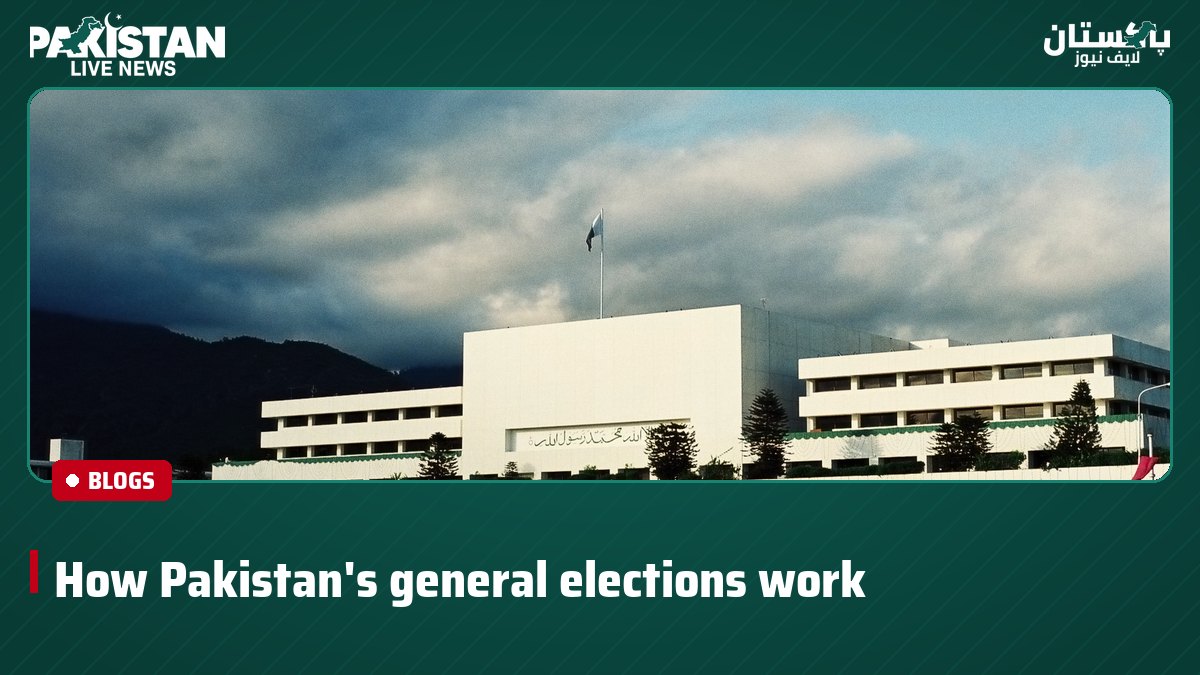
- Voters choose members of the National Assembly and the four provincial assemblies, usually on the same day.
- The Election Commission of Pakistan runs the process, and a caretaker government is in office while it does.
- Constituency seats are won on a first-past-the-post basis; reserved seats are shared out by party strength.
- The prime minister is elected by the National Assembly, not directly by voters.
Every few years, millions of Pakistanis line up at polling stations to choose who will represent them. Yet the process behind that single day, and what happens after it, is not always well understood.
This guide walks through the main stages in order, so you can follow the next election with more confidence. Rules and dates can change through legislation and court rulings, so for anything time-sensitive, check the Election Commission of Pakistan (ECP) directly.
What voters are actually choosing
In a general election, voters elect the National Assembly, the lower house of Parliament, and the provincial assemblies of Punjab, Sindh, Khyber Pakhtunkhwa and Balochistan. Most voters cast separate ballots for the national and provincial seats in their area.
The National Assembly currently has 336 seats. Of these, 266 are general seats contested directly in constituencies. A further 60 are reserved for women and 10 for non-Muslims. A prime minister needs the support of a majority of the whole House, which is 169 members. These figures can change if the Constitution or constituency numbers are amended.
Voters do not vote for a prime minister directly. They vote for a candidate in their constituency, and the assembly members then choose the prime minister. Provincial chief ministers are chosen the same way by their own assemblies.
| Type of seat | Number | How it is filled |
|---|---|---|
| General seats | 266 | Directly elected by voters in constituencies |
| Reserved for women | 60 | Shared among parties by proportion of general seats won |
| Reserved for non-Muslims | 10 | Shared among parties by proportion of general seats won |
| Total | 336 | Majority of the full House: 169 |
Step one: the assembly ends and a caretaker set-up begins
An assembly normally serves a five-year term. Under the Constitution, a general election is meant to be held within 60 days of the term ending. If the assembly is dissolved early, the window is 90 days. In practice, the timing has sometimes been extended or disputed, for example because of delays in delimitation.
While the election is organised, a caretaker government takes over day-to-day administration. The outgoing prime minister and the leader of the opposition are meant to agree on a caretaker prime minister. If they cannot, the decision passes to a parliamentary committee and, failing that, the ECP. Provinces follow a similar approach for caretaker chief ministers.
The idea is simple: those who stand in the election should not be the ones running the government during it.
Step two: the ECP prepares the ground
The ECP is an independent constitutional body led by the Chief Election Commissioner. It is responsible for the electoral rolls, the boundaries of constituencies, the code of conduct and the polling arrangements. Most of the rules are gathered in the Elections Act 2017.
Constituency boundaries are drawn through a process called delimitation, which is linked to population figures from the national census. Voters should check that their name and polling station are correct on the electoral roll well before polling day. Eligible voters are Pakistani citizens aged 18 or over who hold a national identity card and are registered.
The ECP also announces the election schedule, which sets out the dates for each stage. Always check the latest official schedule rather than relying on word of mouth.
Step three: candidates, nominations and symbols
Would-be candidates file nomination papers with the returning officer for their constituency. Candidates for the National Assembly must be at least 25 years old and meet the constitutional requirements for qualification and disqualification, found in Articles 62 and 63.
The papers are then scrutinised. Objections can be raised, and decisions can be appealed. Candidates may also withdraw within a set period. Once that is finished, the final list of candidates is published.
Each party is given an electoral symbol, and independent candidates are allotted one too. Symbols matter in a country where many voters rely on pictures rather than printed names to find their choice on the ballot paper.
Step four: polling day and counting
On polling day, voters go to their assigned station, are checked against the electoral roll, receive ballot papers and mark them in private. Indelible ink is used to help prevent repeat voting. Candidates and parties can place polling agents inside stations to observe the process.
Once voting closes, counting starts at the polling station itself, in front of the agents present. The results for that station are recorded on a statement of the count, known as Form 45, and copies are given to the agents. These results are then consolidated at constituency level by the returning officer, and the ECP notifies the winners.
In each constituency, the candidate with the most votes wins, even without an absolute majority. This is known as first-past-the-post.
Step five: reserved seats and forming a government
Reserved seats for women and non-Muslims are not contested directly. Parties submit priority lists of names beforehand, and the seats are shared among parties in proportion to the general seats each has won. Independent candidates who join a party within the legal window can also affect that party's total, and how this works has at times been contested in the courts.
The National Assembly must be summoned within 21 days of the general election. New members take their oath, and the House elects its Speaker and Deputy Speaker. Then comes the vote for prime minister. To win in the first round, a candidate must secure a majority of the total membership. If no one does, a second vote is held between the two leading candidates, and the winner then needs a majority of the members present and voting.
The new prime minister then forms a cabinet. The same process plays out in the provinces for chief ministers. Later, the provincial assemblies, along with the National Assembly, play a role in the indirect elections for the Senate and the presidency.
After the vote: complaints and petitions
Not every result goes unchallenged. Candidates who believe there was wrongdoing can file an election petition, which is heard by an election tribunal. Courts can also become involved on legal questions. These routes are one reason final outcomes can take time to settle in close or disputed contests.
For ordinary voters, the practical advice is straightforward: confirm your registration early, know your polling station, carry your national identity card, and use the official ECP channels for information. Reliable, official sources are the best defence against rumours on election day.
Questions and answers
Do Pakistanis vote directly for the prime minister?
No. Voters elect members of the National Assembly, and those members then vote to choose the prime minister. In the first round the winner needs the support of a majority of the whole House.
Who runs Pakistan's general elections?
The Election Commission of Pakistan, an independent constitutional body led by the Chief Election Commissioner. It oversees voter lists, constituencies, nominations, polling and the announcement of results.
How are reserved seats for women and non-Muslims filled?
They are not contested directly. Parties submit lists of candidates in advance, and seats are allocated in proportion to the number of general seats each party has won.
Image: Usman.pg / Wikimedia Commons, CC BY-SA 3.0


