
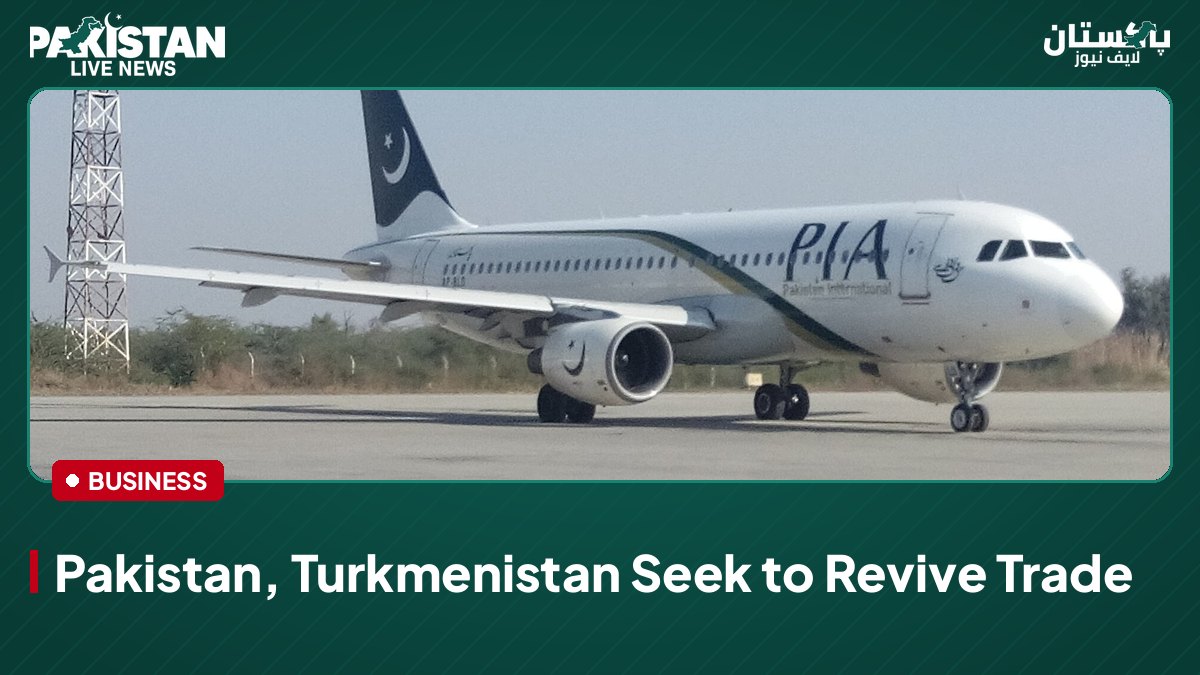
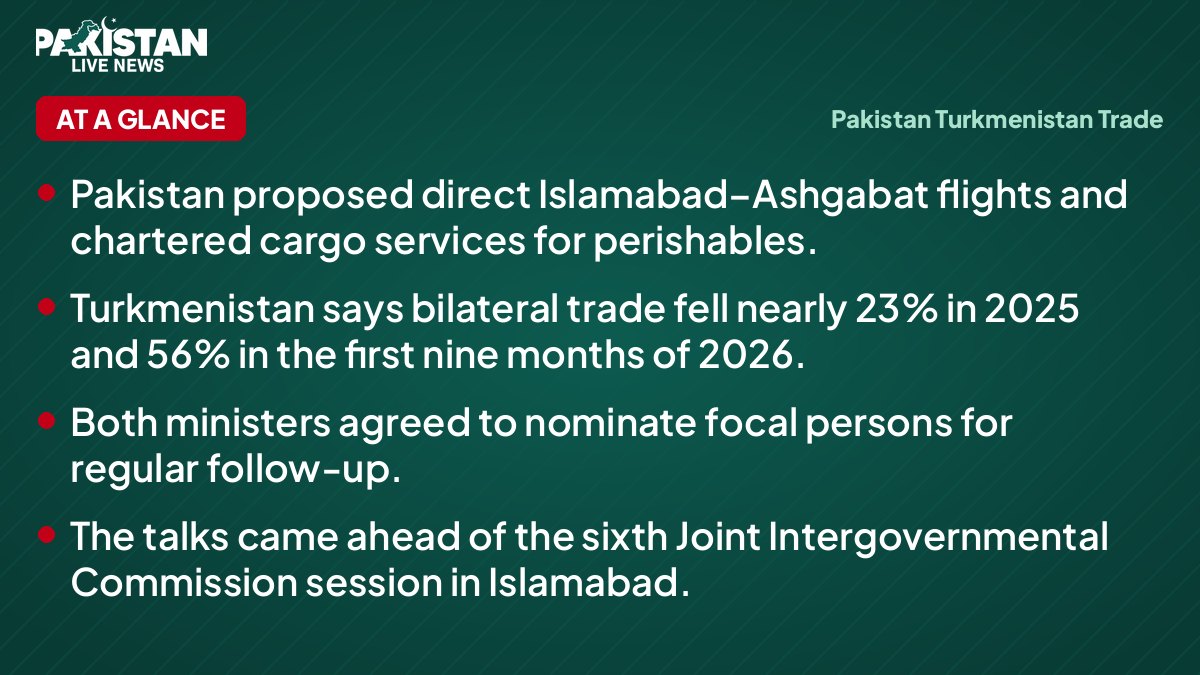
- Pakistan proposed direct Islamabad–Ashgabat flights and chartered cargo services for perishables.
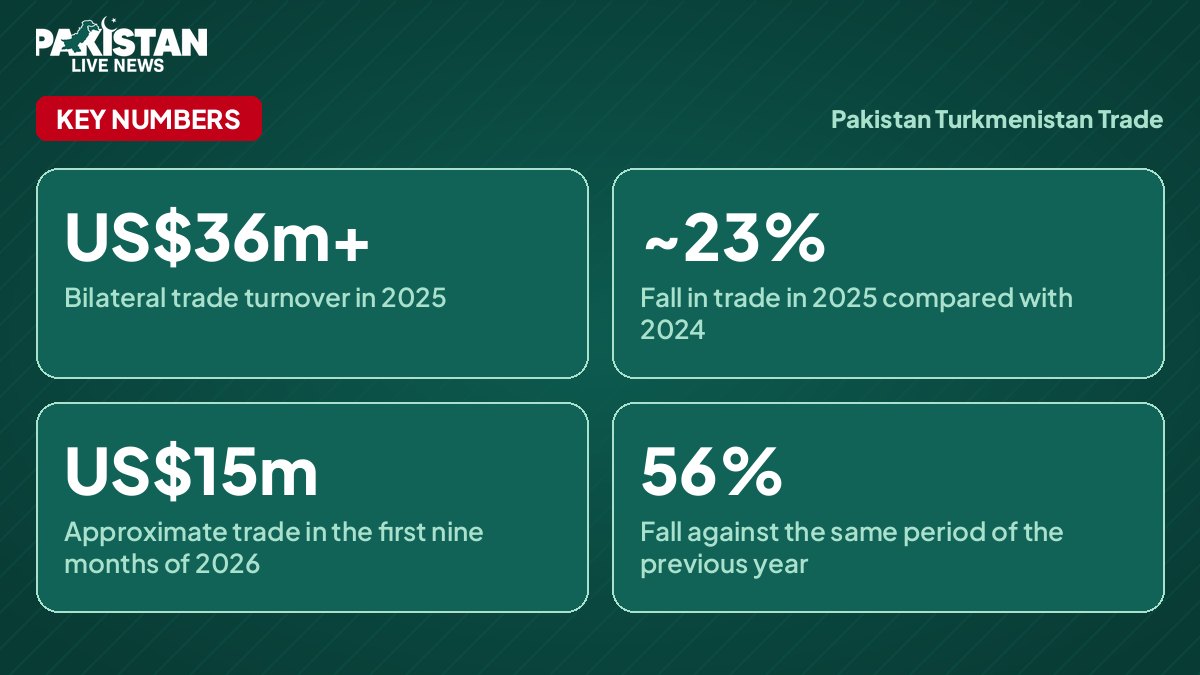
- Turkmenistan says bilateral trade fell nearly 23% in 2025 and 56% in the first nine months of 2026.
- Both ministers agreed to nominate focal persons for regular follow-up.
- The talks came ahead of the sixth Joint Intergovernmental Commission session in Islamabad.
Pakistan has proposed direct flights to Turkmenistan and new overland trade routes as the two countries try to reverse a sharp fall in commerce. Federal Minister for Commerce Jam Kamal Khan raised the ideas in a bilateral meeting with Turkmenistan's Minister of Trade and Foreign Economic Relations, Dortguly Suleymanov.
In this article
The meeting took place ahead of the sixth session of the Pakistan–Turkmenistan Joint Intergovernmental Commission in Islamabad, scheduled for November 17. The ministers discussed ways to expand Pakistan Turkmenistan trade, strengthen regional connectivity, improve market access and encourage business cooperation, according to an official release.
Pakistan Turkmenistan trade: the decline in numbers
Suleymanov stressed the need to reverse the recent downturn. He said trade turnover between the two countries exceeded US$36 million in 2025, nearly 23 percent lower than in 2024.
The slide has continued this year. In the first nine months of 2026, bilateral trade stood at about US$15 million, a fall of 56 percent against the same period of the previous year.
The Turkmen minister blamed the decline mainly on reduced textile exports. He said his country wants to restore traditional trade volumes while also diversifying its exports to Pakistan.
Direct flights and cargo services proposed
Jam Kamal Khan suggested exploring direct flights between Islamabad and Ashgabat. He also proposed chartered cargo services for perishable agricultural and food products.
He noted that the relatively short flying distance between the two capitals could be a significant advantage for time-sensitive exports. Suleymanov acknowledged the importance of better air connectivity. He indicated that the proposal could be taken up with the relevant aviation authorities during the Intergovernmental Commission meeting.
Overland routes and the role of the NLC
On road connectivity, the commerce minister pointed to the growing operations of Pakistan's National Logistics Corporation (NLC) in Central Asian markets. He noted that its fleet of vehicles suited to regional transport needs is also expanding.
He called for easier cross-border movement, a search for alternative trade corridors and solutions to the logistical problems affecting bilateral commerce. The talks also covered possible alternative routes for Pakistani marble and other exports to Central Asia.
Jam Kamal Khan said rising international freight costs and disruption to traditional trade routes have raised the value of regional economic integration. In his view, Pakistan and Turkmenistan are well placed to benefit from emerging trade links between South Asia, Central Asia and the Middle East. He also stressed business visa facilitation, saying easier movement of traders and investors would support regional economic cooperation.
Focal persons and business engagement
Both ministers agreed to nominate focal persons for regular coordination and follow-up on trade matters. Joint Secretary Maria was named as Pakistan's focal person, and the Turkmen side designated a counterpart to coordinate between the two ministries.
Suleymanov proposed exchanging updated lists of exportable products and information on import requirements. He also called for closer coordination between the relevant institutions.
Jam Kamal Khan briefed his counterpart on Pakistan's five-year tariff rationalisation programme. He said progressive cuts in customs duties would open up more opportunities for international businesses. He also highlighted the commerce ministry's new online trade information portal, which carries details of preferential trade agreements and tariff schedules for foreign exporters and investors.
The two sides also discussed closer direct contact between chambers of commerce, industrial associations and business communities. They talked about increasing Turkmen participation in Pakistan's international exhibitions, particularly in food, agriculture and textiles.
Jam Kamal Khan emphasised the importance of translating strong bilateral relations into practical commercial partnerships, particularly in textiles, agriculture, food processing, manufacturing and logistics. He appreciated the exchange of business delegations and stressed the need for continuous engagement to identify new investment opportunities and develop commercially viable trade arrangements.
The sixth session of the Pakistan–Turkmenistan Joint Intergovernmental Commission is scheduled for November 17 in Islamabad. The Turkmen side indicated that the direct flights proposal could be discussed there with the relevant aviation authorities. Jam Kamal Khan expressed optimism that the session would advance cooperation in trade facilitation, transport, market access and private-sector engagement.
Questions and answers
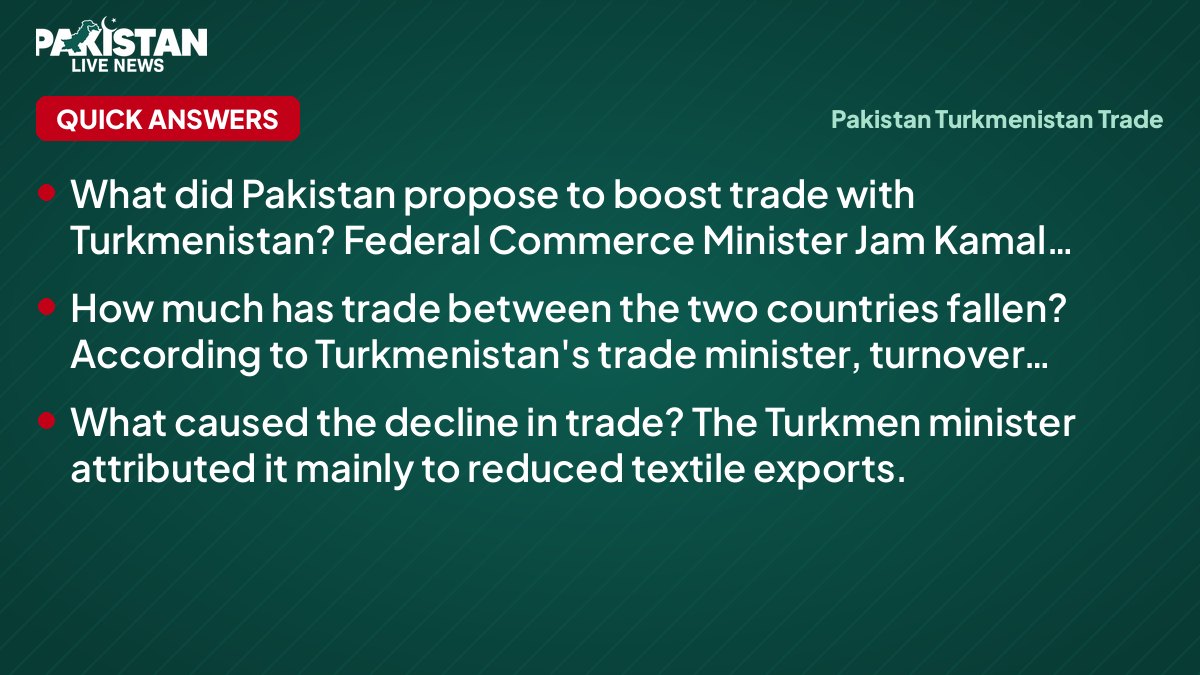
What did Pakistan propose to boost trade with Turkmenistan?
Federal Commerce Minister Jam Kamal Khan proposed exploring direct Islamabad–Ashgabat flights and chartered cargo services for perishable goods. He also suggested expanding NLC trucking, finding alternative routes for marble and other exports, and easing business visas.
How much has trade between the two countries fallen?
According to Turkmenistan's trade minister, turnover exceeded US$36 million in 2025, nearly 23 percent below 2024. In the first nine months of 2026 it was about US$15 million, a 56 percent drop on the same period a year earlier.
What caused the decline in trade?
The Turkmen minister attributed it mainly to reduced textile exports.
Image: Aasif Azaan / Wikimedia Commons, CC BY-SA 4.0