

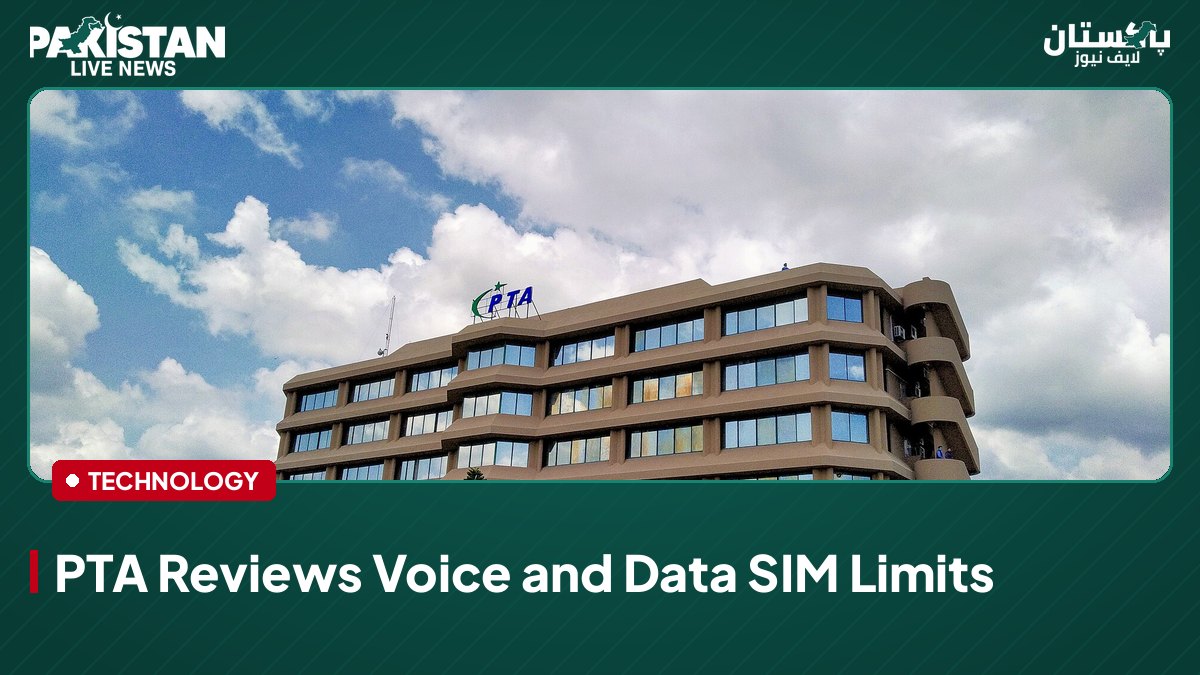
- PTA is considering cutting the voice SIM limit from five to three per CNIC.
- The cap on data SIMs, currently three, may be raised to support 5G and IoT devices.
- Officials say the aim is to curb the misuse of voice connections in cybercrime.
- A final decision will follow consultations with mobile network operators.
The Pakistan Telecommunication Authority (PTA) is looking at a change to how many SIM cards one person can hold. Under the proposal, the voice SIM limit per CNIC would fall from five to three, while the data SIM limit would go up.
In this article
According to officials, a decision in principle has been taken to examine the existing SIM issuance framework, but no final figures have been announced.
Why the PTA wants fewer voice SIMs
Officials say the main reason for revisiting the rules is to reduce the misuse of multiple voice connections in cybercrime and other illegal activities. They believe that letting each person hold more voice SIMs creates more openings for such misuse.
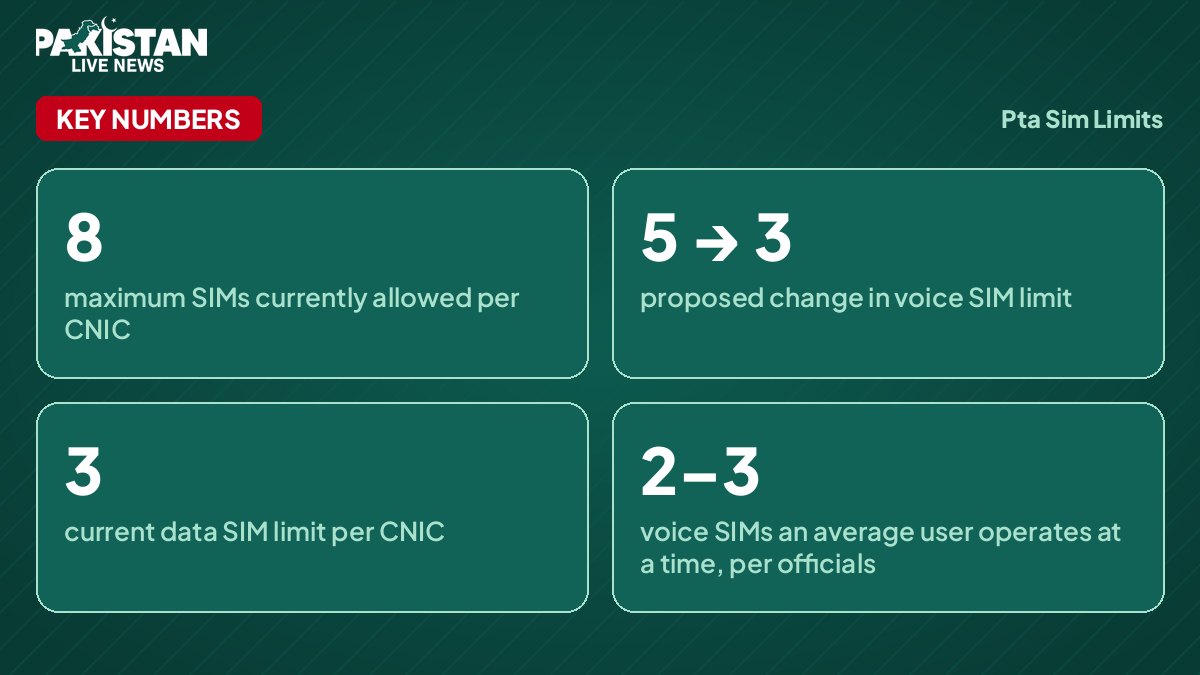
The officials also pointed to how people actually use their phones. An average mobile user runs two to three voice SIMs at a time, which makes the current ceiling of five look relatively high.
| SIM type | Current limit | Under consideration |
|---|---|---|
| Voice SIMs | 5 | 3 |
| Data SIMs | 3 | Increase (figure not stated) |
| Total SIMs | 8 | Not yet decided |
More data SIMs for 5G and IoT
While the voice limit may come down, the PTA is considering a higher cap on data SIMs per CNIC. The data limit currently stands at three, and the reports do not specify a new figure.
The regulator expects the growing adoption of 5G services and wider use of Internet of Things (IoT) devices to generate greater demand for data connections. That expectation is prompting a review of the existing regulatory framework.
What the current PTA SIM limits allow
At present, a maximum of eight SIMs can be registered against a single CNIC. These are made up of five voice SIMs and three data SIMs.
The limits have been unchanged for more than a decade. They follow a 2015 Supreme Court decision that capped connections at five voice and three data SIMs per individual.
Part of a wider tightening of SIM controls
The proposed revisions form part of broader efforts by the regulator to strengthen SIM registration and oversight. The PTA has recently taken other steps to tighten controls, including declaring the buying and selling of foreign SIM cards illegal.
The proposals reflect an attempt to balance telecom security with growing demand for digital connectivity. A lower voice limit is meant to restrict potential misuse, while a higher data limit could support emerging technologies and connected devices.
Consultation before any final decision
The final decision will be made only after consultations with mobile network operators. Officials say the revised limits will take into account the evolving needs of the telecom sector, security concerns and the expected growth of 5G-enabled services.
How the changes would be implemented will depend on the outcome of the consultations and on the PTA's final regulatory decision.
The PTA will hold consultations with mobile network operators before taking a final decision on the revised voice and data SIM limits.
Questions and answers
How many SIMs can one CNIC have at present?
A maximum of eight SIMs can be registered against one CNIC: five voice SIMs and three data SIMs. The limits date back to a 2015 Supreme Court decision.
What change is the PTA considering?
The PTA is considering reducing the voice SIM limit from five to three per CNIC and increasing the data SIM limit, which is currently three. No new data limit has been announced.
Why is the PTA reviewing the limits?
Officials say the aim is to curb the misuse of multiple voice SIMs in cybercrime and other illegal activities. They also want to allow for rising demand for data connections from 5G and IoT devices.
Image: PTA PR / Wikimedia Commons, CC BY-SA 4.0