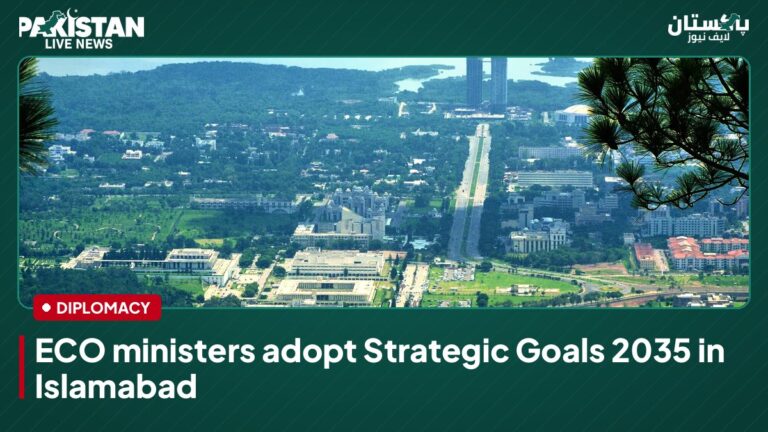

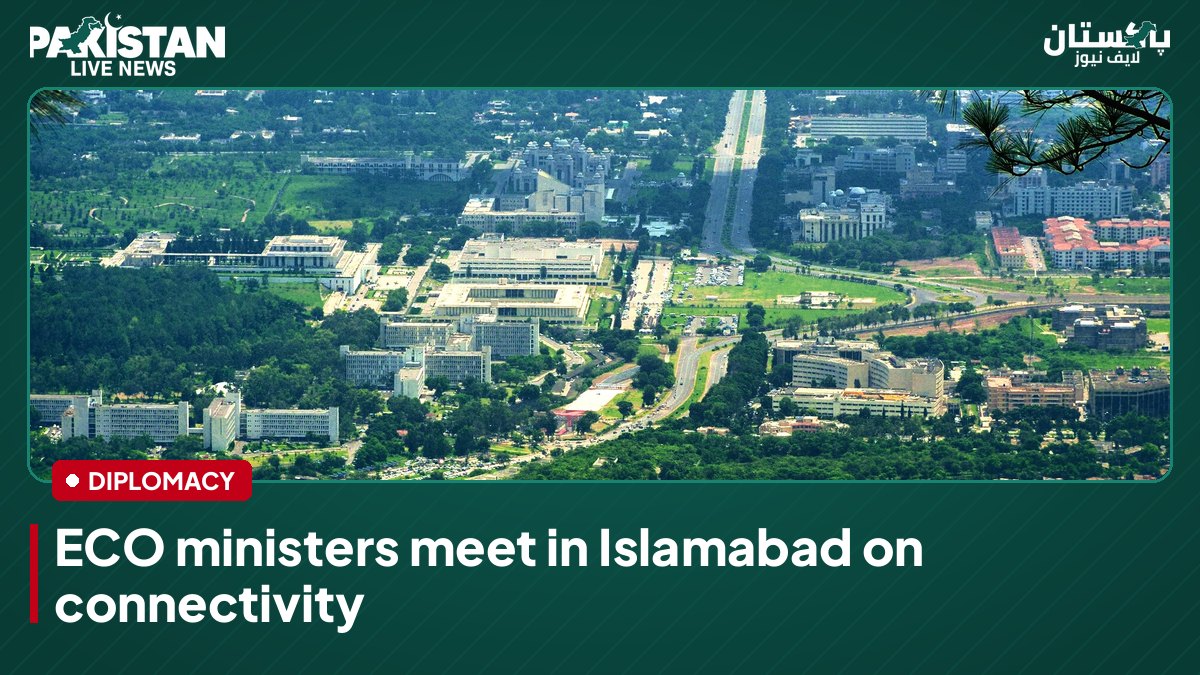
- The 30th ECO Council of Ministers was chaired by Deputy Prime Minister and Foreign Minister Ishaq Dar in Islamabad.
- Delegates stressed regional connectivity, resilient supply chains and diplomacy amid global geopolitical shifts.
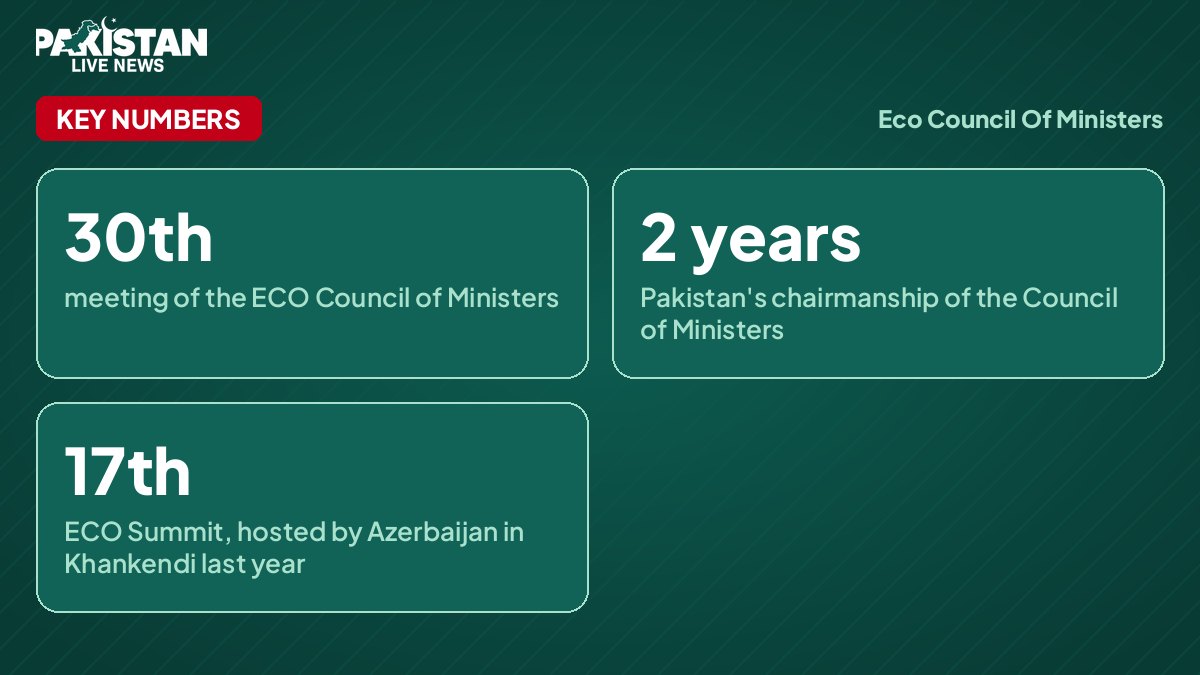
- Pakistan holds a two-year chairmanship of the Council of Ministers, with Kazakhstan the outgoing chair.
- An Islamabad Declaration is expected once the Council's deliberations conclude.
Regional connectivity, resilient supply chains and stronger diplomacy took centre stage in Islamabad on Monday. Foreign ministers and senior dignitaries from member and observer states of the Economic Cooperation Organization (ECO) said these were vital for navigating a shifting global order.
In this article
They were speaking at the 30th meeting of the ECO Council of Ministers, chaired by Deputy Prime Minister and Foreign Minister Senator Muhammad Ishaq Dar. Delegates praised Pakistan's leadership and hospitality, and thanked Kazakhstan for its outgoing chairmanship and the ECO Secretariat for its work on the shared agenda.
Key messages at the ECO Council of Ministers
Tajikistan's Foreign Minister, Sirojiddin Muhriddin, thanked Pakistan for hosting the session and said his country attached great importance to the ECO as a platform for economic cooperation. He also acknowledged Kazakhstan's successful chairmanship.
Türkiye's Deputy Foreign Minister, Musa Kulaklikaya, called the ECO a valuable platform with untapped potential. He said conflicts, the climate crisis and disrupted supply chains meant diplomacy and deeper regional cooperation were the only viable way forward.
Kazakhstan's Deputy Foreign Minister, Arman Issagaliyev, spoke for the outgoing chair. He said geo-economic fragmentation was reshaping trade, investment and supply chains, so regional cooperation must help member economies absorb shocks through more dependable market links. He added that shared heritage dating back to the Silk Road could underpin further cooperation.
Azerbaijan's Deputy Foreign Minister, Elnur Mammadov, voiced full support for Pakistan's two-year chairmanship of the Council of Ministers. He recalled that Azerbaijan hosted the 17th ECO Summit in Khankendi last year. The Communiqué and the first ECO Week, with fora in Aghdam, Lachin and Shusha, set priorities on sustainable development, climate resilience and connectivity, he said.
| Delegate | Country | Main message |
|---|---|---|
| Sirojiddin Muhriddin | Tajikistan | Thanked Pakistan; called the ECO a key platform for economic cooperation |
| Musa Kulaklikaya | Türkiye | ECO has untapped potential; diplomacy and cooperation are the only viable solution |
| Arman Issagaliyev | Kazakhstan | Regional cooperation must help economies withstand shocks |
| Elnur Mammadov | Azerbaijan | Full support for Pakistan's chairmanship; recalled Khankendi summit priorities |
| Bobur Usmanov | Uzbekistan | Review progress on Tashkent and Khankendi summit agreements |
Peace, responsibility and follow-up on summits
The Deputy Foreign Minister of the Kyrgyz Republic described the milestone 30th ministerial meeting as taking place amid profound geopolitical change. He said every state must protect its national interests while acting responsibly to preserve regional peace and stability.
Uzbekistan's Deputy Foreign Minister, Bobur Usmanov, said his country was working closely with Pakistan on multifaceted cooperation and chairmanship priorities. He described the meeting as a timely chance to review regional developments and assess how far agreements from the Tashkent and Khankendi summits had been implemented.
ECO Secretary-General Dr Asad Majeed Khan, Turkmenistan's Foreign Minister Rashid Meredov and Tahsin Ertugruloglu, Foreign Minister of the Turkish Cypriot State, also thanked the Pakistani government and Mr Dar for their hospitality and organisation. They commended Kazakhstan's chairmanship and the Secretariat's preparatory work.
Pakistan's role and the expected declaration
Information and Broadcasting Minister Attaullah Tarar spoke to the media on the sidelines. He said the ECO was an important forum for regional trade, economic cooperation and connectivity, and that Pakistan's relations with Central Asian states had improved considerably in recent years.
Mr Tarar said the presence of foreign ministers from member countries reflected the value of multilateral engagement. He noted that Pakistan had hosted a series of high-level events, including the Shanghai Cooperation Organisation (SCO) Heads of Government meeting last year, along with visits by presidents and ministers.
Referring to the expected Islamabad Declaration, he said it would be inappropriate to comment on its contents before the Council concluded. He said Pakistan's diplomatic role had won international recognition and that leading multilateral forums could strengthen its standing further. He also referred to Pakistan's role in facilitating mediation efforts between Iran and the United States, saying the contribution had been acknowledged internationally.
Mr Dar hosted a dinner for the visiting foreign ministers, Mr Tarar said. The delegates were also due to meet the prime minister.
Cultural evening and media facilitation
The Ministry of Information and Broadcasting arranged cultural activities for local and international journalists, including those accompanying visiting delegations. Mr Tarar said the aim was to showcase Pakistan's cultural diversity.
The programme included musical performances of national and regional songs from all four provinces, Gilgit-Baltistan and Azad Jammu and Kashmir. The Pashtun band Khumariyaan also performed.
Information Secretary Ashfaq Ahmed Khalil said a media facilitation centre had been set up on the minister's directions. It was meant to give journalists covering the meeting a suitable working environment. He said similar arrangements for the SCO meeting and the Islamabad Talks had drawn positive feedback, and that the cultural evening also introduced journalists to Pakistani heritage and cuisine.
The Council's deliberations were due to continue through the day, after which the Islamabad Declaration is expected. The visiting dignitaries were also scheduled to meet the prime minister.
Questions and answers
Who chaired the 30th ECO Council of Ministers?
Deputy Prime Minister and Foreign Minister Senator Muhammad Ishaq Dar chaired the meeting in Islamabad. Pakistan holds a two-year chairmanship of the Council, taking over from Kazakhstan.
What did delegates stress at the meeting?
They stressed regional connectivity, resilient supply chains and diplomatic cooperation. Several speakers linked these to global conflicts, climate pressures and geo-economic fragmentation.
Will there be an outcome document?
An Islamabad Declaration is expected. Information Minister Attaullah Tarar said it would be inappropriate to comment on its contents before the Council concluded.
Image: Zacharie Grossen / Wikimedia Commons, CC BY-SA 4.0