

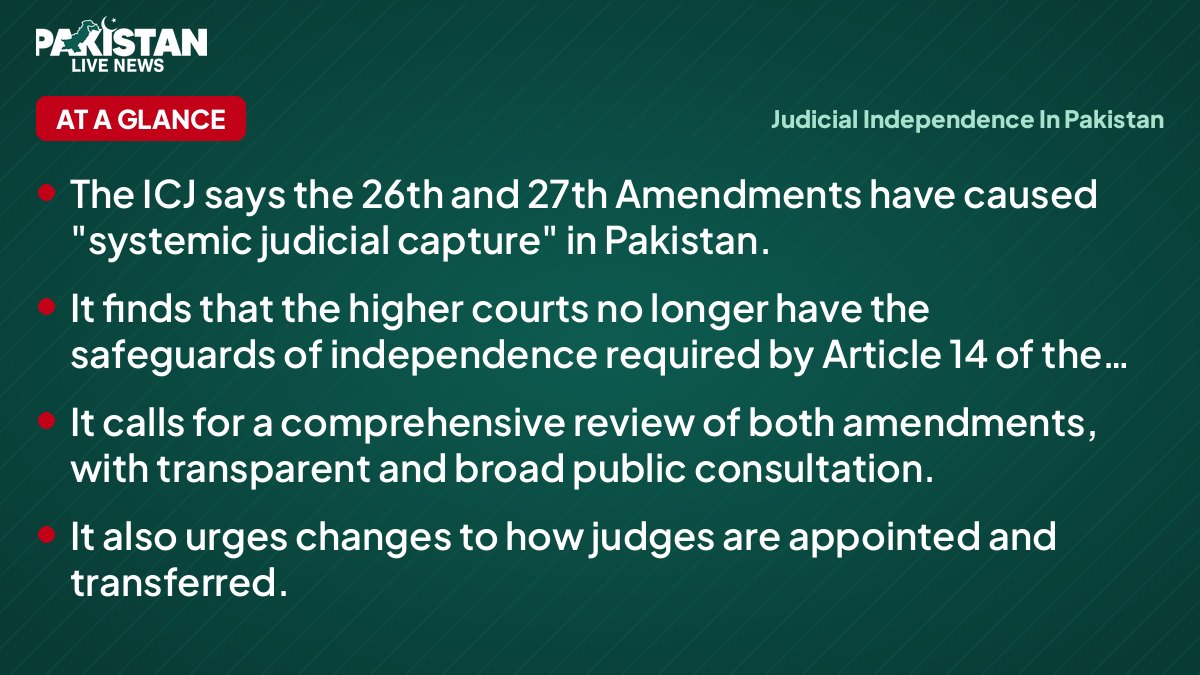
- The ICJ says the 26th and 27th Amendments have caused "systemic judicial capture" in Pakistan.
- It finds that the higher courts no longer have the safeguards of independence required by Article 14 of the ICCPR.
- It calls for a comprehensive review of both amendments, with transparent and broad public consultation.
- It also urges changes to how judges are appointed and transferred.
The International Commission of Jurists (ICJ) has concluded that judicial independence in Pakistan no longer meets the standards set by international law, following the 26th and 27th Constitutional Amendments. In a report released on Wednesday, it said the two changes had led to "systemic judicial capture" by other branches of the state.
In this article
The report is titled "Judicial Capture: Independence of the Judiciary in Pakistan after the 26th and 27th Constitutional Amendments". It examines the framework governing the high courts, the Supreme Court and the Federal Constitutional Court (FCC).
What the two amendments changed
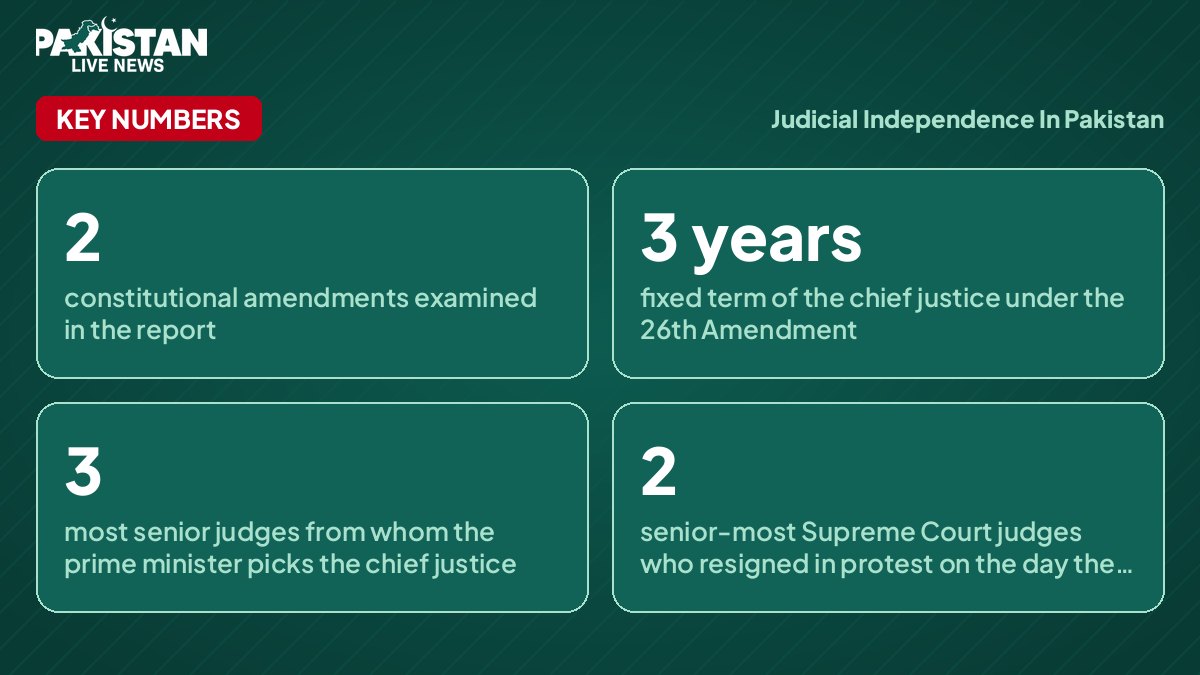
The 26th Amendment was passed in October 2024. It created constitutional benches within the Supreme Court, with members chosen by a reconstituted Judicial Commission of Pakistan (JCP) in which judges no longer held a majority. It also removed the Supreme Court's suo motu powers and fixed the chief justice's term at three years. The prime minister was empowered to appoint the next chief justice from among the three most senior judges.
The 27th Amendment followed in November 2025. It turned the constitutional benches into a separate court, the FCC, and brought changes to the military's chain of command. It also granted immunities to senior government officials. Two of the Supreme Court's most senior judges resigned in protest on the day it became law.
The 26th and 27th amendments have done exactly what we feared: they have placed Pakistan’s highest courts under the control of the executive. When the courts are captured, no one is left to hold the government to account, and victims of human rights violations have nowhere to turn.
Santiago Canton, ICJ Secretary-General
ICJ findings on judicial independence in Pakistan
The ICJ found that the combined effect of the amendments and their implementation is that the highest courts no longer enjoy the institutional guarantees required by Article 14 of the International Covenant on Civil and Political Rights (ICCPR). The UN Basic Principles on the Independence of the Judiciary are also cited. It added that the changes impair the right of victims of human rights violations to an effective remedy, which Article 2(3) of the ICCPR guarantees.
The report describes the changes as "a decisive break" from the model of judicial independence Pakistan built after the judiciary was restored in 2009. It notes that the erosion did not come through the overt removal of judges, as under military rule. Instead, it was carried out through constitutional amendments adopted by Parliament.
It warns that even the highest courts no longer serve as a check on the executive or Parliament. Their role in providing redress for victims of rights violations is, it says, seriously impaired.
Timeline
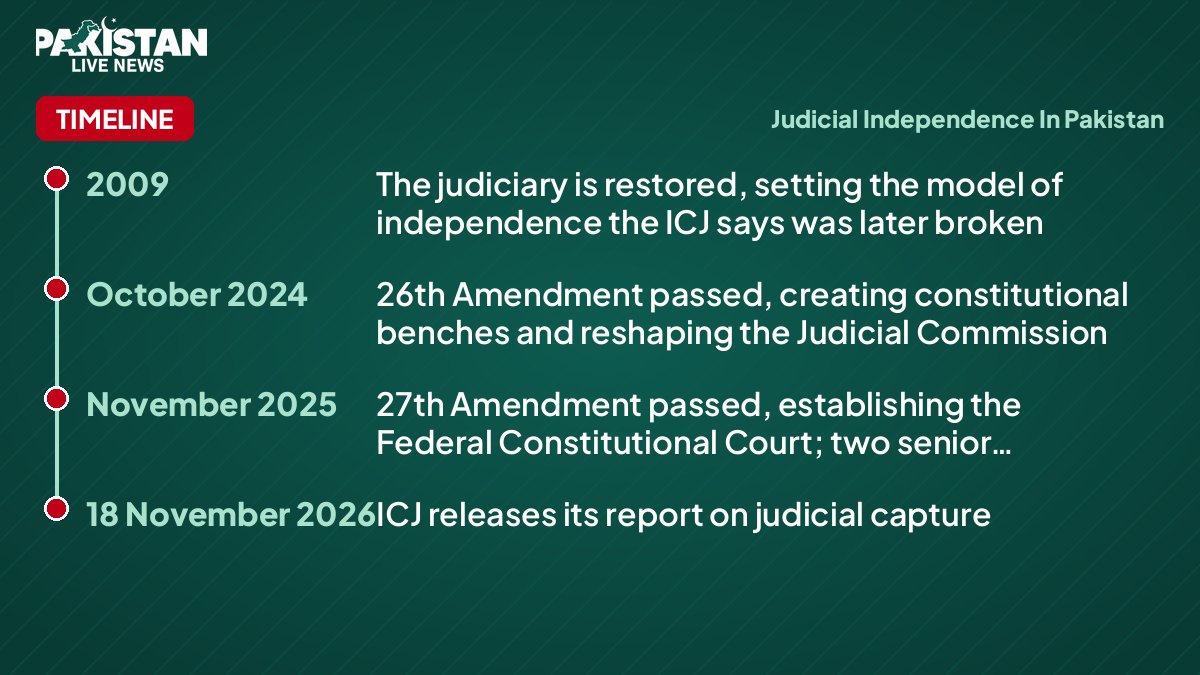
- 2009The judiciary is restored, setting the model of independence the ICJ says was later broken
- October 202426th Amendment passed, creating constitutional benches and reshaping the Judicial Commission
- November 202527th Amendment passed, establishing the Federal Constitutional Court; two senior Supreme Court judges resign
- 18 November 2026ICJ releases its report on judicial capture
Government's case and the ICJ's response
According to the report, the government argued that the amendments were meant to rein in judicial overreach, ease the backlog of cases and curb the politicisation of the Supreme Court's original jurisdiction. It also wanted Parliament to have a role in appointments similar to that of legislatures elsewhere. The ICJ said these aims did not justify a structure that is "glaringly inconsistent" with Pakistan's obligations under international law.
The organisation acknowledged that the Supreme Court had at times encroached on the roles of Parliament and other institutions. It said, however, that Parliament failed to fix those shortcomings in a way that protects judicial independence. It also found that the ruling coalition exploited public grievances over the courts in a "self-serving manner" to gain control of the judiciary.
ICJ Secretary-General Santiago Canton said the courts needed reform, since judges were appointed without transparency. He added that none of those problems had been fixed.
Recommendations for the government and judicial bodies
The ICJ said the structural problems it identified require substantial constitutional and statutory amendments. These should include revising or repealing provisions of the two amendments that conflict with international standards. It asked the government to begin a comprehensive review in light of the ICCPR, backed by transparent and broad public consultation. It also suggested seeking technical assistance from the UN special rapporteur on the independence of judges and lawyers, and inviting them for a country visit.
The JCP was urged to revise its appointment criteria, publish them, and make them the sole basis for nominations to the FCC, the Supreme Court and the high courts. It should also set out a transparent procedure and publish reasons for each appointment. In addition, it should refrain from transferring a high court judge without their consent.
The Supreme Judicial Council was asked to define "inefficiency" narrowly, limiting it to serious incompetence that makes a judge unfit for duty. The Special Parliamentary Committee, which nominates the chief justice, was asked to adopt clear criteria and publish its reasons. Finally, the FCC, the Supreme Court and the high courts were urged to interpret both amendments, as far as possible, in line with Article 14 of the ICCPR.
The ICJ has asked the government to start a comprehensive review of both amendments and to hold public consultations. The reports do not say whether the government has responded.
Questions and answers
What does the ICJ report conclude?
It concludes that the 26th and 27th Amendments have led to systemic judicial capture. In its view, Pakistan's higher courts no longer have the institutional guarantees of independence required by international law.
What did the 27th Amendment do?
It established the Federal Constitutional Court, changed the military's chain of command and granted immunities to top government officials. Two senior-most Supreme Court judges resigned in protest on the day it became law.
What does the ICJ want the government to do?
It wants a comprehensive review of both amendments in light of the ICCPR, with transparent and broad public consultation. It also wants provisions that conflict with international standards revised or repealed.
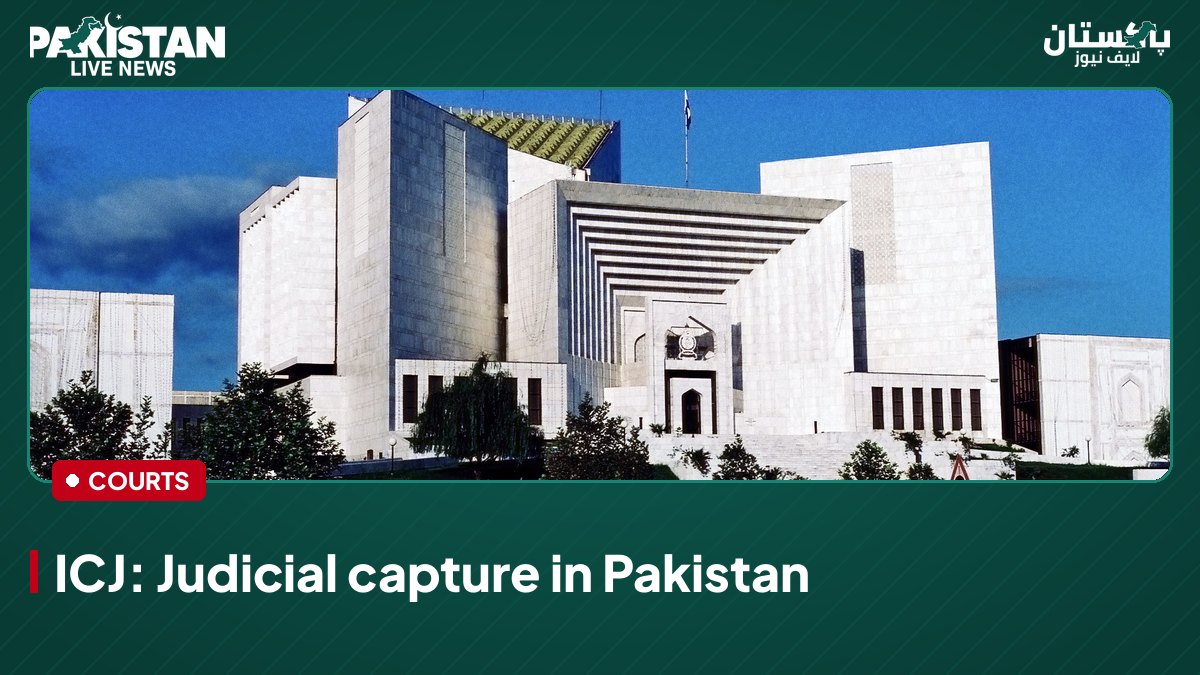
Image: Usman.pg / Wikimedia Commons, CC BY-SA 3.0