
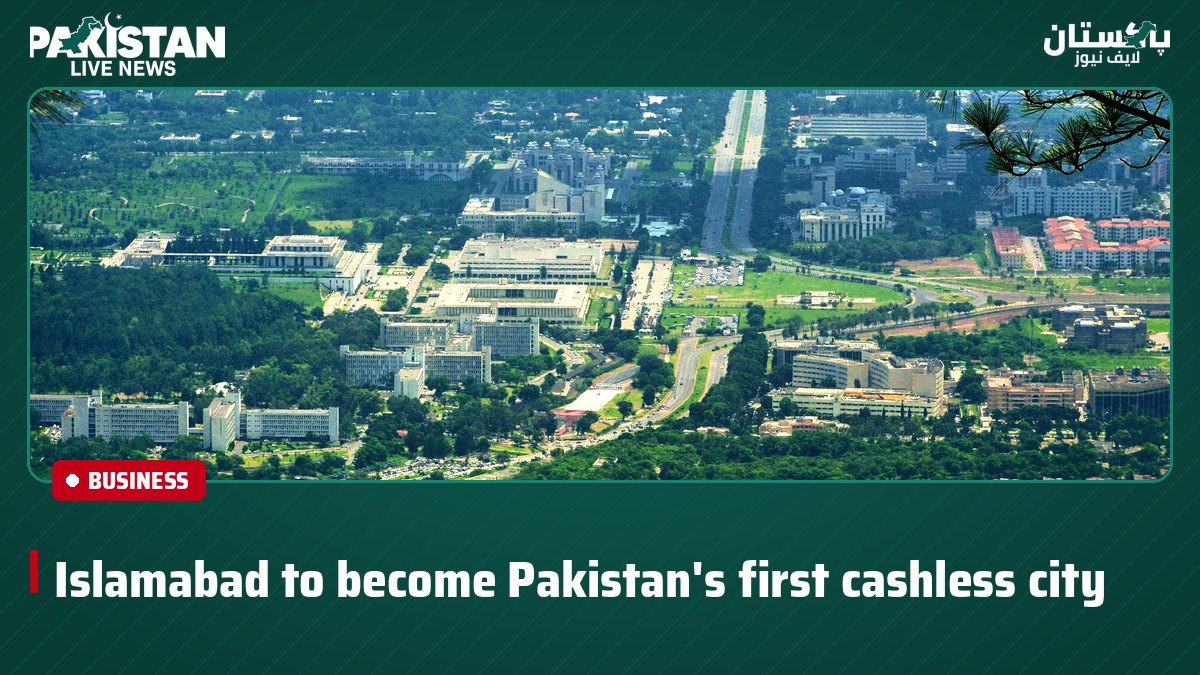
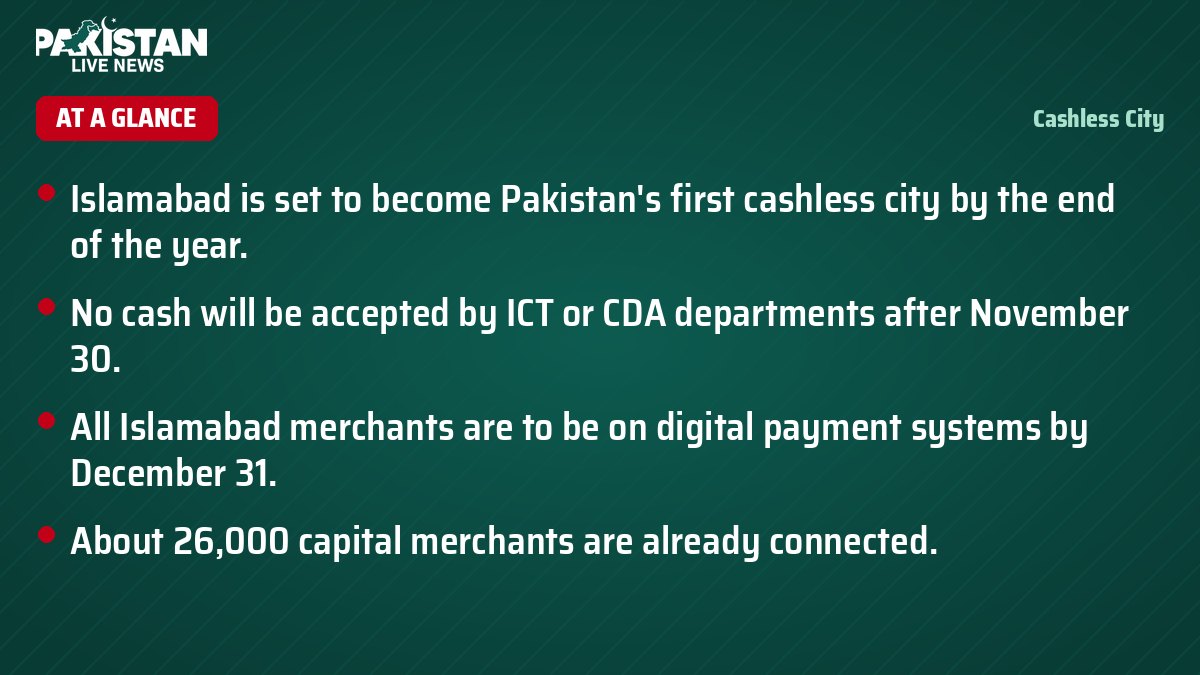
- Islamabad is set to become Pakistan's first cashless city by the end of the year.
- No cash will be accepted by ICT or CDA departments after November 30.
- All Islamabad merchants are to be on digital payment systems by December 31.
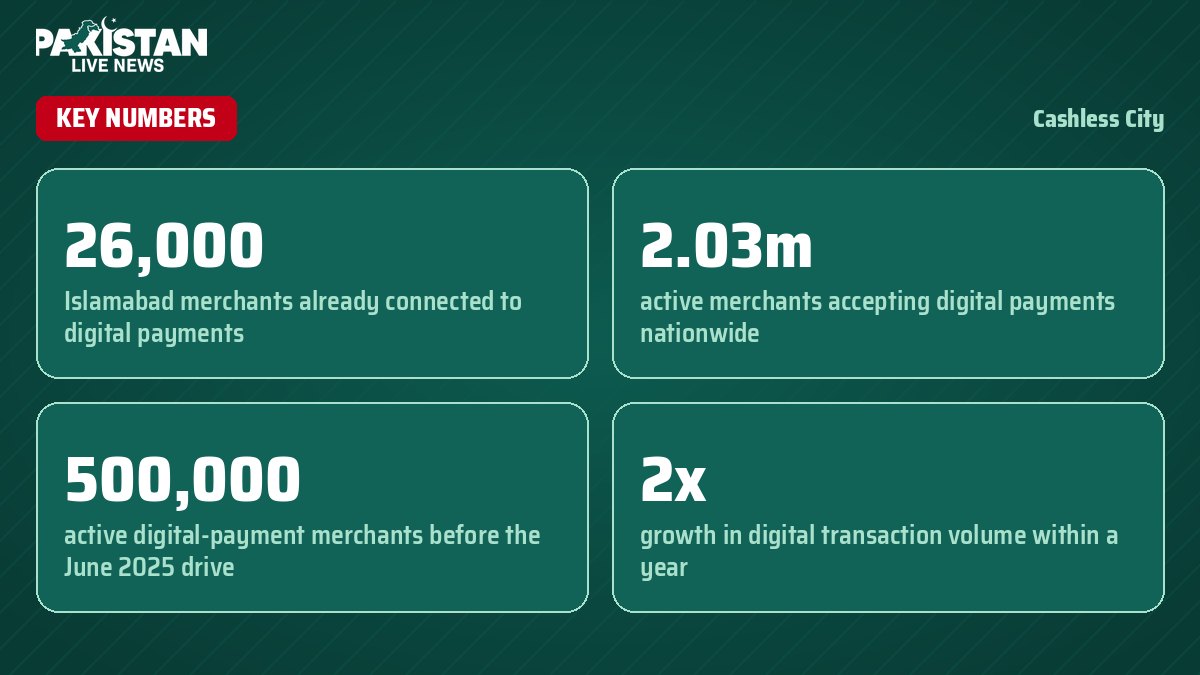
- About 26,000 capital merchants are already connected.
- The Prime Minister has asked for a roadmap towards a fully digital payments system nationwide.
Islamabad is set to become Pakistan's first cashless city, with the federal government fixing the end of the year as its target. Government offices in the capital will end cash collection after November 30.
In this article
The decision was taken at a meeting on the Cashless Islamabad Project chaired by Minister of State for Interior Talal Chaudhry on Friday, according to a Ministry of Interior statement.
What changes in the cashless city and when
Chaudhry said no department of the Islamabad Capital Territory (ICT) administration or the Capital Development Authority (CDA) would accept cash payments after November 30. From December 1, every payment to these bodies will have to go through digital channels.
The wider goal is to bring every merchant in the capital into the cashless system by December 31, 2026. That covers roadside vendors and small retailers as well as large commercial establishments.
The first deadline for the cashless city plan therefore applies to government bodies, while the second covers the market as a whole.
Chaudhry said the shift would improve financial transparency, strengthen the monitoring of tax collection and make the overall transaction system more efficient.
Digital payment facilities will be provided at every level, from street vendors to large business centres.
Talal Chaudhry, Minister of State for Interior
Who is behind the cashless city project
CDA Chairman Sohail Ashraf, representatives of the banking sector and other senior officials attended the meeting. Chaudhry said the input of all stakeholders was essential to the success of the cashless city project.
He said the project was moving at a fast pace on the special instructions of Prime Minister Shehbaz Sharif and Interior Minister Mohsin Naqvi. Naqvi, he added, had promised the prime minister that Islamabad would become Pakistan's first cashless city and the world's first cashless capital.
Banking sector representatives welcomed the plan and assured the government of their full cooperation, the ministry's statement said.
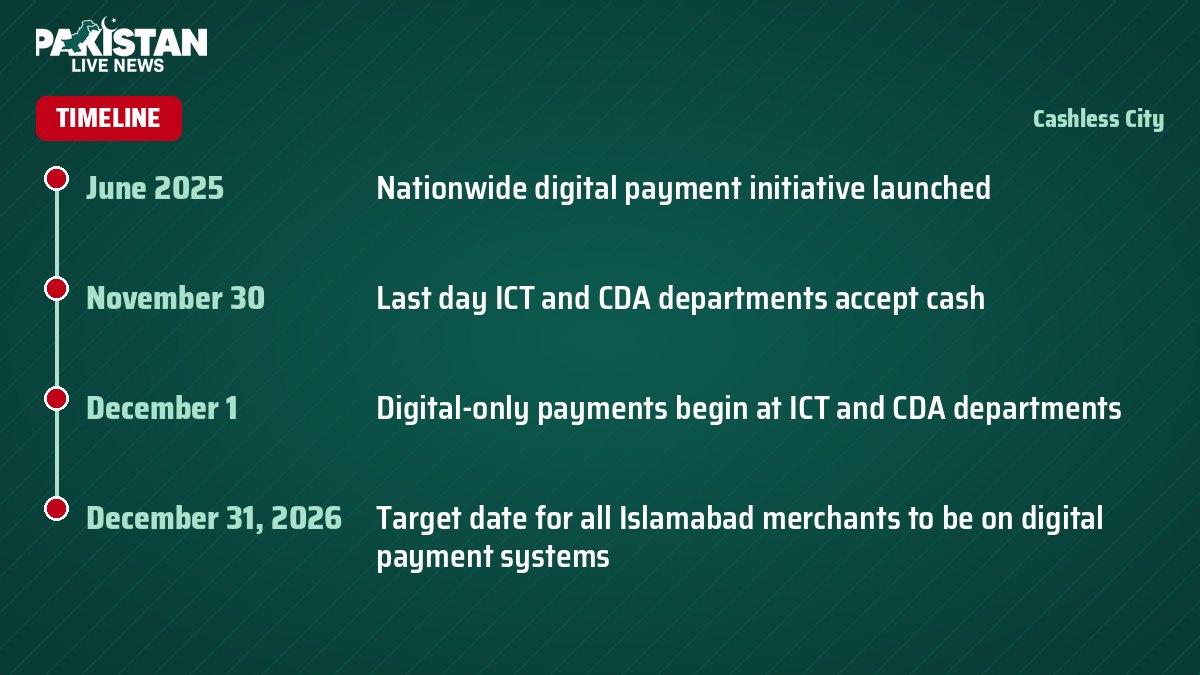
Timeline
- June 2025Nationwide digital payment initiative launched
- November 30Last day ICT and CDA departments accept cash
- December 1Digital-only payments begin at ICT and CDA departments
- December 31, 2026Target date for all Islamabad merchants to be on digital payment systems
Where the cashless city rollout stands
Around 26,000 merchants in Islamabad have already been connected to digital payment facilities. Chaudhry said such facilities would be offered at every level of commerce, from street vendors to large business centres.
The capital's cashless city project builds on a nationwide digital payment drive launched in June 2025 to promote financial inclusion and document economic activity. The government says the number of active merchants accepting digital payments across Pakistan has grown from 500,000 to 2.03 million under that drive. It also says the overall volume of digital transactions has doubled within a year.
The State Bank of Pakistan's Raast instant payment system has a central role. It lets individuals and businesses make immediate payments, and its QR-code feature allows customers to pay by scanning codes through banking and payment apps.
Cashless city explained
The plan has two steps. The first covers payments to government bodies: after November 30, no ICT administration or CDA department will take cash, and from December 1 every payment to them must go through digital channels. In practice, the cashless city plan begins with payments made to these two bodies.
The second step covers the market. The government wants every merchant in the capital, including roadside vendors, small retailers and large commercial establishments, on digital payment systems by December 31, 2026. About 26,000 merchants have already been connected, so the work ahead is to bring the remaining traders into the system.
Chaudhry named three benefits: better financial transparency, stronger monitoring of tax collection and a more efficient transaction system. These aims fit the government's wider effort to digitise a largely cash-dependent economy and bring more businesses into the formal tax net.
What the cashless city means for merchants and customers
For merchants, the cashless city plan means digital payment facilities at every level, from street vendors to large business centres, according to Chaudhry. Banking sector representatives welcomed the plan and assured the government of their full cooperation.
For customers, Raast, the State Bank's instant payment system, allows immediate payments, and its QR-code feature lets them pay by scanning codes through banking and payment apps. The Prime Minister has also stressed the need for reliable internet connectivity and for digital services to be more accessible and convenient for consumers.
The national picture
At a meeting last week, Prime Minister Shehbaz Sharif directed authorities to prepare a "clear roadmap and time-bound targets" for a 100 per cent digital payments system in the country. He also stressed the need for reliable internet connectivity and for digital services to be more accessible and convenient for consumers.
The push is part of the government's wider effort to digitise a largely cash-dependent economy and bring more businesses into the formal tax net.
ICT and CDA departments will stop accepting cash after November 30, and the government aims to connect all Islamabad merchants to digital payment systems by December 31. Authorities are also expected to prepare a roadmap with time-bound targets for a fully digital payments system nationwide, as the cashless city plan moves ahead.
Questions and answers
When will Islamabad government departments stop accepting cash?
Departments under the ICT administration and the CDA will not accept cash after November 30. From December 1, payments will be digital only.
Does the cashless city plan include small vendors?
Yes. The government aims to connect all merchants in Islamabad, from roadside vendors to large commercial establishments, to digital payment systems by December 31.
What is Raast?
Raast is the State Bank of Pakistan's instant payment system. It allows immediate digital payments, including through QR codes scanned in banking and payment apps.
What is the Islamabad cashless city plan?
It is the federal government's plan to make Islamabad Pakistan's first cashless city by the end of the year. ICT and CDA departments will stop taking cash after November 30, and all merchants are to be on digital payment systems by December 31, 2026.
Who decided on the plan?
The decision was taken at a meeting chaired by Minister of State for Interior Talal Chaudhry. He said the project was moving at a fast pace on the special instructions of Prime Minister Shehbaz Sharif and Interior Minister Mohsin Naqvi.
How many merchants are already connected?
About 26,000 Islamabad merchants are already connected. Across Pakistan, the government says active merchants accepting digital payments have grown from 500,000 to 2.03 million under the drive launched in June 2025.
What has the Prime Minister asked for?
Prime Minister Shehbaz Sharif directed authorities to prepare a clear roadmap and time-bound targets for a 100 per cent digital payments system in the country.
What benefits did the government give for going cashless?
Chaudhry said the shift would improve financial transparency, strengthen the monitoring of tax collection and make the overall transaction system more efficient.
Image: Zacharie Grossen / Wikimedia Commons, CC BY-SA 4.0