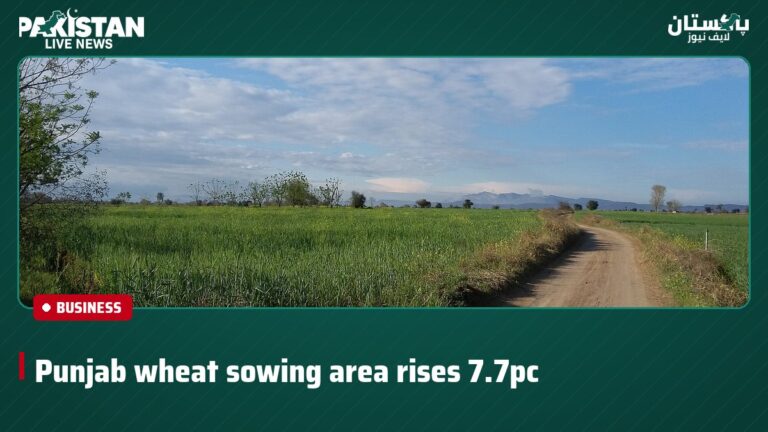


- Farmers in Thatta and Sujawal began sowing cotton in the second week of November, well outside the normal calendar.
- If the crop survives winter, lint could arrive in February-March, months before the usual August peak.
- Scientists warn that cold soil, fog and pink bollworm could undermine yields and fibre quality.
- Punjab arrival figures differ by over 1.6 million bales between two sources, distorting price signals.
Cotton growers in Sindh's coastal districts of Thatta and Sujawal have started sowing in the second week of November. This is a sharp break from the country's conventional farming calendar.
The experiment comes as Pakistan's cotton and textile supply chain is also struggling with widening gaps in official crop reporting. Its commercial value will depend on how the plants cope with winter and on whether market data can be trusted.
A farmer-led break from the calendar
Cotton is traditionally sown in Punjab between May and June, and in Sindh in February and March. That cycle exposes the crop to peak summer heat stress and to post-monsoon pest attacks, particularly from the pink bollworm.
Growers in the coastal belt are trying a multi-season model instead. They are using land cleared after the paddy harvest and intercropping cotton directly into standing tomato fields.
Dr Tasawwar Hussain Malik, a plant breeding and genetics specialist at the Central Cotton Research Institute (CCRI) in Sakrand, says the initiative began with farmers. CCRI researchers are monitoring the fields and running parallel trials to judge whether "off-season" planting is viable in frost-free pockets of lower Sindh, where winter temperatures stay comparatively mild.
| Region / model | Sowing period |
|---|---|
| Punjab (conventional) | May-June |
| Sindh (conventional) | February-March |
| Coastal Sindh (farmer experiment) | Second week of November |
What early lint could mean for mills
If the crop matures through winter and yields lint by February and March, domestic spinners could receive fresh supplies months ahead of the traditional August peak. That would help bridge the annual gap between seasons and reduce reliance on costly imported lint.
Ginning factories could also run beyond their usual three-to-four-month window. However, an overlap with the late wheat harvest could strain local transport, labour and warehousing.
Scientists urge caution
Sajid Mahmood, head of technology transfer at CCRI in Multan, says mid-November conditions look favourable for germination, with daytime highs of 33-34°C and night-time lows of 21-22°C. But he stresses that air temperature alone does not decide a crop's fate, since seed germination needs warm soil at seed depth.
The decisive test will come between December and February. Falling night and soil temperatures can slow root development, delay flowering and impair boll formation. Prolonged fog, dew and cool, moist soil also raise the risk of the Seedling Disease Complex, driven by soil-borne pathogens such as Rhizoctonia and Pythium.
Weak winter warmth and reduced sunlight could also hurt fibre maturity, lowering micronaire values and staple length. If the early lint misses export-grade spinning specifications, mills would be expected to discount it, cutting farmers' profits.
Mahmood also warns of a pest risk. Keeping cotton in the ground from November until the normal spring sowing could create a continuous green bridge for pink bollworm larvae, letting them multiply and move into the main summer crop. He calls for multi-location trials over at least two to three seasons, tracking soil temperatures, fog days, pest dynamics and fibre quality, alongside strict crop-residue management.
A reporting gap that distorts the market
For the 2026-27 season, the Pakistan Cotton Ginners Association recorded Punjab arrivals at 1.999 million bales by 31 October. The Punjab Crop Reporting Service projected provincial output at 3.7 million bales and said arrivals had reached 3.64 million bales by 5 November.
That is a gap of more than 1.6 million bales, although the two figures are dated five days apart. The report says it distorts price discovery across the value chain.
Inflated supply estimates, it argues, depress local lint prices, now around Rs18,500 per maund, and make growers and ginners reluctant to sell. Overstated projections could also delay spinners' forward import contracts, exposing mills to panic buying at steep premiums if shortages emerge. They could also raise bank risk premiums and borrowing costs for warehouse financing.
Institutional alignment needed
Turning coastal Sindh's experiment into lasting relief for the textile sector will require coordination between institutions. The report points to targeted PARC-CCRI seed research for cold-tolerant, pest-resistant varieties, paired with credible, unified crop statistics to restore market stability.
The decisive test for the November-sown crop will come between December and February. Scientists say multi-location trials over at least two to three seasons are needed before off-season cultivation is scaled up.
Questions and answers
Where is cotton being sown in November?
Growers in Sindh's coastal districts of Thatta and Sujawal began sowing in the second week of November, using land cleared after the paddy harvest and intercropping into standing tomato fields.
Why are scientists cautious about the experiment?
Cold soil and night temperatures in winter can retard root growth and boll formation. Fog and moisture raise disease risk, and the crop could carry pink bollworm into the main summer crop.
How big is the gap in Punjab cotton arrival figures?
The ginners' association recorded 1.999 million bales by 31 October, while the Punjab Crop Reporting Service claimed 3.64 million bales by 5 November, a difference of over 1.6 million bales.