
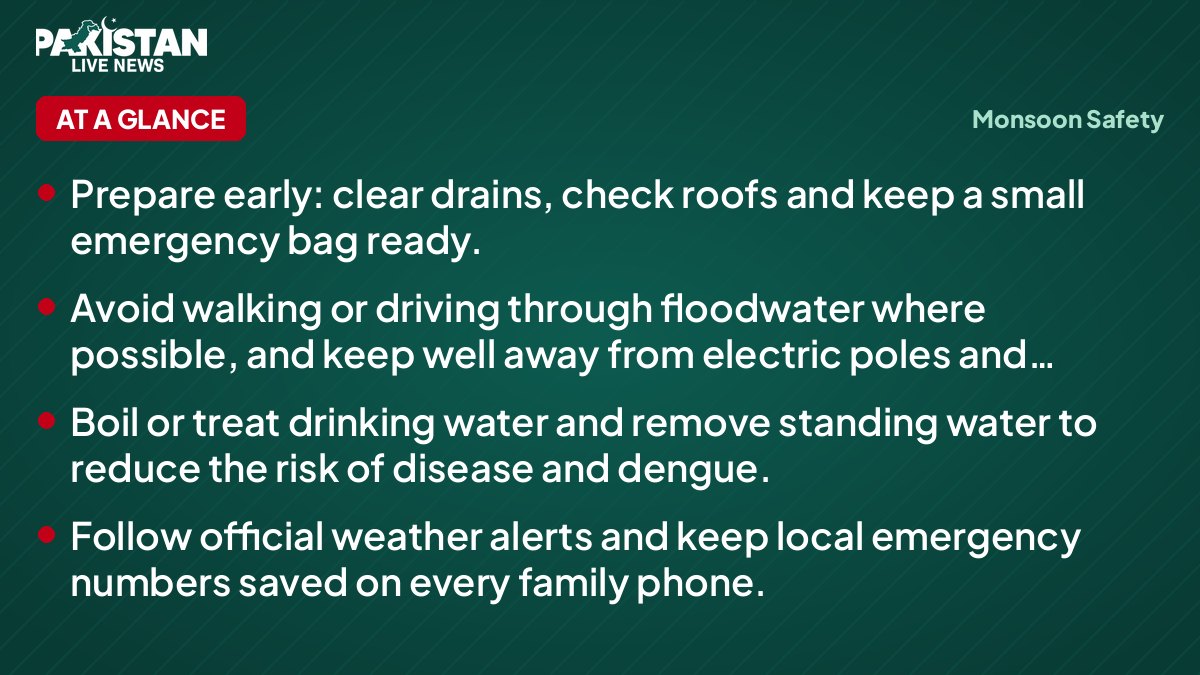
- Prepare early: clear drains, check roofs and keep a small emergency bag ready.
- Avoid walking or driving through floodwater where possible, and keep well away from electric poles and wires.
- Boil or treat drinking water and remove standing water to reduce the risk of disease and dengue.
- Follow official weather alerts and keep local emergency numbers saved on every family phone.
Each year the monsoon brings welcome relief from the summer heat across Pakistan. It also brings waterlogged roads, power cuts, weakened buildings and a rise in illness. Good monsoon safety is mostly about small, sensible steps taken before the first heavy downpour, not heroic efforts in the middle of a storm.
In this article
This guide is a practical checklist for families living in towns and cities. It will not replace official warnings, but it should help you decide what to do at home, on the road and afterwards, when the water goes down.
| Area | What to do |
|---|---|
| Drains | Clear gutters and nearby drains early; report blockages to your local authority. |
| Home | Fix roof leaks and cracks; have unsafe buildings inspected. |
| Documents | Keep CNICs and key papers in a waterproof bag above floor level. |
| Roads | Avoid floodwater, underpasses and nullahs; slow down on wet roads. |
| Electricity | Stay away from poles and wires; never touch switches with wet hands. |
| Health | Use safe water, wash hands, remove standing water to limit dengue. |
| Planning | Save emergency numbers, pack a grab bag and check on neighbours. |
Why monsoon safety is different in cities
In open countryside, rain soaks into the soil or drains towards natural channels. In a city, much of the ground is covered by concrete and tarmac, so water runs off quickly and collects in low-lying streets, underpasses and neighbourhoods built close to drains and nullahs. If drains are choked with rubbish, even a short, intense burst of rain can leave roads under water.
Cities also pack many risks into a small space: dense electrical wiring, hoardings, older buildings, open manholes hidden under murky water and heavy traffic. Karachi, Lahore, Rawalpindi and Islamabad, among others, have all seen how quickly streets can flood after intense rain.
Your best sources of information are the Pakistan Meteorological Department, the National Disaster Management Authority (NDMA) and your provincial or local disaster management authority. Check their latest advisories rather than relying on forwarded messages, which can be out of date or wrong.
Before the rains: prepare your home
Start with water, because that is where many problems begin. Clear rubbish from gutters, rooftop drains and the drain outside your gate. If the street drain is blocked, report it to your local municipal body and ask neighbours to do the same. A drain cleared early in the season is more useful than one cleared in the middle of a storm.
Next, look at the roof and walls. Repair cracks, seal leaks and make sure water on flat roofs has a clear way out. Be especially careful with old, damp or poorly maintained buildings. If you see widening cracks, bulging walls or a sagging roof, ask a qualified engineer or your local authority to inspect it. Do not wait for the rain to test it for you.
Finally, think about what you would lose if water entered the ground floor. Move important documents, such as CNICs, property papers, passports and school certificates, into a sealed waterproof bag or folder and keep them above floor level. Store electrical appliances, cartons and valuables off the floor where you can.
On the road and in floodwater
The simplest rule is the hardest to follow when you are late for work: do not walk or drive through floodwater if you can avoid it. Moving water is stronger than it looks, and even fairly shallow, fast-flowing water can knock an adult off their feet. Depth is easy to misjudge, and a road you know well may have a deep dip, an open manhole or a broken surface hidden below the surface.
Motorcyclists should be particularly careful. Wet roads, poor visibility and sudden pools make skidding more likely. Slow down, keep a good distance from the vehicle in front and avoid riding through standing water. If your engine stalls in water, do not keep trying to restart it, as this can cause serious damage. Move to higher ground if you safely can.
If you can postpone a journey during a heavy spell, do. Check the forecast, leave earlier or later, and tell someone your route. Avoid underpasses, low bridges and roads running beside nullahs or drainage channels when rain is heavy. Keep children away from flooded streets and drains, however tempting the puddles look.
Electricity, gas and buildings
Water and electricity are a dangerous mix. Stay well away from fallen wires, damaged poles and street boxes, and never touch a pole or metal fence that might be live. Report hazards to the electricity distribution company, and warn children and neighbours to keep clear. Do not try to move a wire yourself, or use a stick or any object to do so.
At home, avoid touching switches, plugs or appliances with wet hands or while standing in water. If water is entering the house, switch off the mains supply from the main board only if you can reach it safely and dry. If you cannot, leave it and call a qualified electrician or the utility. Have wiring checked before the season starts, because loose connections and old cables are more likely to fail in damp conditions.
Use generators and heaters outdoors or in well-ventilated spaces, never in a closed room, because carbon monoxide is odourless and deadly. If you smell gas, do not light matches or switch anything on. Open windows, leave the area and contact the gas company.
Health after the rain
Once the rain stops, a second set of risks appears. Standing water becomes a breeding ground for mosquitoes, including the type that spreads dengue. Empty buckets, tyres, flower pots, coolers and any container that collects water, and cover water tanks properly. Use repellent and long sleeves in the evenings, and see a doctor promptly if you develop a high fever, severe body aches or a headache.
Floodwater and contaminated supplies can spread stomach infections such as diarrhoea, typhoid and cholera. Drink only boiled, filtered or properly treated water when the supply may be contaminated, wash hands with soap before eating and after using the toilet, and keep food covered. Avoid street food that has been exposed to splashes or flies during wet weather.
Wash any cuts or scrapes you get in dirty water thoroughly and keep them clean. Wear closed shoes when walking through wet areas, and give children and older family members extra attention, as they can become dehydrated more quickly. If someone is very unwell, do not delay seeking medical help.
Build a simple family emergency plan
A plan does not need to be complicated. Agree on where the family will meet if you are separated, and make sure everyone knows which higher floor or safe nearby location to move to if water rises. Save key numbers on every phone and write them on paper in case batteries die. These should include Rescue 1122 and the Edhi helpline where they operate in your city, your local authority and a relative outside the area. Check the latest official helpline numbers for your city.
Pack a small emergency bag: a torch, spare batteries, a power bank, a basic first-aid kit, any regular medicines, drinking water, dry snacks, a waterproof cover for documents and some cash in small notes. Check it at the start of the season, not when the lights go out.
Look out for others too. Elderly neighbours, people living alone and families with young children or disabilities may need help. A quick knock on the door or a phone call can make a real difference. If evacuation is advised by officials, follow it early rather than waiting for water to reach your door.
Questions and answers
When is the monsoon season in Pakistan?
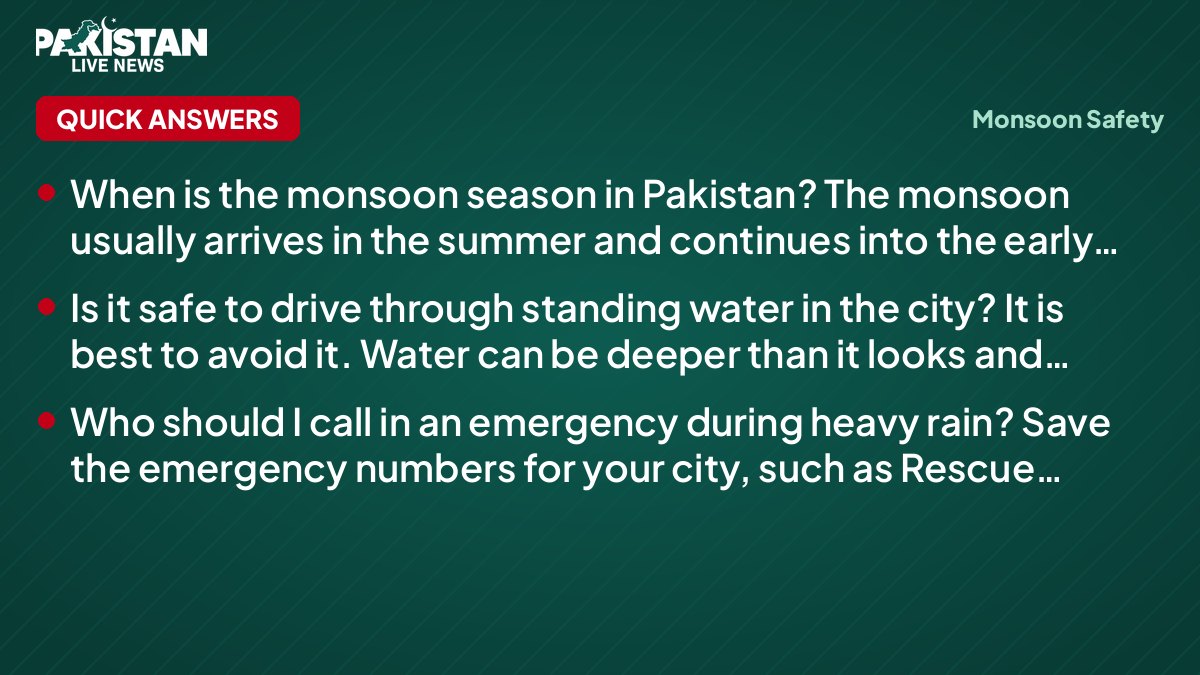
The monsoon usually arrives in the summer and continues into the early autumn, but timing and intensity vary from year to year and by region. Follow the Pakistan Meteorological Department and your provincial disaster management authority for the latest outlook.
Is it safe to drive through standing water in the city?
It is best to avoid it. Water can be deeper than it looks and may hide open manholes or damaged roads. Fast-moving water can also push vehicles off course. Wait, take another route or postpone the trip if you can.
Who should I call in an emergency during heavy rain?
Save the emergency numbers for your city, such as Rescue 1122 and the Edhi helpline where available, along with your local authority and electricity company. Numbers and services can differ by area, so check the latest official details.