
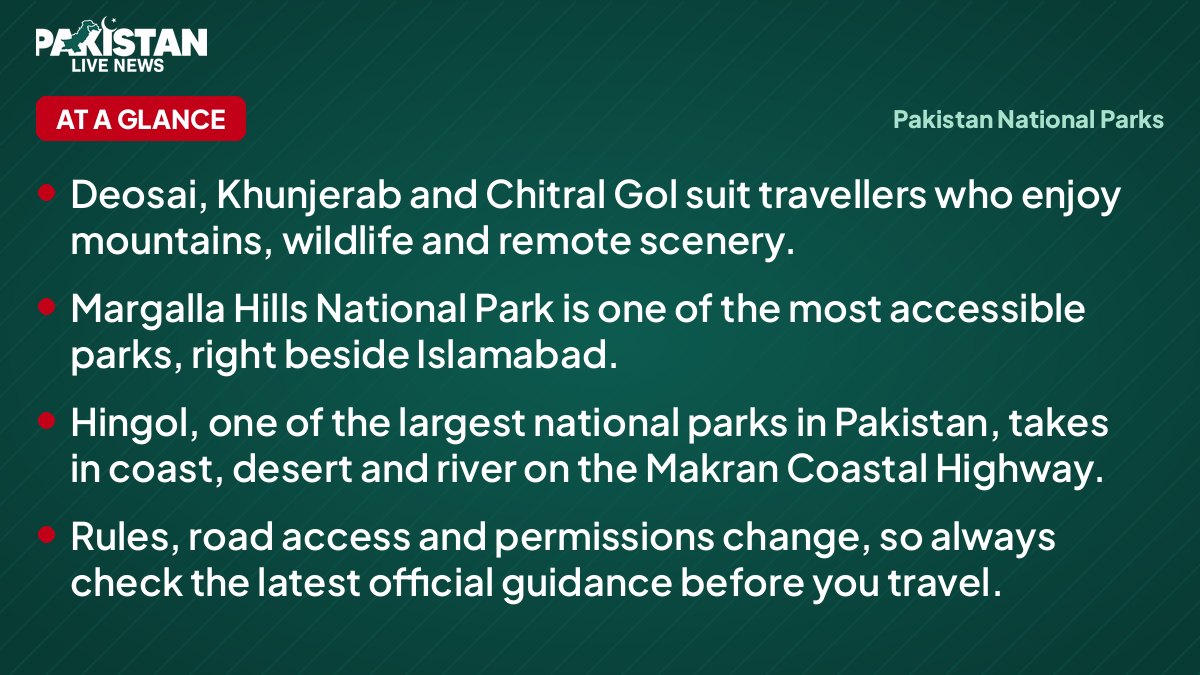
- Deosai, Khunjerab and Chitral Gol suit travellers who enjoy mountains, wildlife and remote scenery.
- Margalla Hills National Park is one of the most accessible parks, right beside Islamabad.
- Hingol, one of the largest national parks in Pakistan, takes in coast, desert and river on the Makran Coastal Highway.
- Rules, road access and permissions change, so always check the latest official guidance before you travel.
Pakistan national parks protect a wide range of landscapes in South Asia, from the windswept high plateau of Deosai to the forested ridges above Islamabad and the rugged coastline of Balochistan. For visitors they offer big skies, fresh air and the chance to see wildlife. For the country they help safeguard species such as the Himalayan brown bear, the markhor and the snow leopard.
In this article
This guide looks at six well-known parks: Deosai, Khunjerab, Margalla Hills, Hingol, Lal Suhanra and Chitral Gol. It focuses on what makes each one special and how to plan a visit sensibly, without relying on details that change from year to year.
A quick note before you pack. Entry rules, permits, road conditions and weather vary by season and can change at short notice. Check the latest official guidance from local authorities and wildlife departments before you set out.
Deosai National Park: the roof of Gilgit-Baltistan
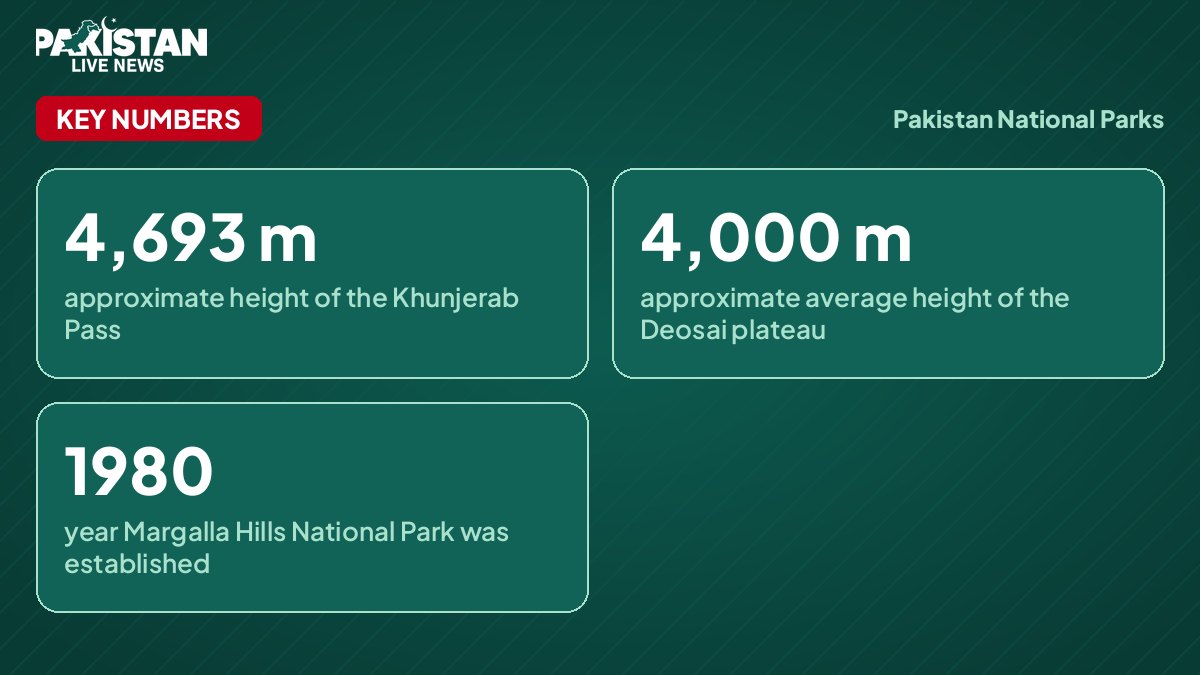
Deosai sits in Gilgit-Baltistan between the Skardu and Astore areas. It is a vast, treeless plateau with an average height of around 4,000 metres, which makes it one of the highest plateaus in the world. It is often called the "Land of Giants", a name that suits its wide horizons.
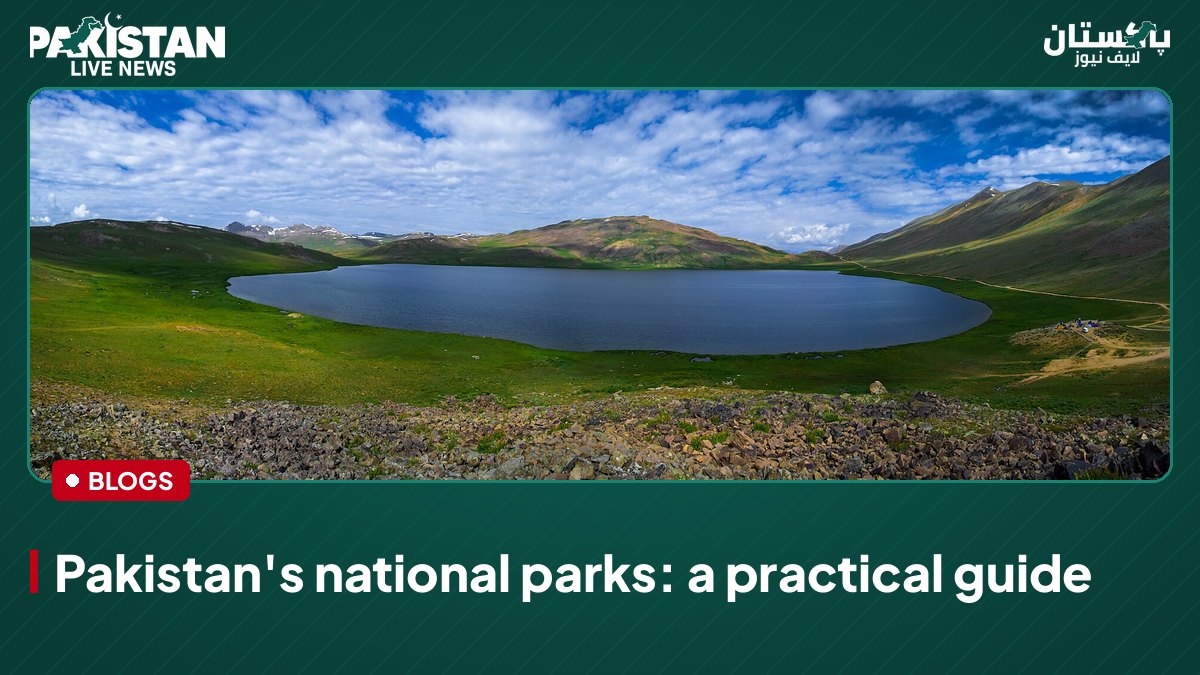
In the short summer, the plateau turns green and is dotted with wildflowers. Sheosar Lake is a well-known stop, with its deep blue water and a backdrop of open grassland. The park is home to the Himalayan brown bear, and you may spot marmots whistling near their burrows.
For much of the year Deosai is under snow and access is limited, so the visiting window is short. Even in summer the nights are cold and the weather can turn quickly. Bring warm layers, rain protection and enough food and water. Give wildlife plenty of space, and never feed or approach bears.
| Park | Province or region | Known for |
|---|---|---|
| Deosai | Gilgit-Baltistan | High plateau, summer wildflowers, Himalayan brown bear |
| Khunjerab | Gilgit-Baltistan | Khunjerab Pass, Marco Polo sheep, ibex, snow leopard |
| Margalla Hills | Islamabad | Hiking trails, viewpoints, birds and leopards |
| Hingol | Balochistan | One of the largest national parks, coast, rock formations, mud volcanoes |
| Lal Suhanra | Punjab | Desert and wetland landscape, blackbuck, birdlife |
| Chitral Gol | Khyber Pakhtunkhwa | Markhor conservation, mountain scenery |
Khunjerab National Park: wildlife along the Karakoram Highway
Khunjerab National Park lies in the Hunza region of Gilgit-Baltistan, along the border with China. It was established in 1975 and is best known for the Khunjerab Pass, which rises to about 4,693 metres on the Karakoram Highway. It is often described as among the highest paved border crossings in the world.
The park is home to Himalayan ibex, the Marco Polo sheep and, more rarely, the snow leopard. Most visitors see the landscape rather than the animals, and that is fine. The drive up through Hunza, with its glaciers, river gorges and snow peaks, is a highlight in itself.
Access to the pass is seasonal and depends on weather and border arrangements, so confirm the current position before travelling. At this altitude the air is thin. Go up gradually, drink plenty of water and be ready to turn back if you feel unwell. Many travellers base themselves in the Hunza valley for a few nights to acclimatise.
Margalla Hills National Park: nature at Islamabad's doorstep
Margalla Hills National Park was established in 1980 and covers the green ridges north of Islamabad, including the area around Rawal Lake. It is one of the most accessible of the Pakistan national parks, which is why it is popular with walkers, families and bird-watchers.
Well-known trails lead to viewpoints such as Daman-e-Koh and Pir Sohawa, where you can look back over the planned layout of the capital. The hills are home to birds and monkeys and, although leopards are rarely seen, they are reported to live there. Early mornings are often the best time for a quieter walk and cooler air.
Because the park sits so close to the city, it is under real pressure from litter and fire. Carry your rubbish out, never light fires and do not feed the monkeys, as it makes them bold and can lead to conflict. Trails can be slippery in the monsoon, so wear proper shoes and carry water.
More Pakistan national parks worth knowing
Beyond the famous northern names, several other parks reward the curious traveller.
Hingol National Park in Balochistan is one of the largest national parks in the country. It stretches along the Makran Coastal Highway, where the Hingol River meets the Arabian Sea. The area is known for dramatic rock formations, including those nicknamed the "Princess of Hope" and the "Sphinx of Balochistan", and for mud volcanoes nearby. Wildlife includes ibex and urial. Distances are long and the heat is intense, so check local travel advice, carry extra water and fuel, and travel with an experienced driver.
Lal Suhanra National Park, near Bahawalpur in Punjab, offers something very different: a mix of desert, forest and wetland on the edge of Cholistan. It is known for its blackbuck and for birdlife, and it makes an easy add-on to a visit to Bahawalpur's historic sights.
Chitral Gol National Park, near Chitral town in Khyber Pakhtunkhwa, is closely associated with the markhor, Pakistan's national animal. It is a good choice if you are already exploring the Chitral valley and want to learn about conservation in mountain communities.
Planning your visit responsibly
Timing matters most. High-altitude parks like Deosai and Khunjerab are best visited in the warmer months, while the plains and coastal parks are more comfortable in the cooler season. Always check road and weather conditions shortly before you go.
Permits and entry requirements differ by park and can differ for Pakistani and foreign visitors. Ask the relevant wildlife department or a reputable local tour operator for the latest official fees and rules, rather than relying on old information.
Hiring a local guide or driver is a good idea in remote areas. It supports local livelihoods, improves safety and can lead to better wildlife sightings. Tell someone your route, carry a power bank and a basic first-aid kit, and do not rely on mobile signal.
Finally, follow the simple rule of leaving nothing behind. Keep to marked tracks, take your rubbish home, keep your distance from animals and respect the villages that live alongside these protected areas. That is how these places stay special for the next traveller.
Questions and answers
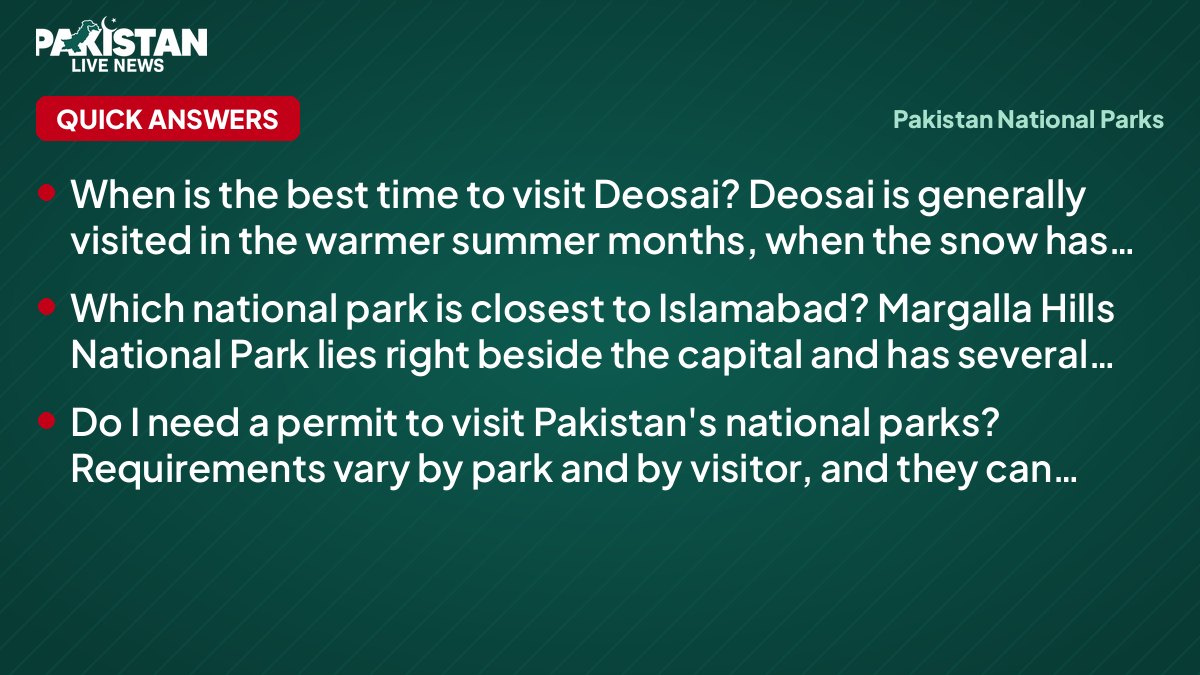
When is the best time to visit Deosai?
Deosai is generally visited in the warmer summer months, when the snow has melted and the wildflowers bloom. Access is limited for much of the year, so check current road and weather conditions before you travel.
Which national park is closest to Islamabad?
Margalla Hills National Park lies right beside the capital and has several walking trails and viewpoints. It is one of the easiest Pakistan national parks to visit for a day trip.
Do I need a permit to visit Pakistan's national parks?
Requirements vary by park and by visitor, and they can change. Check the latest official rules and fees with the relevant wildlife department or a trusted local tour operator before you go.
Image: Ishtiaq93 / Wikimedia Commons, CC BY-SA 4.0