
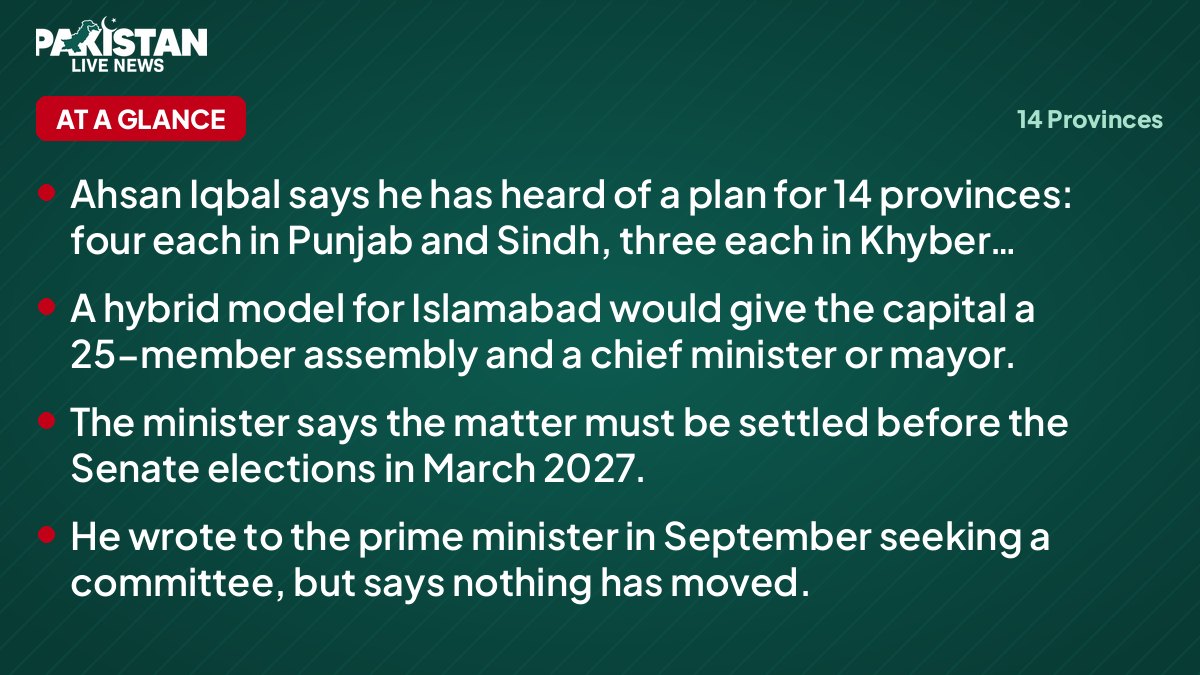
- Ahsan Iqbal says he has heard of a plan for 14 provinces: four each in Punjab and Sindh, three each in Khyber Pakhtunkhwa and Balochistan.
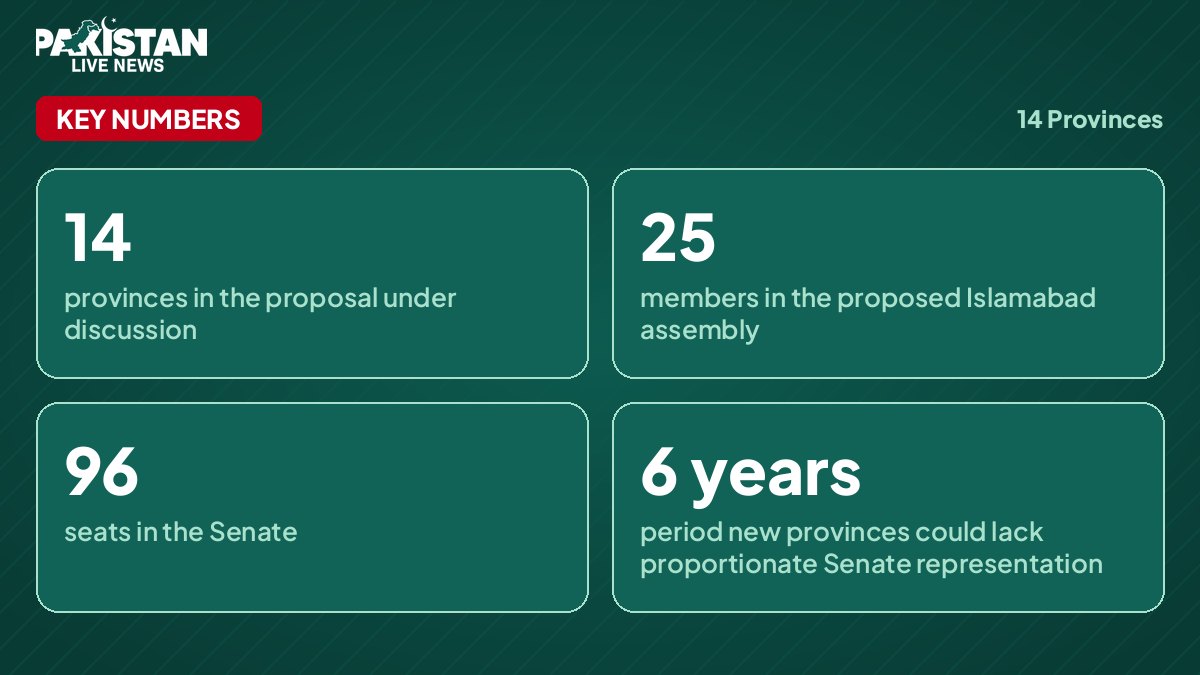
- A hybrid model for Islamabad would give the capital a 25-member assembly and a chief minister or mayor.
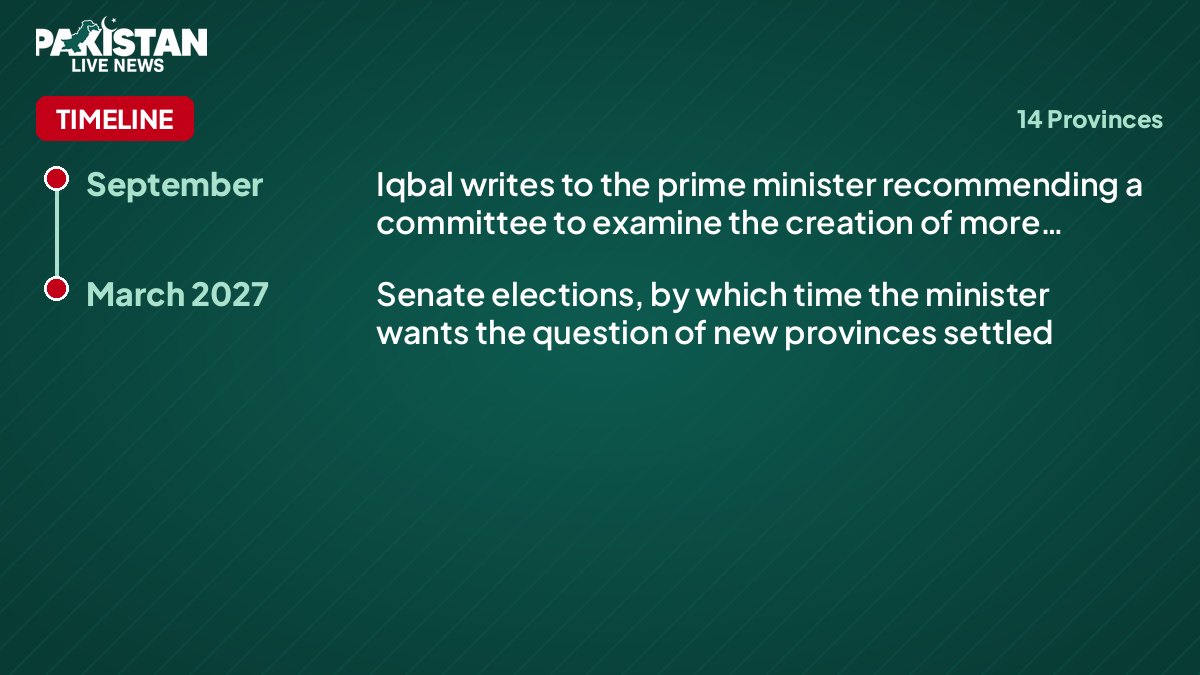
- The minister says the matter must be settled before the Senate elections in March 2027.
- He wrote to the prime minister in September seeking a committee, but says nothing has moved.
Planning Minister Ahsan Iqbal has said that a proposal to create 14 provinces is being discussed, with each of the four existing provinces split into smaller units. He also spoke of a plan to give Islamabad its own legislative forum and self-governance scheme.
In this article
Iqbal said he had heard of the breakdown. He said he wrote to Prime Minister Shehbaz Sharif in September recommending a committee to examine the debate on additional provinces, but that no progress has been made so far.
What the 14 provinces proposal involves
Under the arrangement Iqbal described, Punjab and Sindh would each be divided into four provinces. Khyber Pakhtunkhwa and Balochistan would each be divided into three.
Separately, he said there has been discussion about giving Islamabad the status of an independent province. That would involve widening the capital's boundaries to take in adjoining areas of the Rawalpindi division.
The minister argued that smaller administrative units could become a genuine source of national development and prosperity. According to reports, coalition partners such as the Pakistan Peoples Party have previously resisted the idea of dividing Sindh, even as public discussion of new provinces gathers pace.
Politicians should take the lead and move this debate forward, rather than have proposals emerge from here or there. Being evasive is not helping
Ahsan Iqbal, Federal Planning Minister
A legislature and self-governance for Islamabad
Iqbal said the prime minister had asked him to develop an alternative administrative model for the federal capital. After studying capital cities around the world, his team put forward a hybrid between a local government and a provincial assembly.
At present, any legislation concerning Islamabad must be taken up by parliament, meaning both the National Assembly and the Senate. The minister said this slows municipal administration, and that the capital needs a legislative forum of its own.
The proposed set-up would give the city a chief minister or a mayor, together with an assembly of about 25 members. Of these, 21 would be general seats, three reserved for women and one for minorities. Iqbal added that an elected third tier of government, in the form of union councils, could be introduced at a later stage.
Why the Senate elections set the deadline
Iqbal stressed that the question of new provinces must be resolved before the Senate elections scheduled for March 2027. The 96-member upper house currently gives equal representation to each of the four provinces.
If provinces were created only after those elections, he warned, the new units could argue that they lack proportionate Senate representation, and that this would last for six years. Settling the constitutional and electoral questions early, he suggested, would avoid such an imbalance.
The minister also dismissed speculation about a presidential system. He said he had not heard of any serious proposal to introduce one.
| Existing province | Proposed provinces |
|---|---|
| Punjab | 4 |
| Sindh | 4 |
| Khyber Pakhtunkhwa | 3 |
| Balochistan | 3 |
Call for political leadership on reform
Iqbal said Pakistan needs administrative reform because, in his view, provincial governments did not pass real functions down to local levels after the 18th Amendment. The result, he argued, has been top-heavy provincial structures that struggle to serve growing populations.
He said bringing decision-making closer to communities is essential for better governance, accountability and economic growth. He urged political leaders to own the debate rather than leave it to proposals surfacing from different quarters.
Timeline
- SeptemberIqbal writes to the prime minister recommending a committee to examine the creation of more provinces
- March 2027Senate elections, by which time the minister wants the question of new provinces settled
Iqbal says the matter must be resolved before the Senate elections in March 2027. His proposal for a committee to examine the creation of new provinces, sent to the prime minister in September, has not yet moved forward.
Questions and answers
How many provinces are being discussed?
Planning Minister Ahsan Iqbal says he has heard of a plan for 14 provinces: four in Punjab, four in Sindh, three in Khyber Pakhtunkhwa and three in Balochistan.
What governance model is proposed for Islamabad?
A hybrid of local government and a provincial assembly, with a chief minister or mayor and an assembly of about 25 members. It would have 21 general seats, three for women and one for minorities.
Why does the timing matter?
The Senate has 96 members and equal representation for the four provinces. Iqbal says provinces created after the March 2027 elections could lack proportionate representation for six years.
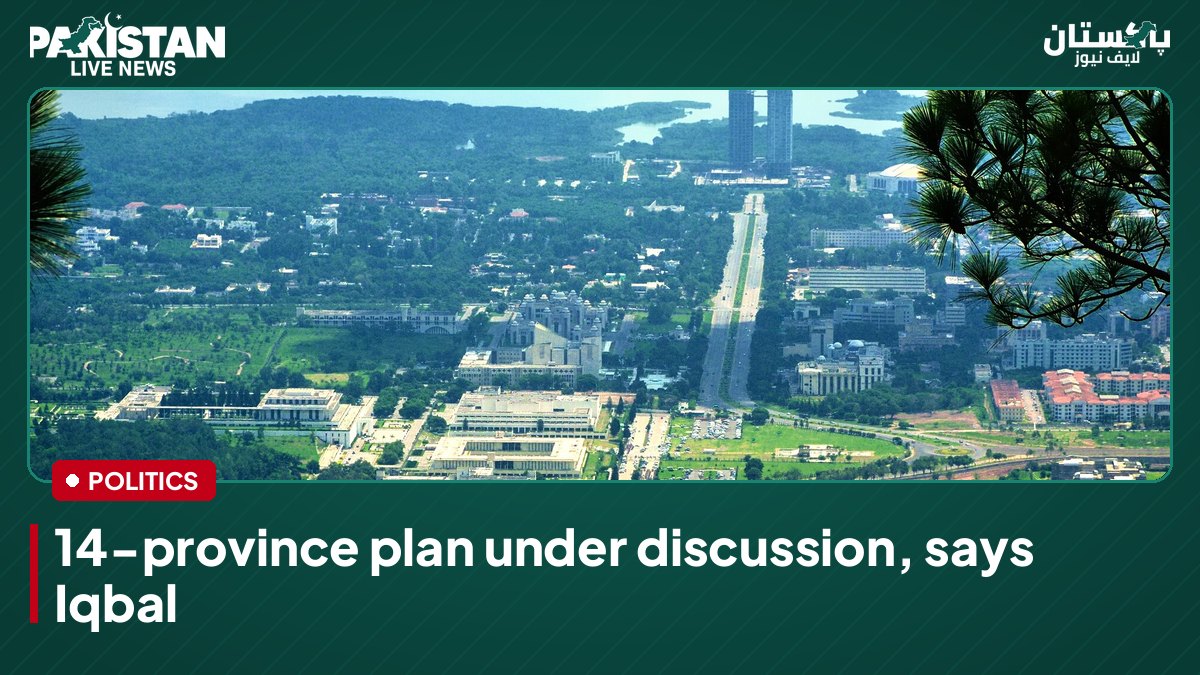
Image: Zacharie Grossen / Wikimedia Commons, CC BY-SA 4.0