

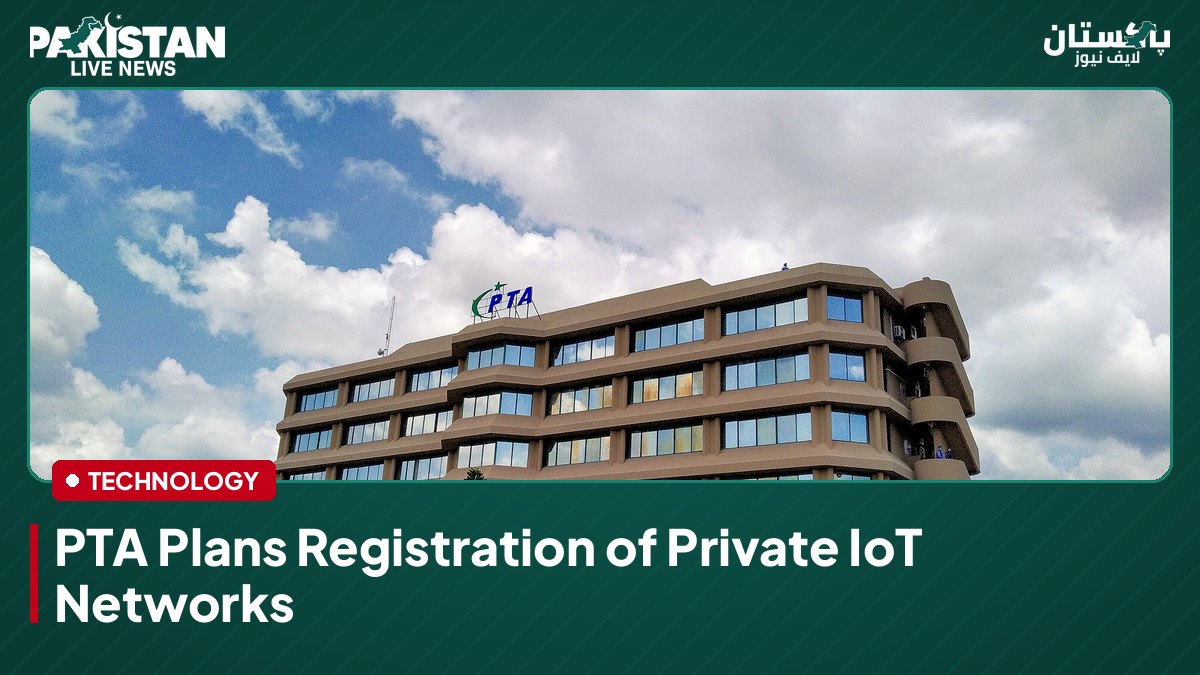
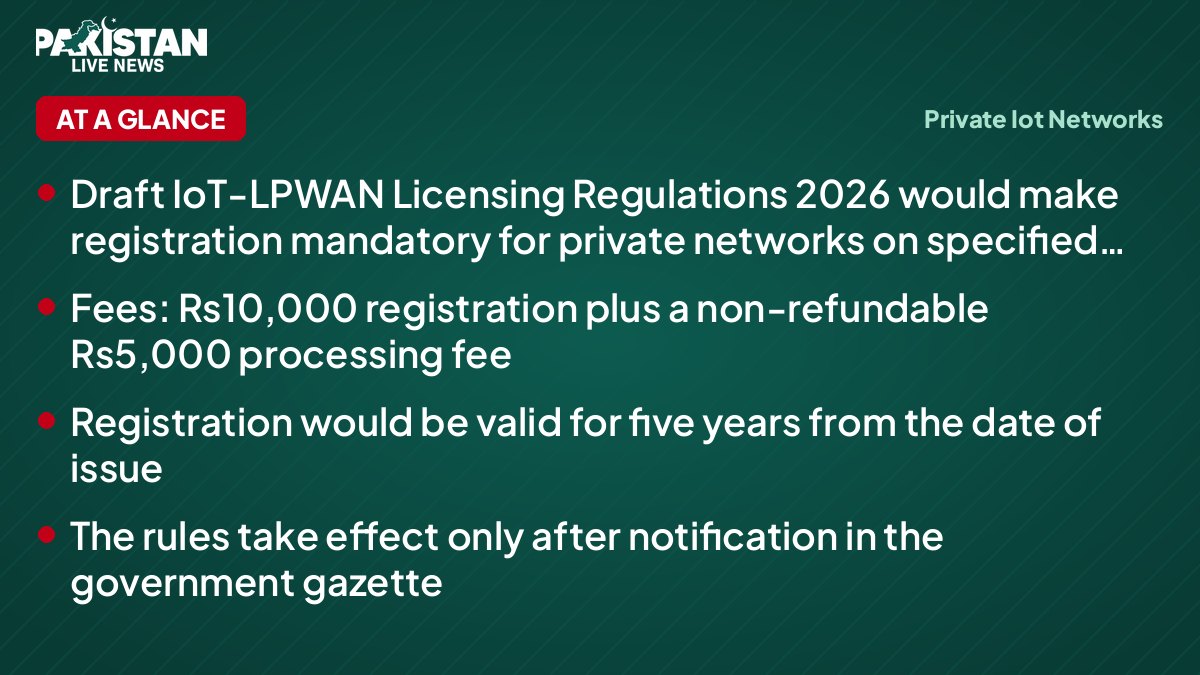
- Draft IoT-LPWAN Licensing Regulations 2026 would make registration mandatory for private networks on specified frequency bands
- Fees: Rs10,000 registration plus a non-refundable Rs5,000 processing fee
- Registration would be valid for five years from the date of issue
- The rules take effect only after notification in the government gazette
Organisations that run their own connected-device systems may soon need formal permission to do so. Under draft regulations from the Pakistan Telecommunication Authority (PTA), registering private IoT networks would become compulsory for businesses, farms, factories and other organisations in Pakistan.
In this article
The proposal is titled the Internet of Things and Low Power Wide Area Networks (IoT-LPWAN) Licensing Regulations 2026. It would apply to networks that operate on specified wireless frequency bands.
Internet of Things (IoT) networks allow connected devices, such as sensors and monitoring equipment, to exchange information wirelessly. The draft would bring such systems under the PTA's registration framework when they are privately operated.
Who would need to register
The draft rules are aimed at private IoT networks that operate within a single location. The examples listed include farms, factories, industrial plants, campuses and project sites.
Such networks would be allowed to serve only the organisation that operates them. A registered operator would not be permitted to provide IoT services to other businesses or customers.
In other words, this category is meant for in-house use at one site, not for offering connectivity to outside parties.
| Item | Detail |
|---|---|
| Registration fee | Rs10,000 |
| Application processing fee | Rs5,000 (non-refundable) |
| Validity | Five years from date of issue |
| Application method | PTA online application system |
Registration fee and validity
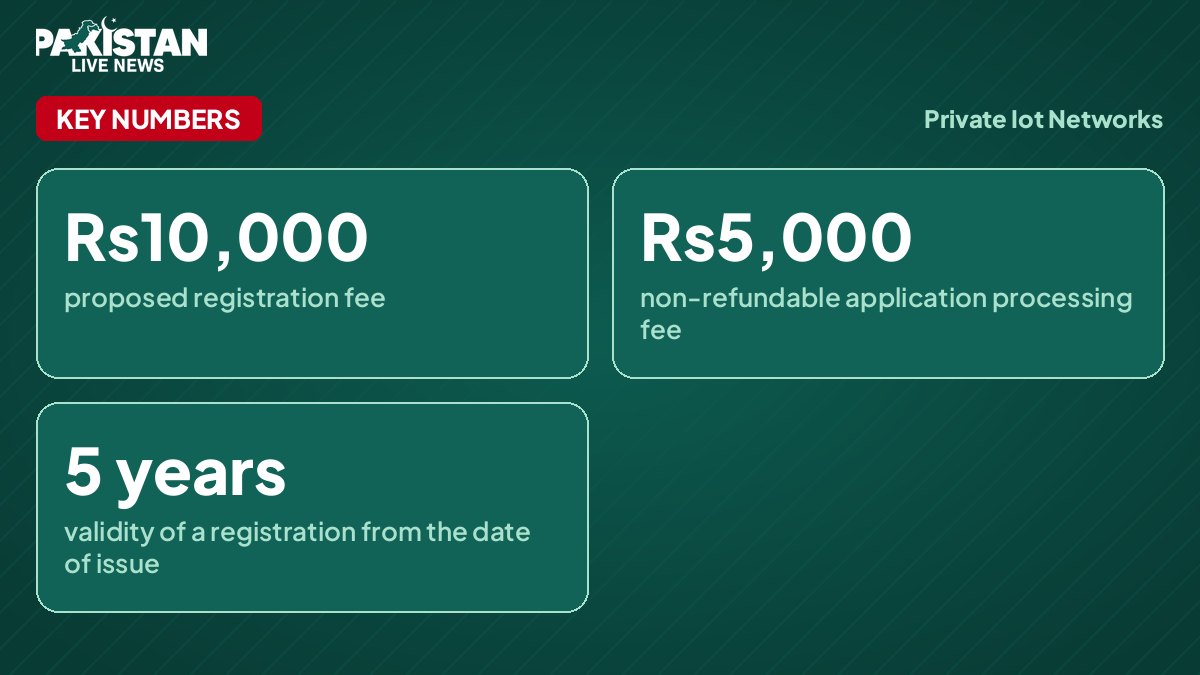
Organisations would have to pay two charges under the proposed regulations. The registration fee is Rs10,000, and the application processing fee is Rs5,000. The processing fee is non-refundable.
Once issued, a registration would remain valid for five years from the date of issue. The two charges together come to Rs15,000.
Applying to register private IoT networks
Applications would have to be submitted through the PTA's online application system. Applicants must supply the required documents, including details of how the network will be used and its technical plan.
They must also provide the geographical location of the network and information about the gateways they expect to install.
Applicants would also have to agree to comply with several things: the Pakistan Telecommunication (Re-organization) Act, 1996, the proposed regulations, other applicable regulatory requirements, and the PTA's directions.
Duties after registration
Registration of the network itself would not be the end of the process. Operators of registered private IoT networks would also have to register each network gateway, either through the PTA's online portal or by another method the authority specifies.
Operators would be required to follow the applicable conditions for using wireless frequencies, along with other regulatory requirements.
Still a draft
The regulations remain in draft form. They will take effect only after they are officially notified in the government gazette.
Until then, the fees, documents and conditions described above remain proposals.
The draft regulations will take effect only once they are officially notified in the government gazette.
Questions and answers
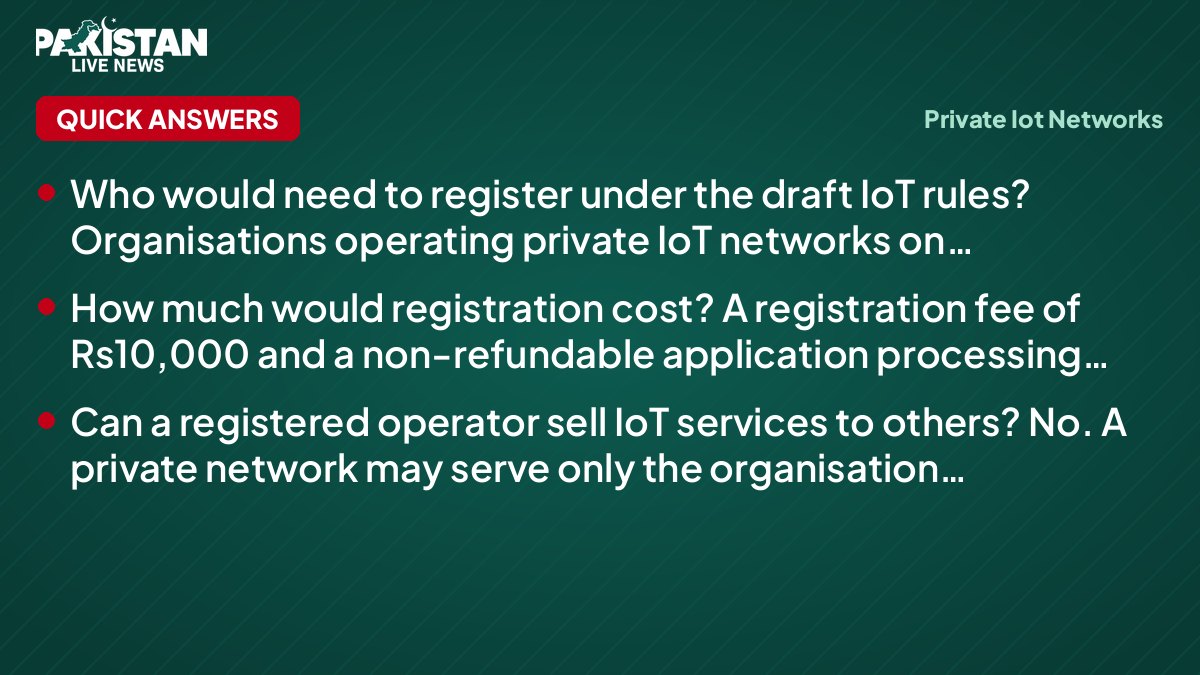
Who would need to register under the draft IoT rules?
Organisations operating private IoT networks on specified wireless frequency bands within a single location, such as farms, factories, industrial plants, campuses and project sites.
How much would registration cost?
A registration fee of Rs10,000 and a non-refundable application processing fee of Rs5,000. A registration would be valid for five years.
Can a registered operator sell IoT services to others?
No. A private network may serve only the organisation operating it, and operators would not be allowed to provide IoT services to other businesses or customers.
Image: PTA PR / Wikimedia Commons, CC BY-SA 4.0