
- PTA has finalised its licensing framework for satellite-based in-flight telecom services (ITS).
- Providers must register with the Pakistan Space Activities Regulatory Board (PSARB) and meet PTA licensing requirements.
- Transit aircraft crossing Pakistani airspace will need a No Objection Certificate from PTA.
- The services are expected to cover communication, entertainment, digital services and work on board.
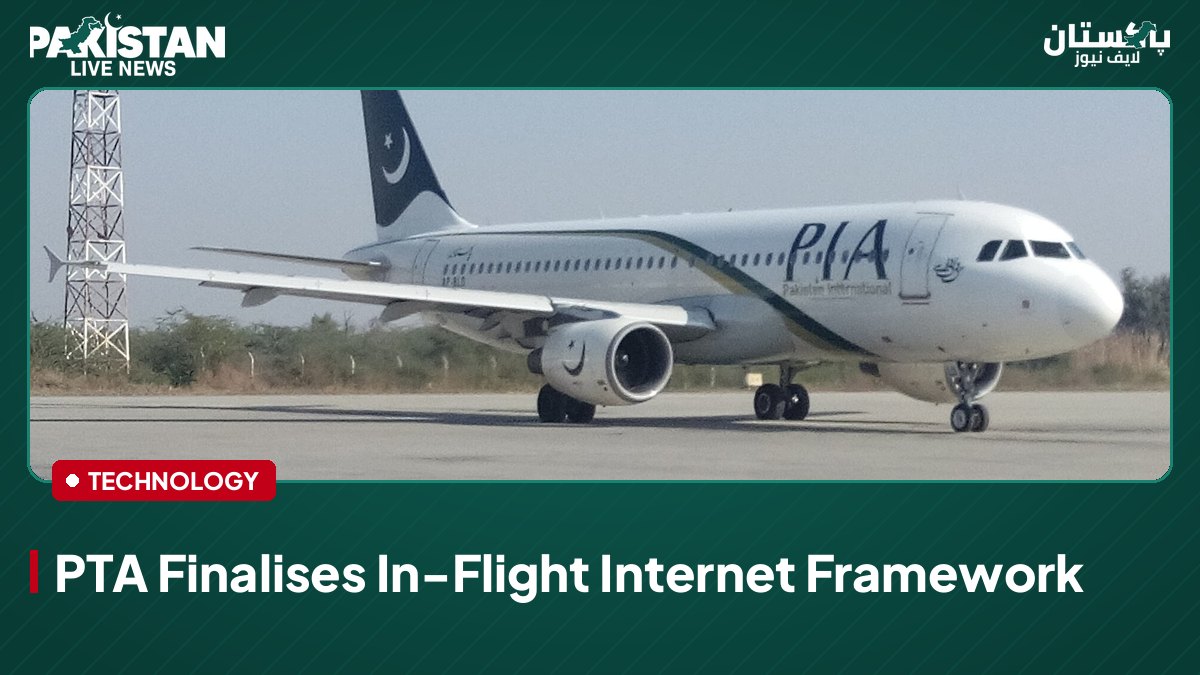
The Pakistan Telecommunication Authority (PTA) has finalised a licensing framework for satellite-based in-flight telecommunication services, clearing the way for in-flight internet on aircraft. The authority announced the step on Tuesday, 17 November.
In this article
The framework is meant to bring digital connectivity to passengers while they travel. It also sets out who may provide the service and what approvals are required.
Transit aircraft crossing Pakistani airspace will require a No Objection Certificate (NOC) from PTA, subject to applicable compliance requirements.
Pakistan Telecommunication Authority (PTA), official statement
What the in-flight internet framework covers
The framework applies to satellite-based in-flight telecommunication services, known as ITS. Under it, licensed ITS providers may use satellites to deliver connectivity to aircraft.
The PTA has described the move as a way to enhance connectivity aboard aircraft. The announcement did not specify when passengers can expect the services to begin.
| Aircraft type | Requirement |
|---|---|
| Pakistani-registered aircraft | ITS provider must register with PSARB and comply with PTA licensing requirements |
| Transit aircraft crossing Pakistani airspace | No Objection Certificate (NOC) from PTA, subject to applicable compliance requirements |
Rules for Pakistani-registered aircraft
Licensed providers may offer services to Pakistani-registered aircraft, but only if they first register with the Pakistan Space Activities Regulatory Board (PSARB). This adds a space-sector registration step to the telecom licensing process.
Providers must also comply with the PTA's own licensing requirements. In practice, a company wanting to offer in-flight internet on Pakistani aircraft will have to satisfy both regulators.
Transit flights need a PTA No Objection Certificate
The framework also covers foreign aircraft that fly through Pakistani airspace. These transit aircraft will need a No Objection Certificate (NOC) from the PTA.
The authority said this is subject to applicable compliance requirements. Operators must therefore meet the relevant conditions before offering connectivity to passengers while crossing Pakistan.
What passengers can expect
The introduction of these services is expected to improve the passenger experience. Travellers should be able to use in-flight internet for digital services, entertainment and personal communication during a journey.
Passengers will also be able to carry out work-related tasks while in the air.
The PTA says the initiative supports its continuing efforts to expand digital connectivity across Pakistan. By licensing satellite-based services, it extends telecommunication coverage beyond traditional terrestrial networks.
Questions and answers
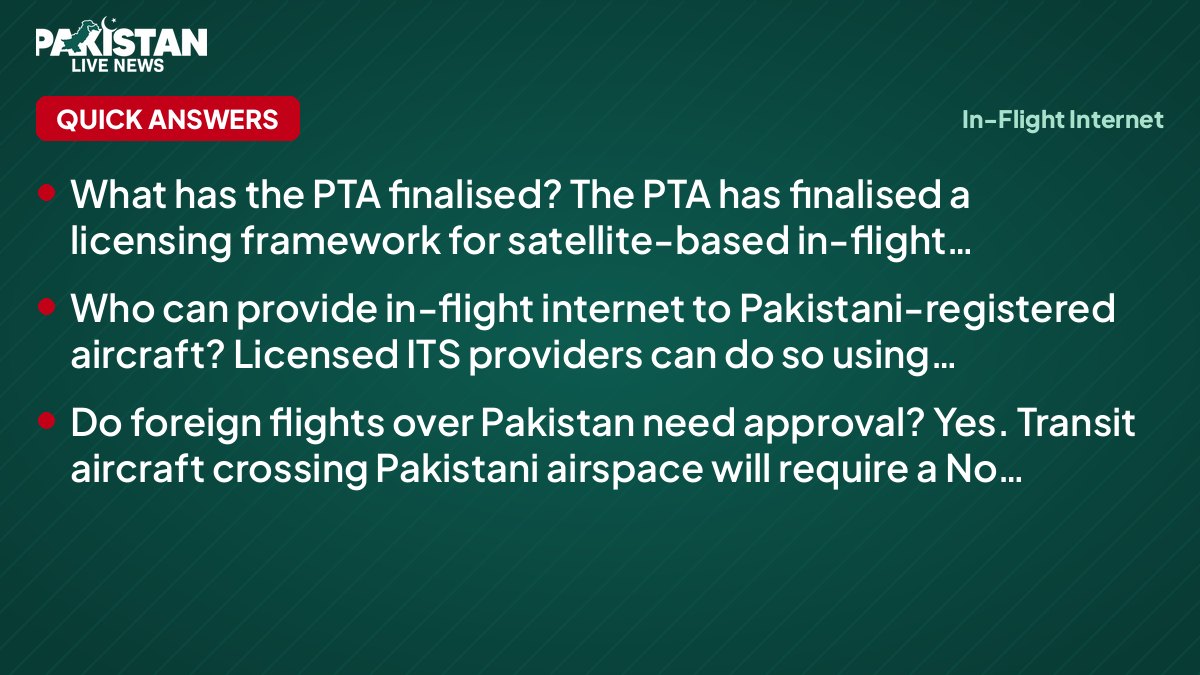
What has the PTA finalised?
The PTA has finalised a licensing framework for satellite-based in-flight telecommunication services (ITS), which allows licensed providers to offer connectivity on aircraft.
Who can provide in-flight internet to Pakistani-registered aircraft?
Licensed ITS providers can do so using satellites, provided they are registered with the Pakistan Space Activities Regulatory Board (PSARB) and comply with the PTA's licensing requirements.
Do foreign flights over Pakistan need approval?
Yes. Transit aircraft crossing Pakistani airspace will require a No Objection Certificate (NOC) from the PTA, subject to applicable compliance requirements.
Image: Aasif Azaan / Wikimedia Commons, CC BY-SA 4.0