
Getting a Discovery or New Frontiers mission from announcement to second-step selection currently takes NASA about 35 months. Under a new plan, called Competition Model 2.0, the agency wants it done in about 19.5.
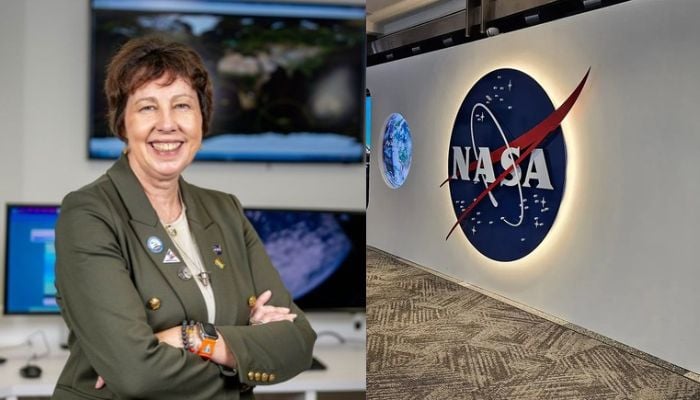
NASA’s science chief, Nicola Fox, says the new model competes on science first. Step 1 for Astro-Probes, New Frontiers and Discovery would ask for only three things: a science case, a science implementation plan and a proof-of-concept mission design.
This, according to NASA, filters out about half of the contents of responses for the current Announcement of Opportunity. NASA also claims that principal investigators not supported by any major university or commercial entity will be considered fairly.
Step 2 is the mission implementation study that will be carried out by either of NASA’s two centres of excellence: Goddard or JPL. For some missions, NASA may give the study to Johns Hopkins APL, managed by Goddard.
NASA will select one mission proposal at the midway Phase A stage. The ones not selected will not be required to pursue their mission concepts through the remainder of Phase A independently. This is where, according to NASA, the timeline is reduced by up to 45%.
Mid-sized Explorer missions follow the same two-step path but are open to more implementers, including universities and industry. The same 45% cut applies.
The smallest missions, from SMEX to Earth Venture, Hosted Payloads and Ride Shares, move to a single-step competition. Selection time drops from about 32 months to about 19. Flagship missions stay as they are.
Fox says teams will be expected to use commercial buses and subsystems wherever it helps technically or on cost. NASA also warns that breaching cost or schedule thresholds could lead to mission termination.
Fox adds that directing work to Goddard and JPL will cut unnecessary competition between NASA centres.
NASA holds a virtual town hall on Monday, October 26. It says it will roll out changes in stages and refine them with community input.