

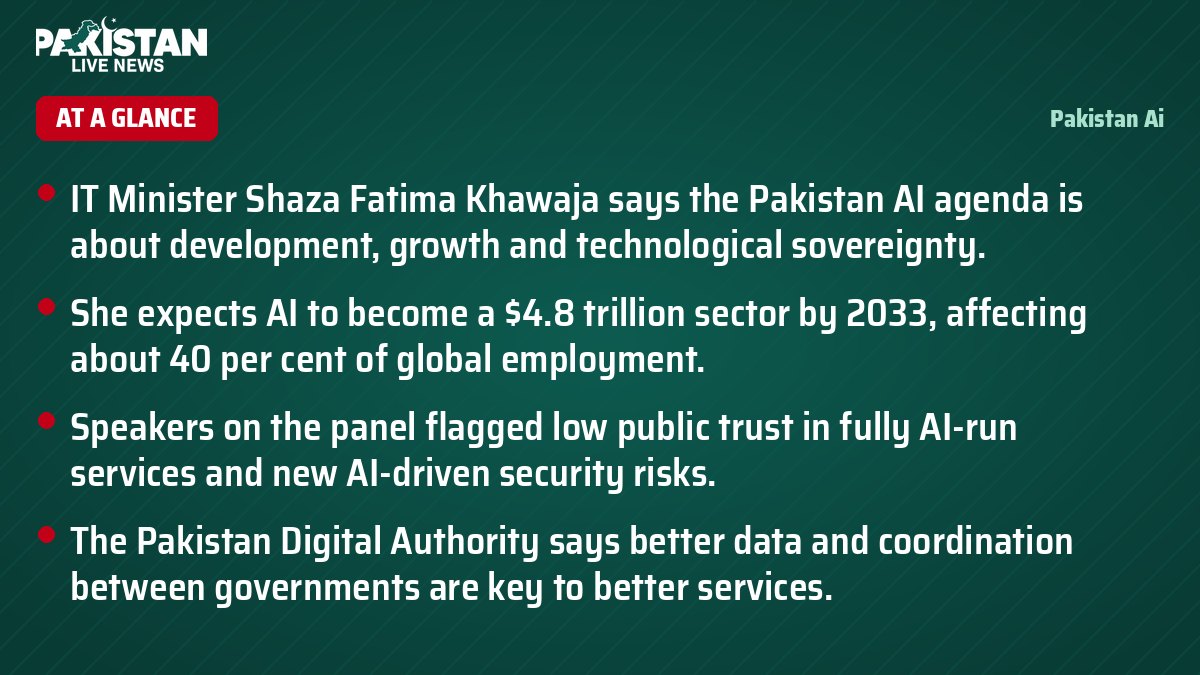
- IT Minister Shaza Fatima Khawaja says the Pakistan AI agenda is about development, growth and technological sovereignty.
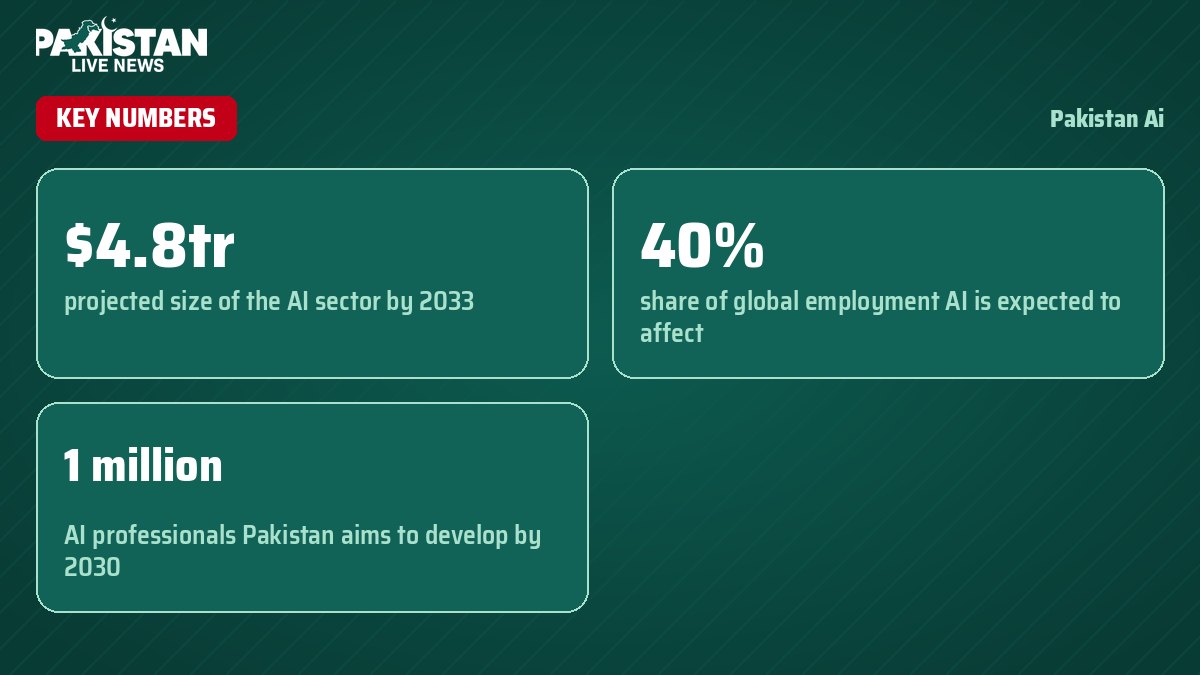
- She expects AI to become a $4.8 trillion sector by 2033, affecting about 40 per cent of global employment.
- Speakers on the panel flagged low public trust in fully AI-run services and new AI-driven security risks.
- The Pakistan Digital Authority says better data and coordination between governments are key to better services.
Pakistan AI ambitions were set out on Wednesday, 11 November, when IT Minister Shaza Fatima Khawaja said the country is determined to make the global shift in technology, and the rapid rise of artificial intelligence in particular, work for its own development. She was speaking at the Margalla Dialogue 2026 in Islamabad.
In this article
She spoke on the second day of the event, on a panel titled 'Technology and Transformation of State and Society'. The key question, she stressed, is who will steer this transformation and decide the values, identities and realities that shape future societies. On Pakistan AI policy, she said the aim is national development, economic growth and technological sovereignty.
Pakistan AI and a $4.8 trillion sector
Ms Khawaja said technology is reshaping almost every area of life, including education, healthcare, finance, social security and national security. AI, she added, is speeding up that change and altering how states, societies and economies operate.
She said AI is expected to grow into a $4.8 trillion economic sector by 2033 and to affect around 40 per cent of the global employment landscape. As the nature of work changes, future skills and the ability to use AI effectively will matter more and more.
Pakistan AI plans also include people. The country aims to develop 1 million AI professionals by 2030, a target that fits the minister's point that future skills will matter more and more.
Only when the quality data is available — the service quality can improve and processing an authentic data can result in realistic service delivery needs.
Dr Rehan Tahir, Executive Director, Pakistan Digital Authority
Pakistan AI, data and trust in digital governance
Pakistan Digital Authority Executive Director Dr Rehan Tahir said the authority's main role is to build links and coordination between the databases of the federal and provincial governments. He tied the quality of public services directly to the quality of the data behind them. In other words, he said service quality can improve only when quality data is available.
International speakers sounded a note of caution on AI-led governance. They said the public still has little trust in services run entirely by AI, and that failures have been seen in many countries. That caution sits alongside the minister's optimism about Pakistan AI growth.
Security risks in the age of AI
Akira Igata of the Economic Security Intelligence Lab at Tokyo University said criminals and lawbreakers are actively using advanced technologies, including AI. He suggested Japan could learn from Pakistan's experience in dealing with terrorists.
Retired Brig Dr Rashid Wali Janjua, who holds a PhD in peace and conflict studies, said new security threats would come from AI and the changing face of war. In his view, AI is making warfare more lethal, customised, precise and much faster. He also pointed to what he described as Pakistan's success against a much larger adversary during Operation Sindoor, through an 'internet-centric kill chain', while India relied on traditional air power.
Wider security and regional views
Former national security adviser, retired Lt Gen Nasser Janjua, told the dialogue that Pakistan sits in the eye of the storm because of global power politics. Facing non-traditional security threats, he argued, requires unconventional solutions. He described the presence of the Tehreek-i-Taliban Pakistan (TTP) in the Afghanistan-Pakistan border region as a serious threat to long-term trade links from Russia to Pakistan.
He called for engagement with Afghanistan and for talks with leaders of insurgent and separatist movements in Balochistan, saying: “Conventional way of dealing with insurgents has to change.”
Prof Cheng Xizhong of China's Charhar Institute criticised Indian policymakers as inflexible and said Delhi's actions risk pushing the region into a dangerous zone. He cited India's withdrawal from the Indus Waters Treaty and efforts to change Kashmir's demography as factors that could make future conflicts more dangerous. Asked whether China could stop water flowing into rivers that enter India, he said it could not, adding that water should be stored and conserved but never denied.
Explained: what the Pakistan AI debate is about
The panel looked at technology and the transformation of state and society. Three themes ran through the discussion: opportunity, trust and security. On opportunity, the minister pointed to a projected $4.8 trillion AI sector by 2033 and an effect on about 40 per cent of global employment.
On trust, international speakers said the public has little confidence in services run entirely by AI. On security, speakers said criminals are using advanced technologies including AI, and that AI is changing the face of war.
In short, the Pakistan AI conversation at the dialogue was not only about economic growth. It also covered who steers the technology, whose values it carries, and how governments handle data and security.

Key takeaways on Pakistan AI from the panel
First, Pakistan AI policy is framed around national development, economic growth and technological sovereignty, according to the IT minister. Second, the Pakistan Digital Authority says better data and closer coordination between federal and provincial governments are central to better services. Third, speakers urged caution, noting that failures of fully AI-run services have been seen in many countries.
Fourth, security was a recurring concern in the Pakistan AI debate. Speakers said criminals are using AI, that AI is making warfare more lethal, customised, precise and faster, and that Pakistan faces non-traditional threats that need unconventional solutions.
Pakistan AI questions and answers
What did the IT minister say about Pakistan AI at the Margalla Dialogue 2026?
Shaza Fatima Khawaja said Pakistan is determined to turn the global technological transformation, especially AI, into national development, economic growth and technological sovereignty. She forecast that AI would become a $4.8 trillion sector by 2033.
What is the Pakistan Digital Authority's role in better public services?
Executive Director Dr Rehan Tahir said the authority's key role is to link and coordinate the databases of federal and provincial governments. He said service quality can improve only when quality data is available.
Why did speakers urge caution on AI in government?
International speakers said public trust in services run completely by AI remains low, and that failures have been seen in many countries.
How big is the Pakistan AI opportunity, according to the minister?
Ms Khawaja said AI is expected to grow into a $4.8 trillion economic sector by 2033 and to affect around 40 per cent of the global employment landscape. She added that future skills and the ability to use AI effectively will matter more and more.
What is the Pakistan AI target for skilled professionals?
The country aims to develop 1 million AI professionals by 2030.
Where was the Pakistan AI panel held?
It was held at the Margalla Dialogue 2026 in Islamabad, on the second day of the event, on Wednesday, 11 November. The panel was titled 'Technology and Transformation of State and Society'.
Image: Zain.3nov / Wikimedia Commons, CC BY-SA 4.0