


- Malicious JavaScript was injected into 178 major websites through Optimizely's Experimentation platform.
- The code tried to swap crypto wallet addresses, capture card details, steal cookies and target iPhones.
- Optimizely says the flaw is fixed; Salesforce and Equifax have taken precautionary steps.
- The full scale of any losses has not yet been established.
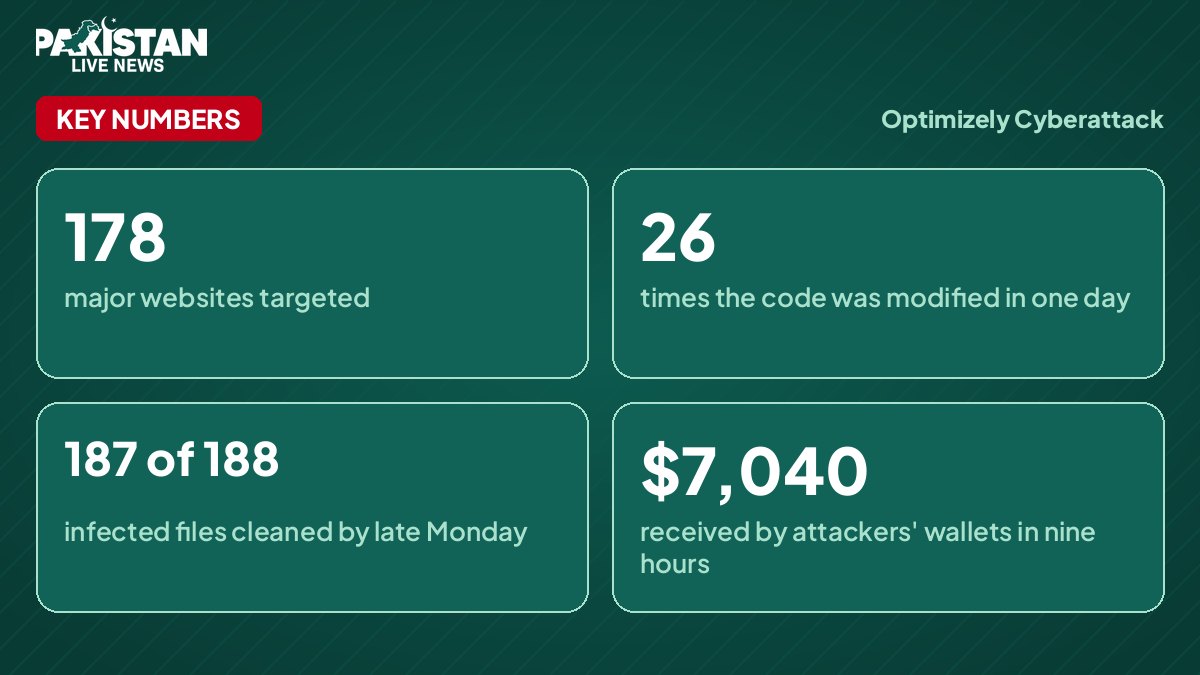
Hackers have slipped malicious code into 178 major websites, including Zoom, HSBC UAE and Ikea, in an Optimizely cyberattack designed to steal money and data. Security researcher Scott Helme, who discovered the incident, says the attackers also tried to compromise Apple devices.
In this article
Optimizely is a digital platform that large companies use to customise what visitors see on their websites. Sites linked to Salesforce, GitLab, Equifax, Air France-KLM, Ledger and Peacock were also affected.
How the Optimizely cyberattack worked
The attackers exploited a vulnerability in Optimizely's Experimentation platform and used it to insert harmful JavaScript into customer projects. Because the code arrived through a service the websites already trusted, visitors' browsers accepted it automatically.
That is what made the method so effective. The attackers did not need to break into each company's private network, since one weak point in a shared tool gave them a route onto many unrelated sites.
Researchers also found that the attackers modified the malicious code 26 times in a single day to add new features. Cybersecurity firm HudsonRock found evidence that compromised websites had delivered malicious scripts to visitors.
| Company | Response |
|---|---|
| Salesforce | Examining the issue; disabled Optimizely scripts as a precaution |
| Ikea | Confirmed it is examining the security issue |
| Equifax | Investigated immediately and stopped using the platform; found no evidence its own systems were compromised |
| HSBC | Said unauthorised scripts were not active on its websites |
| Zoom and Apple | Did not immediately respond to requests for comment |
What the malicious scripts tried to do
According to Helme, the scripts tried to replace legitimate cryptocurrency payment addresses with wallets controlled by the attackers. They also attempted to capture payment card details as users typed them, steal browser cookies and collect screenshots.
The code included exploit tools named Coruna and DarkSword, aimed at Apple iPhones and iPads. Apple has said it patched the targeted iOS vulnerabilities last year, which means users running updated software were protected from those attempts.
Helme said the attackers' cryptocurrency wallets received about $7,040 within nine hours on November 16. It could not be independently established whether the attacks succeeded in every case, or how far any resulting compromises extend.
Optimizely and affected companies respond
Optimizely confirmed that an unauthorised party had exploited the flaw to insert malicious JavaScript into customer projects. The company said it had fixed the vulnerability, removed the injected code and secured affected customer accounts. It has also added safeguards to stop unauthorised scripts reaching websites through its platform, and has contacted affected customers directly.
By late Monday, security teams had cleaned 187 of the 188 infected files. Helme said most of the malicious code had already been removed from affected websites.
Several of the named companies have begun their own checks, as the table below shows.
Why third-party software is a growing risk
The incident underlines the security risks of relying on third-party website tools. When a widely used service is breached, visitors to many unrelated sites can be exposed at once.
It also comes amid mounting concern over crypto theft. According to blockchain intelligence company Chainalysis, hacks have resulted in more than $22.3 billion in stolen funds since 2021.
A separate breach linked to North Korea reportedly saw $6.3 billion stolen from the Binance exchange last month.
Investigations into the Optimizely cyberattack are continuing. The full extent of financial losses and the number of affected users have yet to be established.

Questions and answers
What happened in the Optimizely cyberattack?
Attackers exploited a vulnerability in Optimizely's Experimentation platform to inject malicious JavaScript into customer projects, which then ran on 178 major websites.
Is the vulnerability still active?
Optimizely says it has fixed the flaw, removed the injected code and secured affected accounts. Security teams had cleaned 187 of 188 infected files by late Monday.
Are iPhone users at risk?
The scripts contained exploit code aimed at iPhones and iPads, but Apple has said it patched the targeted iOS vulnerabilities last year, so users with updated software remained protected.