
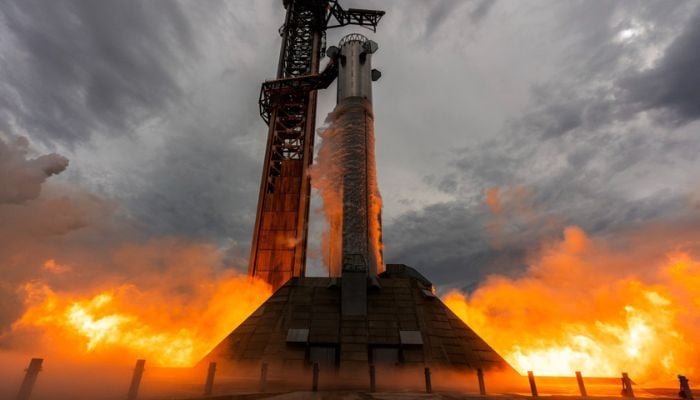
Two weeks after surviving its splashdown intact, SpaceX’s Flight 13 Starship may still end up lost at sea. Elon Musk said on Friday that recovering the 52-metre upper stage from the Indian Ocean “is not looking good right now”, despite the vehicle staying in one piece after toppling over on impact.
Flight 13 took off from the Starbase in South Texas on 24 July and has been called Starship’s best test flight till date. The upper section of Starship, Ship, launched 20 Starlink V3 satellites, which were the first of their kind, before conducting a gentle splashdown in the waters of Western Australia. This was the first time that the upper section of Starship had successfully landed in the ocean without being destroyed.
SpaceX mentioned that its recovery team had been struggling for days against “challenging conditions and increasingly rough seas”.
Musk’s update suggests that effort is now unlikely to succeed, though he noted engineers had already captured close-up photographs of critical sections of the heat shield and Raptor engines before conditions worsened.
Even a failed recovery hasn’t left SpaceX empty-handed. Speaking at the company’s first-ever quarterly earnings call on 4 August, Musk said he now considers the heat shield problem “solved”, a milestone he’s previously called one of the biggest hurdles to making Starship fully reusable. The imagery gathered from Flight 13’s hull is expected to feed directly into upgrades for future vehicles.
SpaceX is targeting late August for Flight 14, which Musk said will be the rocket’s first attempt at reaching operational orbit while carrying production Starlink satellites. The company has also said it plans to attempt catching both the booster and ship stages with the launch tower later this year.