
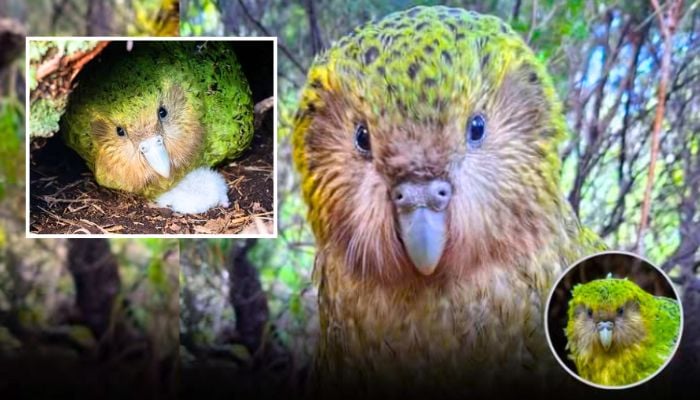
New Zealand’s Department of Conservation (DOC) and Ngāi Tahu officially added 90 fledged chicks from the 2026 breeding season to the tally, pushing the total population of the critically endangered kākāpō to 325 birds.
This marks the highest number of chicks ever produced in a single breeding season under the modern recovery programme—matching in one year what it took 16 years to achieve during the early stages of the project.
It also pushes the population past 300 for the first time in roughly 75 years.
Following a four-year hiatus, the boom was triggered by a massive “mast year” of abundant rimu fruit production across the species’ protected island sanctuaries (such as Whenua Hou/Codfish Island and Fiordland’s Anchor and Chalky islands).
When the Kākāpō Recovery Programme began in 1995, only 51 birds remained (31 males and 20 females).
While the jump to 325 is a monumental conservation victory, experts emphasize that the flightless, nocturnal parrots remain critically dependent on safe, predator-free habitats as conservationists begin experimenting with less intensive, more natural management strategies