
- Islamabad likely to hosts fresh US-Iran talks after Hajj: report.
- Trump warns Iran of attacks if negotiations fail completely.
- Saudi Arabia backs diplomacy, Pakistan’s mediation role.
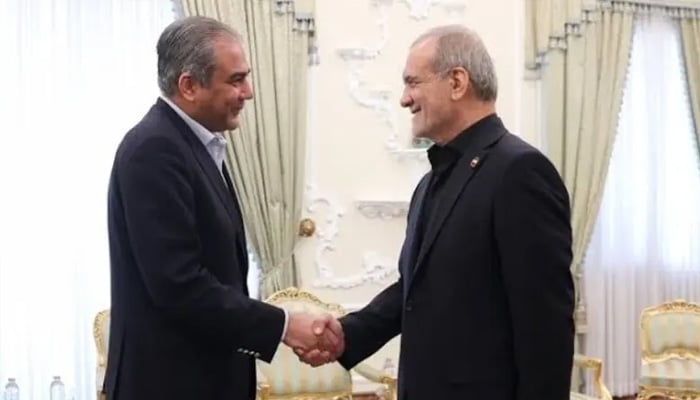
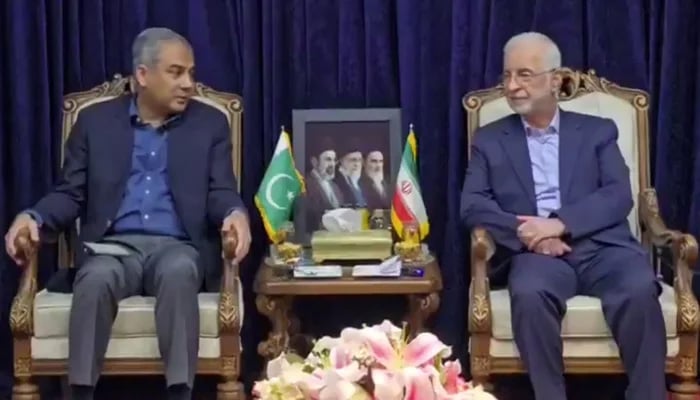
Interior Minister Mohsin Naqvi on Wednesday held separate meetings with Iran’s top civil and military leaders in Tehran amid an impasse between the Islamic republic and Washington over a proposal to end the war, Iranian state media reported.
During his second visit in less than a week, Naqvi met Iranian President Masoud Pezeshkian, Islamic Revolutionary Guard Corps (IRGC) Commander-in-Chief General Ahmad Vahidi, and Interior Minister Eskandar Momeni.
The high-level engagements came amid reports suggesting that efforts were underway to finalise the draft of a potential agreement between Washington and Tehran.
Al Arabiya and Al Hadath, citing sources, reported that a new round of negotiations would likely be held in Islamabad after the ongoing Hajj.
The final version of the agreement between the US and Iran may be announced within hours, the reports said, adding that a key Pakistani figure is expected to visit Tehran tomorrow (Thursday) as part of ongoing diplomatic contacts.
The latest diplomatic activity comes six weeks after US President Donald Trump paused Operation Epic Fury for a ceasefire, with negotiations to end the conflict making limited progress despite continued international mediation efforts.
Speaking to reporters today, Trump said negotiations with Iran were now in the “final stages”, while warning Tehran of further attacks if a deal was not reached.
“We’re in the final stages of Iran. We’ll see what happens. Either have a deal or we’re going to do some things that are a little bit nasty, but hopefully that won’t happen,” Trump said.
The US president also said he had recently come close to ordering additional strikes against Iran, but decided to delay military action to provide more time for negotiations, according to Reuters.
Saudi Foreign Minister Prince Faisal bin Farhan welcomed Trump’s decision to “give diplomacy a chance”, saying Riyadh highly appreciated efforts aimed at securing an acceptable agreement to end the war.
In a statement posted on social media, the Saudi minister also expressed support for Pakistan’s mediation efforts and urged Iran to seize “the opportunity to avoid the dangerous implications of escalation”.
Naqvi’s latest visit follows his previous two-day trip to Tehran, during which he had held a 90-minute meeting with President Pezeshkian focused on bilateral ties and Islamabad’s role in facilitating dialogue between Tehran and Washington.
During the meeting, the Iranian president thanked Pakistan, Iraq and Afghanistan for not allowing their territories to be used for military actions against Tehran during the conflict.
Naqvi’s renewed engagement with Iranian leadership also comes after Iranian media claimed Washington failed to offer meaningful concessions in response to Tehran’s proposal for ending the war.
According to Fars news agency, the United States submitted a five-point proposal that included limiting Iran to one operational nuclear site and transferring its stockpile of highly enriched uranium to Washington.
Mehr news agency reported that Tehran viewed the proposal as an attempt by the United States to secure through negotiations concessions it failed to obtain during the war, potentially leading talks towards deadlock.
During his separate meeting with Parliament Speaker Ghalibaf, Naqvi praised Iran’s diplomatic efforts during Islamabad talks, saying Pakistan recognised Tehran’s attempts to protect its national interests through negotiations.
He added that both countries were witnessing growing closeness between their peoples and reiterated Islamabad’s goodwill towards Iran’s leadership and citizens amid continued regional tensions.
The conflict in the Middle East began after the US and Israel launched coordinated attacks on Iran on February 28. Tehran responded by targeting Israel and US military bases across the region, while effectively blocking the Strait of Hormuz.
Pakistan hosted both sides for peace talks in Islamabad on April 11 and 12, but negotiations ended without a permanent agreement as Tehran and Washington remained divided over Iran’s nuclear programme, missile capabilities and control over the Strait of Hormuz.