
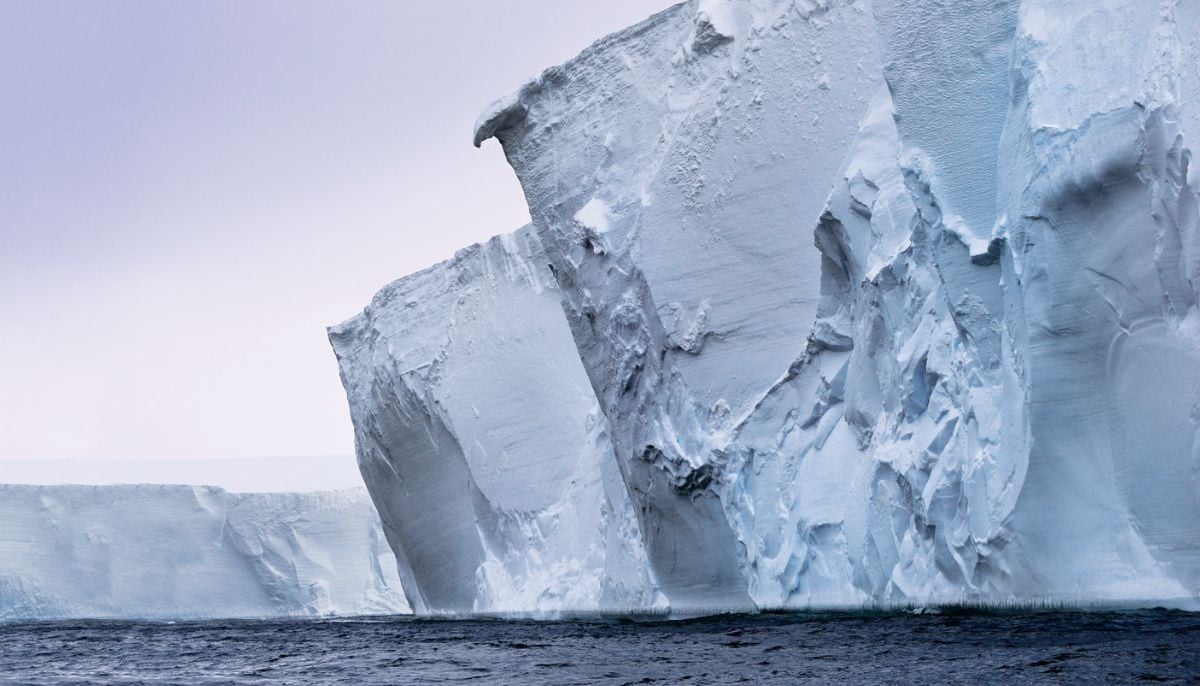
Researchers in a new study have reported the rapid collapse of “Doomsday Glacier”, also called Thwaites Glacier in West Antarctica, sparking fears of global sea-level rise of unprecedented level.
Two decades of satellite and GPS data, published in the Journal of Geophysical Research: Earth Surface, offers detailed account of the accelerating breakdown of the Thwaites Eastern Ice Shelf (TEIS).
TEIS, the critical part of the glacier, floats on the ocean and is partly adhered to a pinning point at its northern edge.
As per data which documented the changes over 20 years, TEIS over this time period has suffered from increasing fractures around a major zone.
As a result of these fractures, the shelf has experienced weak connection to the pinning point, thereby leading to degradation of attachment.
Consequently, the ice upstream’s flow has accelerated, reducing the TEIS’ mechanical stability to the pinning point.
The study was led by Debangshu Banerjee, along with Dr. Karen Alley (Assistant Professor, CEOS) and Dr. David Lilien also discovered two major findings.
As per the first finding, the scientists found a positive feedback cycle in which the fractures increased the ice acceleration. In turn, these fractures also caused further deterioration, thereby speeding up the shelf’s recent collapse.
The second finding consists of four distinct stages of ice decline along with two fracture phases. The long fractures which show alignment with the ice appeared first, followed by shorter fractures.
According to researchers, the four-stage structural decline could serve as a critical signal for other Antarctic ice shelves that can face the similar fate of rapid deterioration.
If the decline continues in future, it would contribute more substantially to future sea-level rise of unknown nature.