
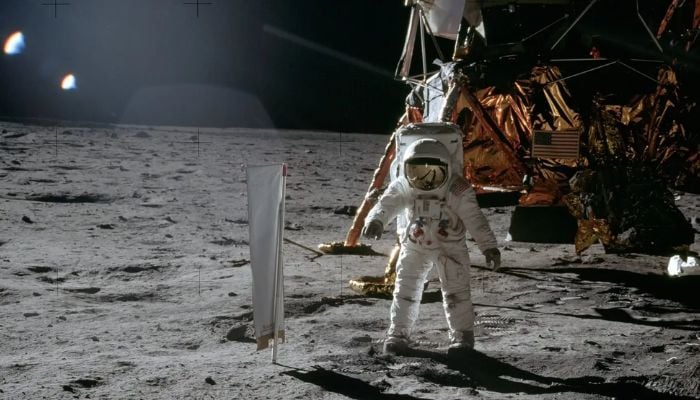
In a rare research study, Chinese researchers explored how the moon could become the Earth’s next battleground, spilling the conflicts into lunar surface.
Researchers from Northwestern Polytechnical University in Xi’an have discovered a vulnerable area cislunar space, the vast region influenced by the combined gravitational fields of Earth and the moon.
Spacecraft could utilize the moon’s complex gravitational environment to hide their positions, follow unpredictable trajectories, and station themselves near critical “choke points” to intercept rivals and control essential routes.
The challenges are non-kinetic deterrence like forcing foes to change routes, delay missions and miss window launches without indulging in combat.
As per scientists, such capabilities could cast an immense impact even without an actual confrontation. According to Dang Zhaohui, the report’s lead author and an associate professor at Northwestern Polytechnical University’s school of astronautics, “Without directly using force, [a country could] compel an adversary to change its route, delay a mission, give up a launch window or incur higher costs.”
“What is at stake in cislunar orbital competition is not any single spacecraft, orbit or route, but the ability to access, control and use space – and to deter adversaries – that they provide.”
The study also classified 6 potential confrontations: pursuit and evasion, attack and defence, blockade and counter-blockade, and deception and identification.
Researchers also warn that it is difficult to track spacecraft-related activities in vast cislunar space. So the decision-making in the case of any threat will be based on judgement based on missing information.