
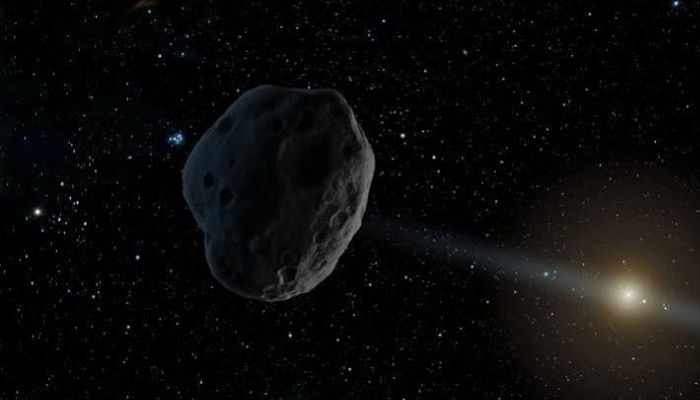
Samples collected from the asteroid Bennu by NASA’s OSIRIS-REx mission have revealed new clues about the asteroid’s origins showing how it was shaped on the boundary between hot and cold that formed the planets 4.5 billion years ago-a mission that gives our best look at the cosmic dust from which the planets assembled.
Bennu is a near-Earth asteroid that NASA visited with its OSIRIS-REx mission between 2018 and 2021.
The material in that sample was disseminated to the international research community including half a gram being received by Schonbachler’s lab. Schonbachler’s findings have revolutionized our understanding of the origins of Bennu.
In this connection, Maria Schonbachler, a professor of isotope geochemistry in Switzerland said: “ Bennu may offer our best glimpse of the original mix of chemical elements from which the terrestrial planets were ultimately built.”
Bennu and Ryugu are primarily remnants left over after an impact smashes an asteroid or proto-planet apart.
Some scientists have proposed that these parent bodies likely originated in the distant reaches of the outer solar system, maybe alongside comets and that they originated after the planets since outer-system processes developed at a much slower pace.
Separately, the isotopic analysis of the Bennu sample by Schonbachler’s team politely contradicts this assumption as the even mixing of the isotopes suggests that it was formed from fine dust grains rather than coarser,granular material.
Nonetheless, it has been so intriguing but both near-Earth asteroids, Bennu and Ryugu served as the origins for successful sample-return missions.