
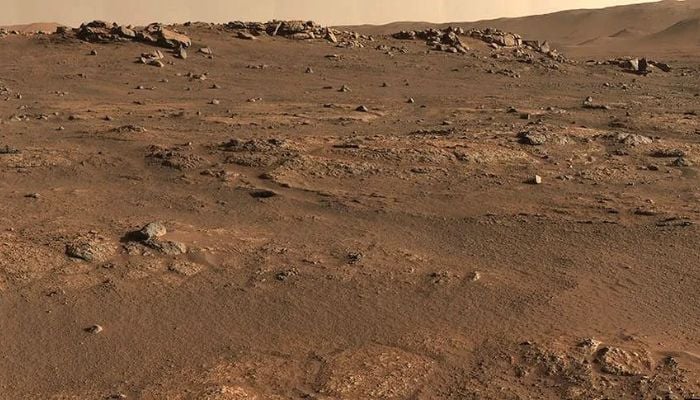
A recent study investigates how beneficial fungi can transform lunar and Martian regolith into a suitable medium for space agriculture.
Lunar and Martian regolith lack critical nutrients essential for plant growth, specifically macronutrients such as nitrogen, potassium, and phosphorus, and present harsh abiotic stress conditions.
The study, published in Frontiers in Astronomy and Space Sciences, carried out by US and Brazilian researchers found that fungi such as Trichoderma and arbuscular mycorrhizal fungi (AMF) can mobilize essential nutrients while improving the chemical and physical structure of regolith. They can also relieve environmental stresses.
At the heart of this study lies the discovery that AMF forms close partnerships with plant roots, functioning as microscopic extensions that help plants absorb water and scarce nutrients much more efficiently.
While promising, future studies must test these fungi using actual lunar and Martian regolith rather than Earth-based simulations.
Speaking about the long-term impacts, developing effective fungal-based regolith farming could drastically reduce the need to ship food from Earth and enable sustainable, permanent human settlements on the Moon and Mars.
The study notes, “Including plant growth-promoting fungi into lunar or Martian regolith-based agriculture systems would present a strategic enhancement to space crop production and the establishment of human settlements beyond Earth.”
“These microorganisms offer a promising biotechnological tool to transform the regolith environment (inorganic composition) and positively impact the engineered microbiome introduced to inhospitable substrates.”