
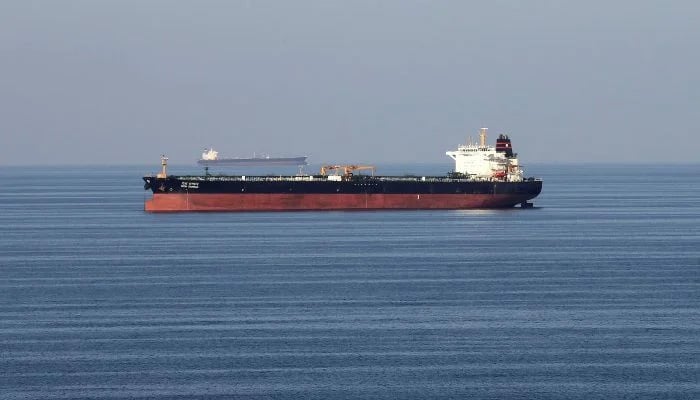
- March-July petroleum imports rise nearly 20% year-on-year.
- India’s crude import bill jumps 56.5% to $63.4bn.
- Iran war pushes global oil and gas import bill up $330bn.
ISLAMABAD: Escalating tensions in the Middle East linked to the Iran war and disruptions in the Strait of Hormuz have pushed up energy costs across South Asia, increasing the fuel and LNG import burden on Pakistan, India and Bangladesh.
Pakistan’s petroleum import bill surged in the months following an escalation in the Iran conflict, rising from around $983 million in March to $1.28 billion in July, while reaching nearly $1.91 billion in June, according to official trade data.
Country’s petroleum-group imports during March-July 2026 totalled roughly $7.7-$7.9 billion, compared with about $6.6 billion during the corresponding period of 2025, representing an increase of around $1.3 billion, or nearly 20%, The News reported on Monday.
The sharpest increase came in April, when the petroleum import bill jumped to around $1.79 billion, compared with $1.35 billion a year earlier. It remained elevated in May and reached approximately $1.91 billion in June, up about 46 per cent year-on-year.
The pressure eased in July when the petroleum-group import bill fell to around $1.28 billion, down sharply from June. Despite the monthly correction, the cumulative March-July bill remained substantially higher than a year earlier.
The oil shock has been accompanied by higher LNG costs. Pakistan’s petroleum-group imports in June included around $221.5 million worth of LNG, adding to the foreign-exchange burden created by expensive petroleum products.
The disruption of energy flows through Hormuz has increased not only crude and LNG prices but also freight, marine insurance and security costs, raising the landed cost of energy cargoes.
The additional energy cost comes after Pakistan’s petroleum-group imports had already reached approximately $16.86 billion in FY2025-26, up 5.76% from the previous year. Crude oil imports increased by more than 31% during the year.
However, according to the data from the Finland-based climate think tank Centre for Research on Energy and Clean Air, the war between the United States, Israel, and Iran has caused the oil and gas import bill of the world to swell by as much as $330 billion over the six months between March and August.
Europe suffered the biggest hit at $78 billion, followed by China at $35 billion and India at $22 billion, reflecting their heavy dependence on imported energy.
India has suffered an even larger increase in absolute terms because of its enormous crude-import requirement. The country’s crude oil import bill jumped 56.5% to $63.4 billion during April-July 2026, despite broadly stable import volumes, as the average price of imported crude surged.
India’s crude import price reached approximately $114.48 per barrel in April, compared with $67.70 a year earlier. Its oil import bill stood at around $13.7 billion in July alone, up about 41% year-on-year.
India imports roughly 88 per cent of its crude oil requirements, making its economy highly sensitive to international oil prices and disruptions affecting Middle Eastern supply routes.
The increase in crude costs has added to pressure on India’s merchandise trade balance, with expensive oil raising the dollar value of one of the country’s largest import categories.
Bangladesh has also suffered a sharp energy-cost shock. Bangladesh Bank data show petroleum-goods imports more than doubled to $10.64 billion in FY2025-26 from $5.14 billion a year earlier, with crude petroleum imports rising 92% and POL imports 109%.
The Iran war and Hormuz disruption then intensified the LNG burden, forcing Petrobangla to replace planned long-term supplies with expensive spot cargoes; 25 of the 37 LNG cargoes scheduled for March-June were ultimately sourced from the spot market at $20-$28 per MMBtu.
The wider regional shock is corroborated by CREA, which estimates that Asian LNG prices averaged 75% above pre-war expectations during March-August 2026. Bangladesh purchased 11 LNG cargoes for March-May at an average price of $21.35 per MMBtu, with the purchases costing around $880 million. The price was roughly twice pre-war levels.
Dhaka has also sought alternative sources of refined petroleum from countries including China, Singapore, Malaysia, Indonesia and India as conventional supply routes were disrupted.
Bangladesh has said that around 20-23% of its imported fuel oil passes through the Strait of Hormuz, highlighting its vulnerability to a prolonged disruption of the waterway.
For Pakistan, an additional $1.3 billion spent on petroleum imports over March-July represents a significant foreign-exchange burden. Higher oil and LNG prices can also increase transportation, electricity and industrial costs and ultimately add to domestic inflation.
For South Asia, the immediate concern is no longer simply the security situation in the Middle East but its impact on energy bills, foreign-exchange reserves, inflation and external balances.

let firebaseLoaded = false; function loadFirebaseOnce() { if (firebaseLoaded) return; firebaseLoaded = true; import("https://www.gstatic.com/firebasejs/8.10.1/firebase-app.js").then(() => { //import("https://www.gstatic.com/firebasejs/8.10.1/firebase-analytics.js"); import("https://www.gstatic.com/firebasejs/8.10.1/firebase-messaging.js").then(() => { import("https://www.geo.tv/assets/front/ui/js/subscribe_user.js?v=553222"); }); }); }
window.addEventListener("scroll", loadFirebaseOnce, { once: true }); window.addEventListener("mousemove", loadFirebaseOnce, { once: true }); window.addEventListener("click", loadFirebaseOnce, { once: true });
//setTimeout(function(){ $('.medium-insert-images').find('figure').show() }, 3000); var loadDeferredJS = function() {
var lazyloadjs = ['https://www.geo.tv/assets/front/js/lazysizes.min.js'];
var alljs = ['https://www.geo.tv/assets/front/js/ui/thirdparty.js'];
var jqueryjs = ['https://www.geo.tv/assets/front/js/ui/jquery.min_new.js']; var bootstrapjs = ['https://www.geo.tv/assets/front/js/ui/bootstarp.js']; var sliderjs = ['https://www.geo.tv/assets/front/js/ui/swiper.min.js'];
var alljscustom = ['https://www.geo.tv/assets/front/js/ui/my.js','https://www.geo.tv/assets/front/js/mycustom.js'];
setTimeout(function(){ jqueryjs.forEach(function (item,index) { var scriptElement=document.createElement('script'); scriptElement.type="text/javascript"; scriptElement.src = item; document.body.appendChild(scriptElement); }); }, 1000);
const jqueryIntervalcheck = setInterval(function () { if(typeof jQuery !== "undefined"){ clearInterval(jqueryIntervalcheck);
setTimeout(function(){ sliderjs.forEach(function (item,index) { if(item == 'https://www.geo.tv/assets/front/js/ui/swiper.min.js'){ var story_embed_gallery = $('.story-area').find('.embedgallery').length; //var story_embed_gallery = 0; if(parseInt(story_embed_gallery) > 0){ var scriptElement=document.createElement('script'); scriptElement.type="text/javascript"; scriptElement.src = item; document.body.appendChild(scriptElement); } } }); }, 100);
setTimeout(function(){ alljscustom.forEach(function (item,index) { var scriptElement=document.createElement('script'); scriptElement.type="text/javascript"; scriptElement.src = item; document.body.appendChild(scriptElement); }); }, 1300);
if($('.infogram-embed').length > 0 || $('embedinfogram').length > 0) { !function (e, t, n, s) { var i = "InfogramEmbeds", o = e.getElementsByTagName(t)[0], d = /^http:/.test(e.location) ? "http:" : "https:"; if (/^\/{2}/.test(s) && (s = d + s), window[i] && window[i].initialized)window[i].process && window[i].process(); else if (!e.getElementById(n)) { var a = e.createElement(t); a.async = 1, a.id = n, a.src = s, o.parentNode.insertBefore(a, o) } }(document, "script", "infogram-async", "https://e.infogram.com/js/dist/embed-loader-min.js"); }
if($('.flourishClass').length > 0) { var scriptElement=document.createElement('script'); scriptElement.type="text/javascript"; scriptElement.setAttribute="async"; scriptElement.src="https://public.flourish.studio/resources/embed.js"; document.body.appendChild(scriptElement); }
if($('.apester-media').length > 0) { var scriptElement=document.createElement('script'); scriptElement.type="text/javascript"; scriptElement.setAttribute="async"; scriptElement.src="https://static.apester.com/js/sdk/latest/apester-sdk.js"; document.body.appendChild(scriptElement); }
if($('.twitter-tweet').length > 0) { var tweetObj = document.getElementsByClassName('tweetPost'); var counter_tweet = 0; if (tweetObj.length == 0) { tweetObj = document.getElementsByClassName('twitter-tweet'); $.each(tweetObj, function (i, v) { $(this).attr('id', 'twitter-post-widget-' + i); }); } else { $.each(tweetObj, function (i, v) {
if($(this).find('.twitter-tweet').length > 0){ $(this).find('.twitter-tweet').attr('id', 'twitter-post-widget-' + counter_tweet); counter_tweet++; } }); } $.getScript('https://platform.twitter.com/widgets.js', function () { var k = 0; var tweet = document.getElementById('twitter-post-widget-' + k); var tweetParent, tweetID;
while (tweet) { tweetParent = tweet.parentNode; //tweetID = tweet.dataset.tweetId; tweetID = tweetParent.getAttribute("id"); if(tweetID === null){ tweetID = tweet.dataset.tweetId; } //var tweetVideoClass = tweet.getAttribute('class').split(' ')[0]; $(tweet).remove();
twttr.widgets.createTweet( tweetID, tweetParent ); k++; tweet = document.getElementById('twitter-post-widget-' + k); } }); /*==============*/ var tweetObjVid = document.getElementsByClassName('tweetVideo'); var counter_tweet = 0; if (tweetObjVid.length == 0) {
tweetObjVid = document.getElementsByClassName('twitter-video'); $.each(tweetObjVid, function (i, v) { $(this).attr('id', 'twitter-vid-widget-' + i); });
} else {
$.each(tweetObjVid, function (i, v) { if($(this).find('.twitter-video').length > 0){ $(this).find('.twitter-tweet').attr('id', 'twitter-vid-widget-' + counter_tweet); counter_tweet++; } });
} $.getScript('//platform.twitter.com/widgets.js', function () { var v = 0; var tweetVid = document.getElementById('twitter-vid-widget-' + v); var tweetParentVid, tweetIDVid; while (tweetVid) { tweetParentVid = tweetVid.parentNode; //tweetIDVid = tweetVid.dataset.tweetId; tweetIDVid = tweetParentVid.getAttribute("id"); if(tweetIDVid === null){ tweetIDVid = tweet.dataset.tweetId; } $(tweetVid).remove(); twttr.widgets.createVideo( tweetIDVid, tweetParentVid ); v++; tweetVid = document.getElementById('twitter-vid-widget-' + v); } }); }
if($('.instagram-media').length > 0){ var scriptElement=document.createElement('script'); scriptElement.type="text/javascript"; scriptElement.setAttribute="async"; scriptElement.src="https://platform.instagram.com/en_US/embeds.js"; document.body.appendChild(scriptElement); }
if($('.tiktok-embed').length > 0){ var scriptElement=document.createElement('script'); scriptElement.type="text/javascript"; scriptElement.setAttribute="async"; scriptElement.src="https://www.tiktok.com/embed.js"; document.body.appendChild(scriptElement); }
if($('.threadsPost').length > 0){ var scriptElement=document.createElement('script'); scriptElement.type="text/javascript"; scriptElement.setAttribute="async"; scriptElement.src="https://www.threads.net/embed.js"; document.body.appendChild(scriptElement); }
if($('.fb-video').length > 0 || $('.fb-post').length > 0){ var container_width = $(window).width(); if(container_width < 500){ if($('.fb-video').length > 0){ let embed_url = $('.fb-video').attr('data-href'); let htmla="
'; $('.fb-video').parent('.embed_external_url').html(htmla); } else{ let embed_url = $('.fb-post').attr('data-href'); let htmla="
'; } }
$('body').prepend('
');
var scriptElement=document.createElement('script'); scriptElement.type="text/javascript"; scriptElement.setAttribute="async"; scriptElement.src="https://connect.facebook.net/en_US/sdk.js#xfbml=1&version=v2.11&appId=580305968816694"; document.body.appendChild(scriptElement); } } },100); };
var raf = window.requestAnimationFrame || window.mozRequestAnimationFrame || window.webkitRequestAnimationFrame || window.msRequestAnimationFrame;
var loadDeferredJSCaptcha = function() { var addJSNode = document.getElementById("captchejs"); var replacement = document.createElement("div"); replacement.innerHTML = addJSNode.textContent; document.body.appendChild(replacement); addJSNode.parentElement.removeChild(addJSNode); };
window.addEventListener('load', loadDeferredJS); //window.addEventListener('load', loadDeferredJSCaptcha);