
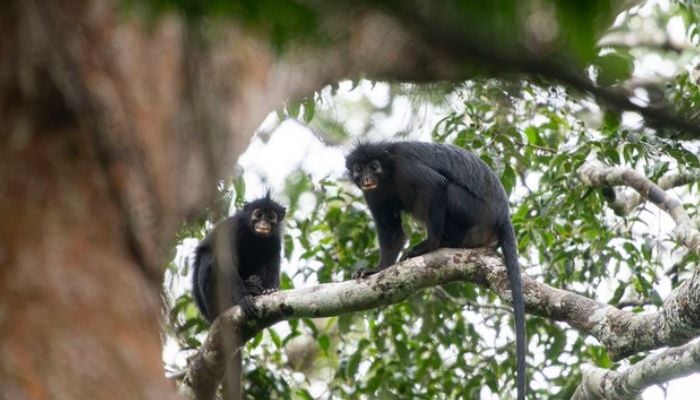
Scientists in a rare breakthrough have discovered new monkey species showing distinctive features who have been hiding in the forests of DR Congo for this whole time.
An international team spotted this unusual-looking species which was hidden away in the high tree canopy of dense tropical forests in Lomami National Park. But, they managed to capture just one blurry photo of that monkey.
In 2008, another team of conservationists first captured the sight of this monkey.
What makes this new monkey species, called “Likweli” by local people, distinctive is its unusual-looking features marked by “striking pinkish-orange lips and black -furred face.”
Marking a rare scientific milestone, this new African species is the fifth one to be discovered in the last 75 years.
Junior Amboko, a PhD student at Florida Atlantic University, spearheaded the study, which utilized a combination of genetic analysis, photography, and audio monitoring. The findings, published in PLoS One, have been met with excitement.
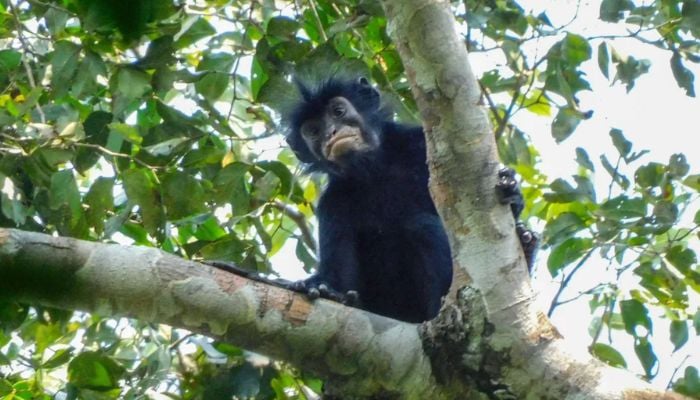
Speaking about their nature and habitat, Amboko said, the monkeys were kind of shy and preferred to hide high in the dense forest trees. When the team spoke to the locals about the species, only few people in eight villages had ever seen them. They always live in a rare and restricted part of food where they can find food.
According to Amboko, “the monkeys also have a distinctive ‘roaring’ call. You often hear them, but don’t see them.”
They were given the Latin name Colobus congoensis in recognition of the natural diversity in the country.
Delving deep into the features of the monkey, Prof Kate Detwiler from Florida Atlantic University, explained, “These are really important African monkeys that don’t have thumbs.”
“They’re these herbivores of the canopy that are a critical part of the ecosystem. We think they have a lot to do with processing seeds and germination in the forest,” he added.
Much more needs to be explored about this newly found secretive species. Therefore, researchers are planning to conduct more detailed surveys.