
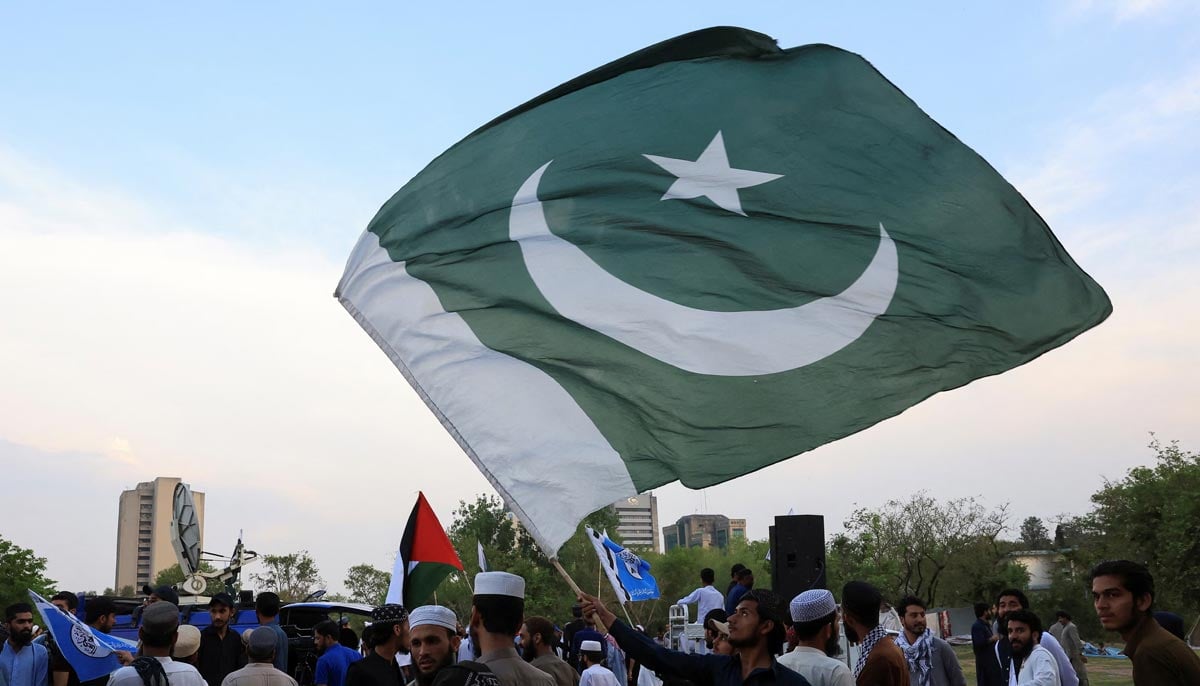
From emerging as a “net region stabiliser” and a moderator in the over two-year Gaza war to clinching strategic defence agreements and recalibrating ties with Washington, 2025 was an epochal year for Pakistan.
As American diplomat and renowned author Richard N Haass once observed, “Success in foreign policy, as in carpentry, requires the right tools for the job.” In 2025, Pakistan appeared to deploy those tools with uncommon precision.
Islamabad flawlessly capitalised on a rapidly evolving geopolitical landscape following its brief but intense military engagement with India, leveraged renewed engagement with the United States and simultaneously balanced ties with long-standing and ironclad partner, China. Nevertheless, this is no overnight miracle. It is the product of necessity, pressure and shifting alignments in a volatile region.
It all started in May 2025, when Pakistan stood against a much-larger aggressor with more resources, catching the world’s eyeballs and succeeding in repositioning itself from a “problem state” to a relevant regional stakeholder.
The conflict between Pakistan and India was sparked by an attack on Hindu tourists in Indian Illegally Occupied Jammu and Kashmir (IIOJK), which New Delhi, without evidence, said was backed by Pakistan. Pakistan has denied involvement, with the foreign ministry having questioned the credibility of India’s account of the events, saying it was “replete with fabrications”.
Both sides used fighter jets, missiles, artillery and drones during the four-day conflict, killing dozens of people, before agreeing to a US-brokered ceasefire. In the immediate aftermath of the conflict, Pakistan said it took down seven Indian fighter jets during the conflict, including the French-made Rafale. New Delhi acknowledged “some losses” during the conflict but denied losing seven jets.
The four-day armed conflict war became the moment Pakistan proved its mettle and re-entered global diplomacy with authority. What followed was a cascade of high-level engagements — meetings between Pakistan’s leadership and US President Donald Trump, and the signing of defence agreements with Saudi Arabia, Azerbaijan and Libya.
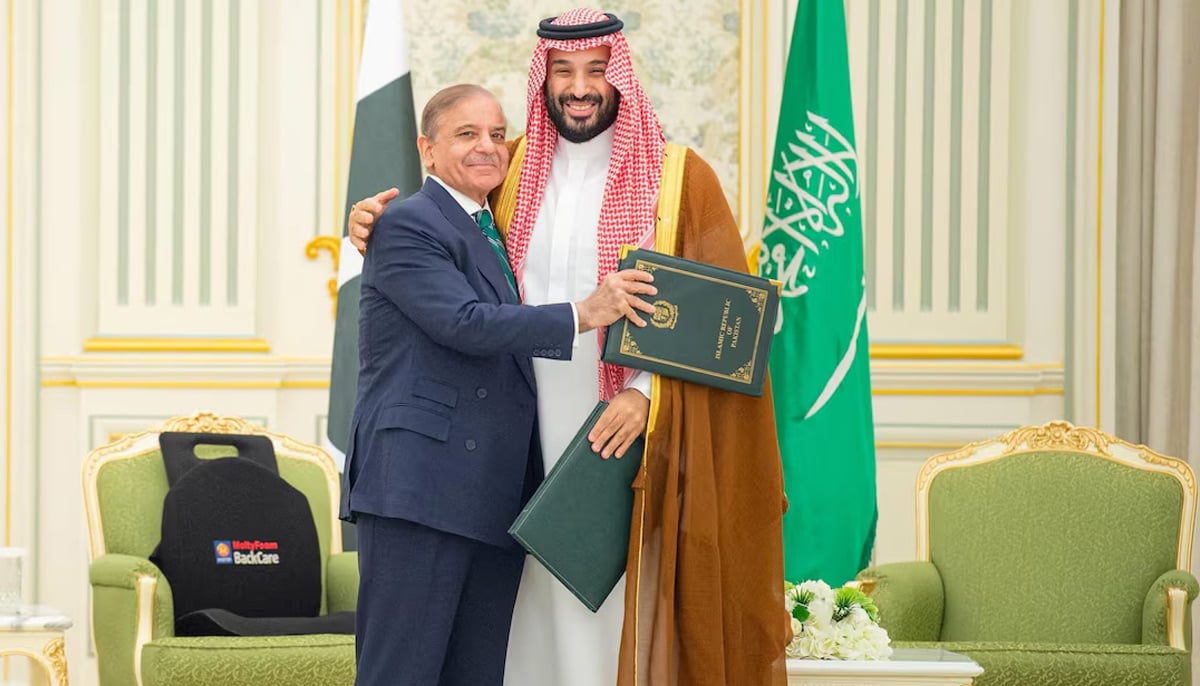
The strategic mutual defence agreement with Saudi Arabia has a clause that aggression against one would be considered aggression against the other, which added another layer to Pakistan’s deterrence regime against potential aggressors.
The uneasy US-India relationship was another factor in Pakistan becoming a relevant regional stakeholder. The US-India ties nosedived due to disputes over visas and tariffs, and Washington’s unease over New Delhi’s growing engagement with Moscow. Prime Minister Narendra Modi’s August visit to Beijing signalled India’s willingness to incline towards China. For Trump, eager to maintain balance in Asia, Pakistan appears useful again as a counterweight to India’s flirtations with Beijing.
The third and most precarious driver is mineral diplomacy. Islamabad’s outreach to Washington centres on promises of access to rare earth minerals, many of which are located in the restive region of Balochistan. Islamabad signed an agreement with United States Strategic Metals (USSM) involving roughly $500 million in mineral sector investment, while reports suggested further backing from the US Export-Import Bank (EXIM).
Together, these drivers — security, diplomacy and resources — reshaped Pakistan’s international standing over the course of the year. But the central question remains: did Pakistan engineer a lasting strategic reset in 2025, or merely exploit a rare convergence of crises?
Geo.tv spoke to foreign policy experts and strategic analysts to examine whether Pakistan’s 2025 diplomatic resurgence marks a lasting recalibration of its international standing or a short-term gain driven by war, mineral diplomacy and shifting US-India dynamics.

Pakistan’s foreign policy in 2025 witnessed a visible change from the inertia of recent years, particularly after the brief but intense confrontation with India in May.
According to Syed Baqir Sajjad, a seasoned journalist who covers foreign affairs, Islamabad appeared “more active and visibly confident than in recent years,” registering “clear gains, especially in resetting ties with the United States and managing the fallout from the brief clash with India.”
However, Sajjad cautions against overstating the shift. “This looks more like a tactical recovery than a deep strategic reset,” he said, noting that much of the momentum stemmed from “favourable external conditions — especially US-India frictions and President Trump’s transactional approach to foreign policy — rather than a rethinking of long-term priorities.”
He warned that the durability of this trajectory would depend on follow-through, particularly on sensitive commitments such as potential participation in a Gaza stabilisation force, where domestic politics and operational risks could quickly narrow Islamabad’s room for manoeuvre.
Meanwhile, former ambassador to Washington and author Aizaz Ahmad Chaudhry, by contrast, sees 2025 as a decisive turning point. “It is my sense that Pakistan’s overall foreign policy trajectory in 2025 served the country’s interests. And this was, I would say, in many ways a genuine strategic reset,” he said.
Chaudhry argued that Pakistan’s response to India in May fundamentally altered regional perceptions. “Pakistan was able to not only blunt India’s aggression but also bust India’s narrative about terrorism emanating from Pakistan,” he said, adding that for nearly two decades India had unsuccessfully projected Pakistan as a sponsor of terrorism to Western capitals.

On the security front, both experts agree that Pakistan managed escalation effectively — though they differ on how transformative the outcome was.
Sajjad said Pakistan “secured a ceasefire and projected restraint, which played well diplomatically,” helping unlock “short-term gains, including renewed US cooperation, military upgrades, and a defence pact with Saudi Arabia.” While calling these “real, if limited, security benefits,” he stressed that “the broader balance with India has not shifted.”
“Core disputes remain untouched, the promised talks at a neutral venue did not happen and tensions are essentially frozen,” he said. “Pakistan avoided a wider war, which mattered. It did not, however, alter the underlying strategic equation.”
Chaudhry offered a more bullish assessment. He said the May episode had effectively ended a cycle of Indian military adventurism that began in 2016. “It has put an end to a streak of aggressions that India had carried out in September 2016, then February 2019, and finally in May 2025,” he said.
He argued that India’s reluctance to blame Pakistan for subsequent terrorist incidents — including one near the Red Fort — reflected a new deterrent reality. “India has come to know that if they do, then they will also have to resume the military Operation Sindhoor, which, according to India, has been paused only, not ended,” he said, adding that New Delhi could not afford another confrontation after losing aircraft during what he described as Marka-e-Haq and Bunyan-um-Marsoos.

There is broader consensus that Pakistan’s international image improved in 2025.
“There was a noticeable improvement in how Pakistan was perceived in key capitals,” Sajjad said, pointing to crisis management with India and “concrete counterterrorism deliverables — notably with regards to Daesh — [that] helped Islamabad regain access in Washington.”
That, he said, softened the longstanding “problem state” label. Still, he warned that the repositioning remains incomplete. “Relations with Afghanistan remain fragile, and the emerging debate over Gaza stabilisation highlights new risks. For now, Pakistan’s relevance is situational and externally driven, not yet the result of a fully consolidated regional role.”
Chaudhry, however, believes Pakistan has crossed a qualitative threshold. “With that confidence that Pakistan has gained after the May 2025 episode, I believe Pakistan is now being widely recognised the world over as a country that is a factor of stability in the region,” he said.
He cited Saudi Arabia’s decision to sign a strategic mutual defence agreement with Pakistan and Islamabad’s role at “the high table which negotiated an end to the genocidal war that Israel had waged against Palestinians in Gaza” as evidence that Pakistan had emerged as a relevant regional stakeholder.

Pakistan’s intensified engagement with major powers in 2025 raised questions about sustainability and balance.
Sajjad noted that “some engagements are beginning to produce results,” particularly US agreements on critical minerals and energy exploration. However, he cautioned that “many of these gains are still at an early stage” and that “implementation will be the real test.”
He added that while CPEC remains stalled despite official talk of “CPEC 2.0,” China’s loan rollovers mean it “remains economically invested.” At the same time, he warned that “diplomatic momentum increasingly comes with expectations attached, making many benefits conditional rather than automatic.”
Chaudhry dismissed concerns that Pakistan must choose between Washington and Beijing. “Some people raise the question whether Pakistan maintain a balance between the US and China. I would say that the balance may be the wrong word,” he said. “These are the times when cooperation and confrontation coexist in every part of the world, and therefore, Pakistan should be able to maintain relations with both countries.”
He said Pakistan’s relationship with China “has been a steady strategic partner and has never wavered,” while renewed US engagement offers convergence in areas such as minerals, oil and gas exploration, and emerging technologies.

Mineral diplomacy emerged as one of the most significant — and most precarious — pillars of Pakistan’s 2025 outreach.
Sajjad described US-Pakistan agreements on critical minerals as “meaningful,” but stressed that benefits remain conditional. “Implementation will be the real test,” he said, adding that economic dividends will depend on domestic capacity and political stability.
Chaudhry echoed the opportunity but placed responsibility squarely on Islamabad. “It now depends on Pakistan how it maintains its relevance in 2026,” he said, arguing that economic security, continuity of policy and ease of doing business would be decisive in translating diplomatic gains into lasting influence.

Both experts converged on one point: sustainability remains the unresolved question.
“Much of 2025’s relevance stemmed from a rare convergence of events — the India crisis, US-India tensions, and Trump’s personalised style of engagement,” Sajjad said. While some continuity exists through Saudi defence cooperation, he warned that “sustainability will depend on delivery, not optics.”
Chaudhry likewise stressed the domestic front. “It is time also to focus on the internal situation in the country — degree of political stability and more importantly economic security,” he said, calling for continuity of economic policy, governance reform and devolution to grassroots levels to ensure long-term national resilience.

Taken together, these views suggest that Pakistan’s foreign policy shift in 2025 was not a dramatic revival, but a careful and calculated adjustment. Factors such as the situation in Afghanistan, changes in US-India relations and growing interest in mineral diplomacy help explain Pakistan’s increased global relevance.
However, these developments do not remove the country’s deeper structural challenges.
Whether 2025 turns into a lasting turning point will depend not just on foreign engagement but on Pakistan’s ability to match its external ambitions with political and economic stability at home.