
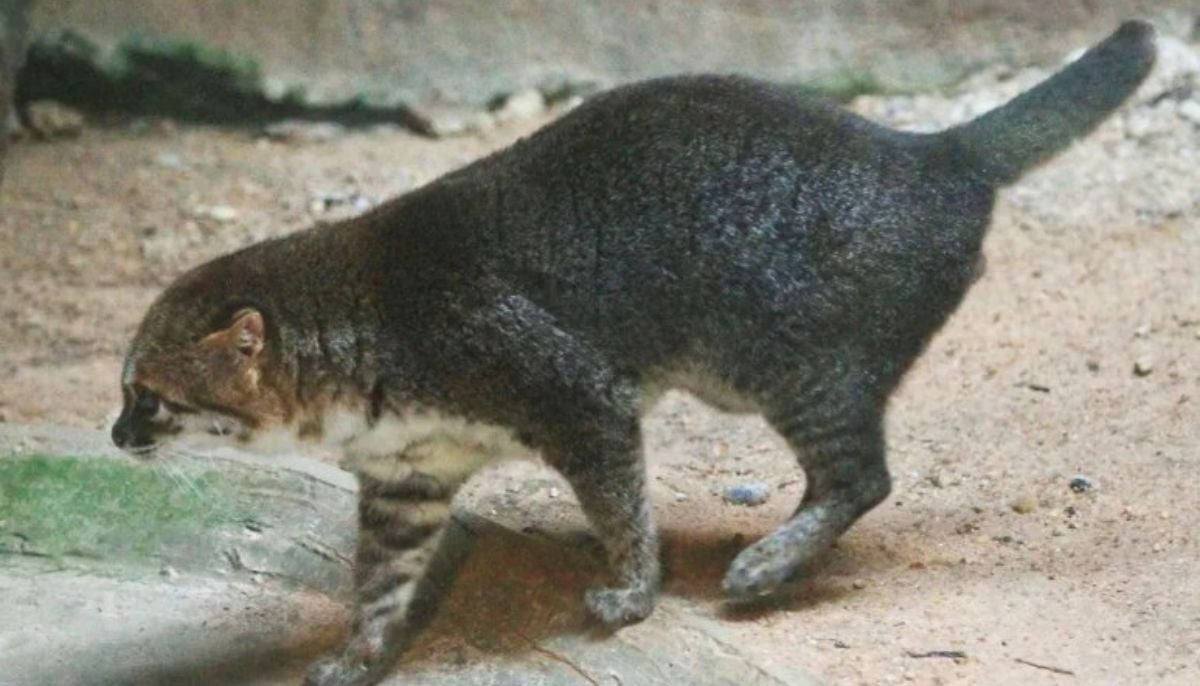
In a recent unique discovery, researchers have photographed the world’s rarest cat in Thailand, which hasn’t been seen in the country for almost 30 years.
Cat conservation organization Panthera announced the rediscovery on Friday, December 26, 2025, at Thailand’s annual Wildlife Protection Day.
Flat-headed cats, Prionailurus planiceps, named after their flattened foreheads, live in fragmented pockets across Brunei, Indonesia and Malaysia, but they have been feared extinct in Thailand for a long time, reports AFP.
The conservation authorities and an NGO informed that an elusive wild cat long feared extinct has been rediscovered three decades after the last recorded sighting.
The researchers went looking for the cats in remote areas of Thailand in what Panthera described as the “largest-ever survey of the species.”
Researchers rediscovered the cats using remote camera traps in Thailand’s Princess Sirindhorn Wildlife Sanctuary in 2024 and 2025—the first detections in Thailand since 1995.
About flat-headed cats

The flat-headed cats are among the world’s rarest and most threatened wild felines.
The fur on its head is orange-brown, and it bears distinctive narrow, dark stripes behind and below the eye.
Their flanks are greyish brown, grizzled and lack spots or stripes while the muzzle area, chin and chest are white.
Their range is limited to Southeast Asia, and they are endangered because of dwindling habitat.
“The rediscovery is exciting, yet concerning at the same time,” veterinarian and researcher Kaset Sutasha of Kasetsart University said, noting that habitat fragmentation has left the species increasingly “isolated.”
Thai veterinarian, academic, and conservationist Professor Rattapan said the flat-headed cat typically lives in dense wetland ecosystems such as peat swamps and freshwater mangroves, environments that are extremely difficult for researchers to access.
Globally, the International Union for Conservation of Nature estimates that around 2,500 adult flat-headed cats remain in the wild, classifying the species as endangered.
Additionally, it was not immediately clear how many individuals the detections represent, as the species lacks distinctive markings, so counting is tricky.
Whereas, the findings suggest a relatively high concentration of the species, Panthera conservation programme manager Rattapan Pattanarangsan said.