
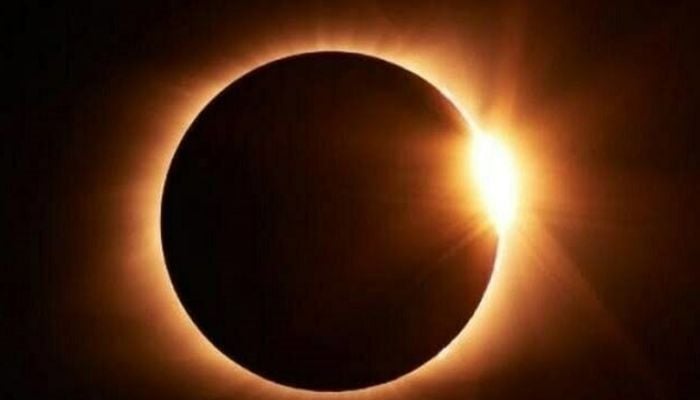
The world is set to witness a spectacular solar eclipse in August when the Sun will be blocked out by the moon in a celestial showdown.
On August 12, a major total solar eclipse swept across parts of the Northern hemisphere. The moon will move in front of the Sun and block out its light, thereby temporarily darkening the skies, making the air cool and offering millions a view of a rare sunset eclipse
However to witness the incredible and highly anticipated event, one has to know about the best viewing time, location, and tips.
The full total eclipse will trace a path traversing eastern Greenland, northern Russia, western Iceland, the Atlantic ocean, northern Spain and a small silver of Portugal. The totality of the eclipse will last up to 2 minutes and 18 seconds.
Speaking about the partiality, the people belonging to Ireland and the UK will see a partial solar eclipse with 96 percent of the Sun being obstructed by the Moon.
Regions across Morocco, Algeria, and surrounding areas will catch a dramatic partial view. The larger parts of Europe including Belgium, France, northern Italy and Switzerland will witness partial one with 95 percent of obstruction.
Some parts of northern Canada and Alaska will experience a morning partial eclipse and the northeastern US will catch a minor “bite” out of the sun.
If you are outside the visibility zone, NASA will stream the eclipse live across its official channels starting around 1:15 p.m. EDT (5:15 p.m. UTC) on August 12.
Best tips for viewing eclipse
Solar eclipse undoubtedly is a spectacular event but it could cause lasting damage to eyes if viewed without taking precautions.
Except for the brief moments of total darkness only if you are directly inside the path, you must use ISO 12312-2 certified solar viewing glasses at all times. Standard sunglasses are not safe. If your eclipse glasses are old, the expert advised that one must not use it due to its compromised quality.
If you are using optical devices such as cameras, binoculars and telescopes, they must be equipped with specialized solar filters.
If you don’t have the eclipse glasses, NASA advised to use indirect viewing methods like pinhole projector to safely cast images of the sun.