
- Solar may save another $6.3bn by 2026.
- Fossil-fuel imports fall 40% since 2022.
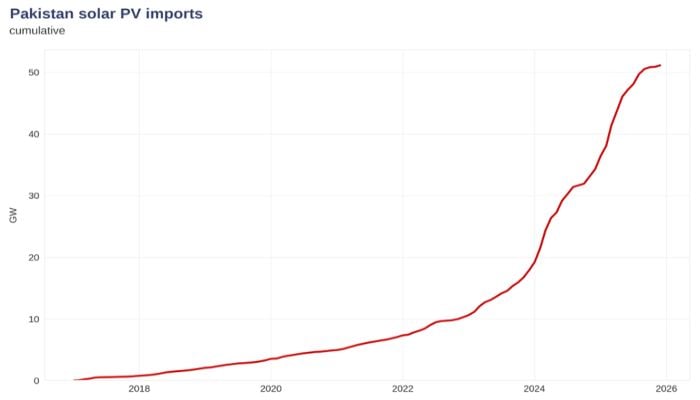
- Solar panel imports top 51GW by 2026.
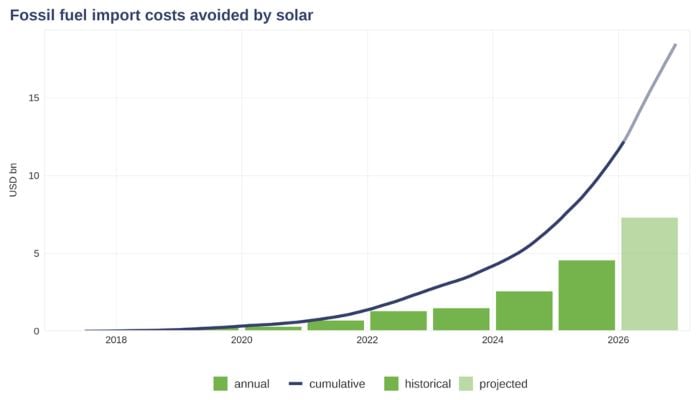
Pakistan’s rapid solar expansion has already avoided more than $12 billion in oil and gas imports, and could save a further $6.3 billion by the end of 2026, helping cushion the impact of soaring fossil-fuel prices caused by the war in the Middle East, according to analysis by Renewables First and the Centre for Research on Energy and Clean Air.
The development is especially significant for Pakistan, which remains highly vulnerable to energy shocks because it imports almost all of its crude oil, refined petroleum products and liquefied natural gas from Persian Gulf countries.
Those supplies have come under pressure as hostilities between the United States and Iran disrupt production, exports and shipping routes across the region.
The report says Pakistan remains highly exposed to disruptions around Hormuz because a large share of its Liquefied natural gas (LNG) and oil imports transit the waterway. In 2024, Pakistan ranked third globally in LNG dependence on Hormuz-transiting cargoes as a share of total consumption and fifth for oil.
Islamabad last week introduced a series of fuel-saving and austerity measures in response to the energy crisis, including suspending ministers’ salaries and shifting to a four-day work week.
Earlier this month, the government also raised fuel prices by Rs55 per litre, the biggest increase on record, while Petroleum Minister Ali Pervaiz Malik warned that prices could begin changing on a weekly basis.
According to the report, the pressure from higher fuel costs would have been far worse without the country’s unexpected solar surge, which accelerated after liquefied natural gas prices jumped in the wake of Russia’s 2022 invasion of Ukraine.
“That solar uptick in the country has limited the electricity demand requirement from the national grid,” said Rabia Babar, a data manager at Renewables First.
Without solar, “Pakistanis would have been more vulnerable to these price shocks,” she said.
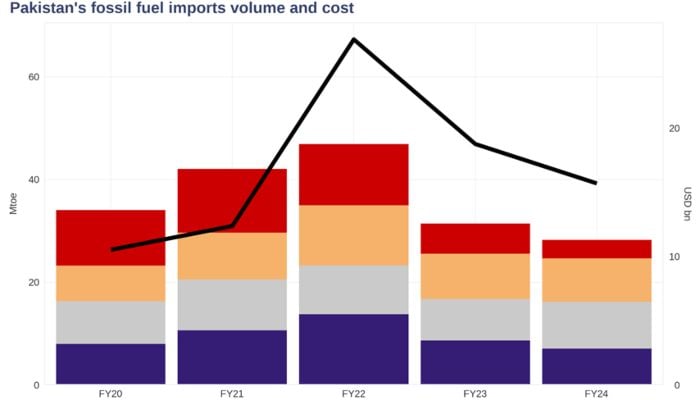
According to the analysis, the country’s solar boom has sharply reduced its need for imported fuel. Pakistan’s fossil-fuel imports fell 40% between 2022 and 2024, while cumulative solar panel imports rose from under 1 gigawatt in 2018 to more than 51 gigawatts by early 2026.
The report estimates that installed solar capacity reached about 33 gigawatts by March 2025.
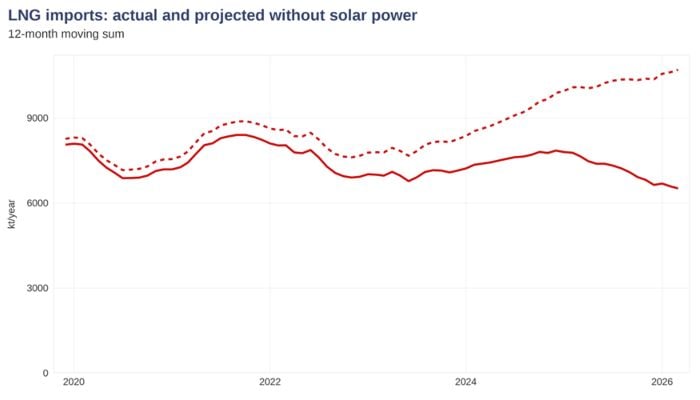
The researchers said solar has cut LNG demand enough for some contracted cargoes to be diverted and for the government to renegotiate LNG terms. They added that the spread of solar has so far helped Pakistan avoid load-shedding or other peak-demand restrictions despite the current crisis.
They also estimated that Pakistan saved $12 billion over the past five years through reduced LNG imports, as cumulative imports of Chinese solar panels rose above 50 gigawatts.
The report also said Pakistan has been restricting travel to conserve oil and encouraging people to stay home and work online as it tries to manage fuel pressure linked to the Hormuz crisis.
Renewables First said the surge in solar adoption was driven by economics rather than subsidies, with households, farmers and businesses responding to high grid tariffs and imported panel prices.
The report described Pakistan’s solar shift as one of the fastest anywhere in the world and said it had fundamentally changed the country’s power-demand outlook.
It added that this transition has created a buffer against external shocks at a time when Gulf-related supply risks remain unusually high.
Without the expansion in solar power, Pakistan would have faced far higher oil and gas import costs and much sharper exposure to volatility stemming from any prolonged disruption in or around the Strait of Hormuz.
Moreover, in a fresh development, a Pakistani-flagged tanker has become the latest vessel to navigate the Strait of Hormuz by sailing closely along the Iranian coastline, indicating that vessels may now require Tehran’s approval for safe passage through the world’s most critical oil chokepoint amid escalating regional tensions, Bloomberg reported on Tuesday.