
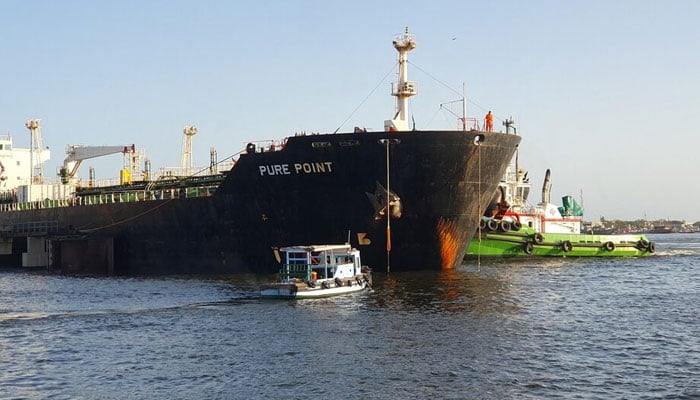
- Proposed policy allows foreign firms to store fuel locally.
- Suppliers can sell domestically or re-export petroleum stocks.
- Proposal aims to boost energy security and supply resilience.
ISLAMABAD: Pakistan is set to open its petroleum storage sector to international oil suppliers through a customs-bonded framework that would permit local sales as well as re-exports.
The move is aimed at positioning Pakistan as a regional petroleum storage and trading hub while enhancing energy security and supply-chain resilience.
The Policy Guideline on Import on Foreign Suppliers’ Account through Customs Bonded Storage Facilities-2026 offers international suppliers a mechanism to maintain inventories in Pakistan without immediately triggering domestic duties and taxes, while giving them greater flexibility to decide whether to supply the domestic market or re-export their stocks.
The Petroleum Division has sent the 168-page policy to ECC (Economic Coordination Committee) for approval. The policy covers a wide range of strategic energy commodities, including crude oil of all grades, motor spirit, high-speed diesel, jet fuel, fuel oil, LPG and LNG. It envisages bonded storage at locations including Port Qasim, KPT/Kemari, Hub, Gwadar, Mahmood Kot and Machike Sheikhupura, subject to the relevant regulatory and safety approvals.
The central attraction for foreign suppliers, particularly from the Middle East, such as from Kuwait and the Kingdom of Saudi Arabia, is that petroleum cargo can be imported into bonded storage on the supplier’s account, rather than requiring an immediate domestic sale or foreign-exchange remittance at the point of entry.
Under the proposed structure, a foreign supplier can participate through a registered liaison office or through a locally established branch or incorporated company acting as its consignee. The consignee can develop dedicated storage or use licensed public and private bonded storage facilities.
This effectively positions Pakistan not merely as a destination market but potentially as a strategic storage and trading hub for regional petroleum flows.
For investors, the proposition is straightforward: bring product into Pakistan, keep it under customs bond, wait for a commercially attractive domestic sale or redirect it to an overseas market.
The policy could have its biggest strategic impact on energy security. Instead of relying solely on cargoes imported for immediate consumption, Pakistan could see more petroleum stocks physically available inside the country but held under a bonded regime. Such inventories could provide greater flexibility during disruptions in international supply chains.
The policy also provides for movement of bonded petroleum through the national pipeline network from port-based locations to inland approved storage facilities such as Mahmood Kot and Machike Sheikhupura without triggering duty or tax merely because the product moves in bond.
The framework further envisages movement between approved bonded storage locations, pipelines, refineries, ports and export terminals under customs-supervised transit while the products remain bonded.
That flexibility could allow suppliers to position stocks closer to major consumption centres while retaining the option to export them. Another major investor attraction is commercial pricing flexibility.
The policy seeks to make the bonded-storage model tax neutral for foreign suppliers and their consignees. It says no tax, duty, levy, charge or cess—and corresponding federal or provincial registrations—would apply to goods so long as they remain within the bonded regime and have not been debonded for domestic consumption.
For global suppliers assessing the cost of establishing a physical presence in Pakistan, these provisions could substantially improve the attractiveness of the market.
The policy does not treat Pakistan-bound inventory as necessarily destined for Pakistani consumers. Foreign suppliers would be allowed to re-export bonded petroleum products, with the policy expressly protecting the right to re-export except in cases involving internationally sanctioned goods or products appearing on the applicable Negative List.
This combination of domestic-market access and re-export flexibility could make Pakistan more attractive to international trading houses and oil suppliers seeking regional inventory options.
The proposed infrastructure architecture is another major attraction. Port-based bonded stocks could be connected to inland locations through the national petroleum pipeline network. The policy specifically identifies Mahmood Kot and Machike Sheikhupura as inland approved locations for bonded movement and local sales.
This could enable international suppliers to position inventory near major demand centres rather than keeping all stocks concentrated at ports. The result could be a more distributed petroleum-supply system, reducing dependence on the immediate arrival of individual cargoes. The investor pitch is accompanied by a regulatory framework for product quality and safety.
Foreign suppliers would have an incentive to position stocks in Pakistan because they could serve the domestic market when commercially attractive while retaining the ability to re-export. Pakistan, meanwhile, could benefit from greater availability of petroleum stocks, more diversified suppliers and potentially faster access to additional cargoes during periods of international market disruption.

//setTimeout(function(){ $('.medium-insert-images').find('figure').show() }, 3000); var loadDeferredJS = function() {
var lazyloadjs = ['https://www.geo.tv/assets/front/js/lazysizes.min.js'];
var alljs = ['https://www.geo.tv/assets/front/js/ui/thirdparty.js'];
var jqueryjs = ['https://www.geo.tv/assets/front/js/ui/jquery.min_new.js']; var bootstrapjs = ['https://www.geo.tv/assets/front/js/ui/bootstarp.js']; var sliderjs = ['https://www.geo.tv/assets/front/js/ui/swiper.min.js'];
var alljscustom = ['https://www.geo.tv/assets/front/js/ui/my.js','https://www.geo.tv/assets/front/js/mycustom.js'];
setTimeout(function(){ jqueryjs.forEach(function (item,index) { var scriptElement=document.createElement('script'); scriptElement.type="text/javascript"; scriptElement.src = item; document.body.appendChild(scriptElement); }); }, 1000);
const jqueryIntervalcheck = setInterval(function () { if(typeof jQuery !== "undefined"){ clearInterval(jqueryIntervalcheck);
setTimeout(function(){ sliderjs.forEach(function (item,index) { if(item == 'https://www.geo.tv/assets/front/js/ui/swiper.min.js'){ var story_embed_gallery = $('.story-area').find('.embedgallery').length; //var story_embed_gallery = 0; if(parseInt(story_embed_gallery) > 0){ var scriptElement=document.createElement('script'); scriptElement.type="text/javascript"; scriptElement.src = item; document.body.appendChild(scriptElement); } } }); }, 100);
setTimeout(function(){ alljscustom.forEach(function (item,index) { var scriptElement=document.createElement('script'); scriptElement.type="text/javascript"; scriptElement.src = item; document.body.appendChild(scriptElement); }); }, 1300);
if($('.infogram-embed').length > 0 || $('embedinfogram').length > 0) { !function (e, t, n, s) { var i = "InfogramEmbeds", o = e.getElementsByTagName(t)[0], d = /^http:/.test(e.location) ? "http:" : "https:"; if (/^\/{2}/.test(s) && (s = d + s), window[i] && window[i].initialized)window[i].process && window[i].process(); else if (!e.getElementById(n)) { var a = e.createElement(t); a.async = 1, a.id = n, a.src = s, o.parentNode.insertBefore(a, o) } }(document, "script", "infogram-async", "https://e.infogram.com/js/dist/embed-loader-min.js"); }
if($('.flourishClass').length > 0) { var scriptElement=document.createElement('script'); scriptElement.type="text/javascript"; scriptElement.setAttribute="async"; scriptElement.src="https://public.flourish.studio/resources/embed.js"; document.body.appendChild(scriptElement); }
if($('.apester-media').length > 0) { var scriptElement=document.createElement('script'); scriptElement.type="text/javascript"; scriptElement.setAttribute="async"; scriptElement.src="https://static.apester.com/js/sdk/latest/apester-sdk.js"; document.body.appendChild(scriptElement); }
if($('.twitter-tweet').length > 0) { var tweetObj = document.getElementsByClassName('tweetPost'); var counter_tweet = 0; if (tweetObj.length == 0) { tweetObj = document.getElementsByClassName('twitter-tweet'); $.each(tweetObj, function (i, v) { $(this).attr('id', 'twitter-post-widget-' + i); }); } else { $.each(tweetObj, function (i, v) {
if($(this).find('.twitter-tweet').length > 0){ $(this).find('.twitter-tweet').attr('id', 'twitter-post-widget-' + counter_tweet); counter_tweet++; } }); } $.getScript('https://platform.twitter.com/widgets.js', function () { var k = 0; var tweet = document.getElementById('twitter-post-widget-' + k); var tweetParent, tweetID;
while (tweet) { tweetParent = tweet.parentNode; //tweetID = tweet.dataset.tweetId; tweetID = tweetParent.getAttribute("id"); if(tweetID === null){ tweetID = tweet.dataset.tweetId; } //var tweetVideoClass = tweet.getAttribute('class').split(' ')[0]; $(tweet).remove();
twttr.widgets.createTweet( tweetID, tweetParent ); k++; tweet = document.getElementById('twitter-post-widget-' + k); } }); /*==============*/ var tweetObjVid = document.getElementsByClassName('tweetVideo'); var counter_tweet = 0; if (tweetObjVid.length == 0) {
tweetObjVid = document.getElementsByClassName('twitter-video'); $.each(tweetObjVid, function (i, v) { $(this).attr('id', 'twitter-vid-widget-' + i); });
} else {
$.each(tweetObjVid, function (i, v) { if($(this).find('.twitter-video').length > 0){ $(this).find('.twitter-tweet').attr('id', 'twitter-vid-widget-' + counter_tweet); counter_tweet++; } });
} $.getScript('//platform.twitter.com/widgets.js', function () { var v = 0; var tweetVid = document.getElementById('twitter-vid-widget-' + v); var tweetParentVid, tweetIDVid; while (tweetVid) { tweetParentVid = tweetVid.parentNode; //tweetIDVid = tweetVid.dataset.tweetId; tweetIDVid = tweetParentVid.getAttribute("id"); if(tweetIDVid === null){ tweetIDVid = tweet.dataset.tweetId; } $(tweetVid).remove(); twttr.widgets.createVideo( tweetIDVid, tweetParentVid ); v++; tweetVid = document.getElementById('twitter-vid-widget-' + v); } }); }
if($('.instagram-media').length > 0){ var scriptElement=document.createElement('script'); scriptElement.type="text/javascript"; scriptElement.setAttribute="async"; scriptElement.src="https://platform.instagram.com/en_US/embeds.js"; document.body.appendChild(scriptElement); }
if($('.tiktok-embed').length > 0){ var scriptElement=document.createElement('script'); scriptElement.type="text/javascript"; scriptElement.setAttribute="async"; scriptElement.src="https://www.tiktok.com/embed.js"; document.body.appendChild(scriptElement); }
if($('.threadsPost').length > 0){ var scriptElement=document.createElement('script'); scriptElement.type="text/javascript"; scriptElement.setAttribute="async"; scriptElement.src="https://www.threads.net/embed.js"; document.body.appendChild(scriptElement); }
if($('.fb-video').length > 0 || $('.fb-post').length > 0){ var container_width = $(window).width(); if(container_width < 500){ if($('.fb-video').length > 0){ let embed_url = $('.fb-video').attr('data-href'); let htmla="
'; $('.fb-video').parent('.embed_external_url').html(htmla); } else{ let embed_url = $('.fb-post').attr('data-href'); let htmla="
'; } }
$('body').prepend('
');
var scriptElement=document.createElement('script'); scriptElement.type="text/javascript"; scriptElement.setAttribute="async"; scriptElement.src="https://connect.facebook.net/en_US/sdk.js#xfbml=1&version=v2.11&appId=580305968816694"; document.body.appendChild(scriptElement); } } },100); };
var raf = window.requestAnimationFrame || window.mozRequestAnimationFrame || window.webkitRequestAnimationFrame || window.msRequestAnimationFrame;
var loadDeferredJSCaptcha = function() { var addJSNode = document.getElementById("captchejs"); var replacement = document.createElement("div"); replacement.innerHTML = addJSNode.textContent; document.body.appendChild(replacement); addJSNode.parentElement.removeChild(addJSNode); };
window.addEventListener('load', loadDeferredJS); //window.addEventListener('load', loadDeferredJSCaptcha);