
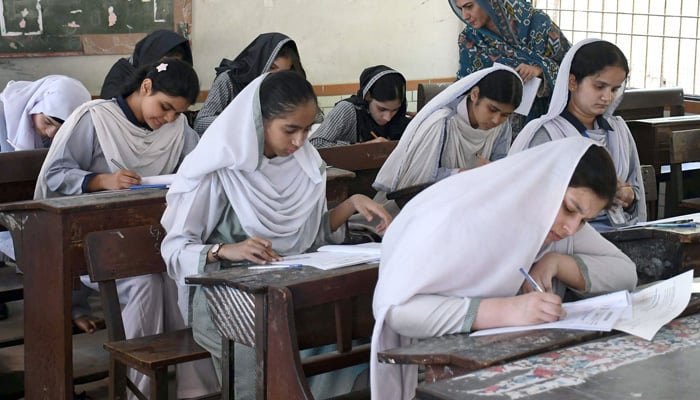
Karachi’s ongoing matriculation examinations have been plunged into controversy, with widespread allegations of paper leaks, bribery, and severe administrative failures disrupting students’ ability to sit exams fairly.
Speaking on Geo News’ programme “Geo Pakistan”, reporter Rana Javaid painted a grim picture of systemic mismanagement, revealing that examination centres were being changed even after papers had already begun. According to him, students who had appeared for two or three papers at one centre were suddenly informed — via official letters —that their centres had been relocated elsewhere.
He further disclosed that a Computer Science paper, along with its answers, was circulating on social media at least 20 minutes before the exam began. “If I receive answers to four or five questions before the paper starts, then my paper is effectively done,” he remarked, highlighting the scale of the leak and questioning how early it may have spread across various groups.
The situation is compounded by allegations of organised cheating. Javaid presented evidence of a Rs5,000 slip allegedly issued by a school principal, instructing a student to sit in a specific room and cheat. He argued that students paying such amounts are granted full freedom to use mobile phones and copy answers without restriction, exposing a complete breakdown of invigilation.
Security concerns have also surfaced, with at least two reported incidents of students bringing daggers into examination centres. The reporter stressed that checks are virtually non-existent, with bans on mobile phones and other prohibited items “only in name”.
Beyond cheating, the basic conditions at examination centres remain deeply troubling. Students are reportedly forced to take exams in extreme heat, with broken fans, insufficient furniture, and persistent load shedding. In some cases, centres are located hours away from students’ schools, placing additional strain on families, while in others, “home centres” have allegedly been created within the same schools—an apparent violation of established rules.
The programme’s anchor noted that such issues have become an annual occurrence, lamenting that despite repeated discussions over the years, little has changed. “The year changes, but the system remains the same,” she said, expressing concern for hardworking students forced to compete under such unfair conditions.
Sindh Minister for Universities and Boards, Ismail Rahu, has taken notice of the situation and ordered an inquiry, directing authorities to submit a report within 15 days and vowing action against those responsible. However, scepticism persists, with questions raised over whether meaningful accountability will follow or if the cycle of mismanagement will continue unchecked.