
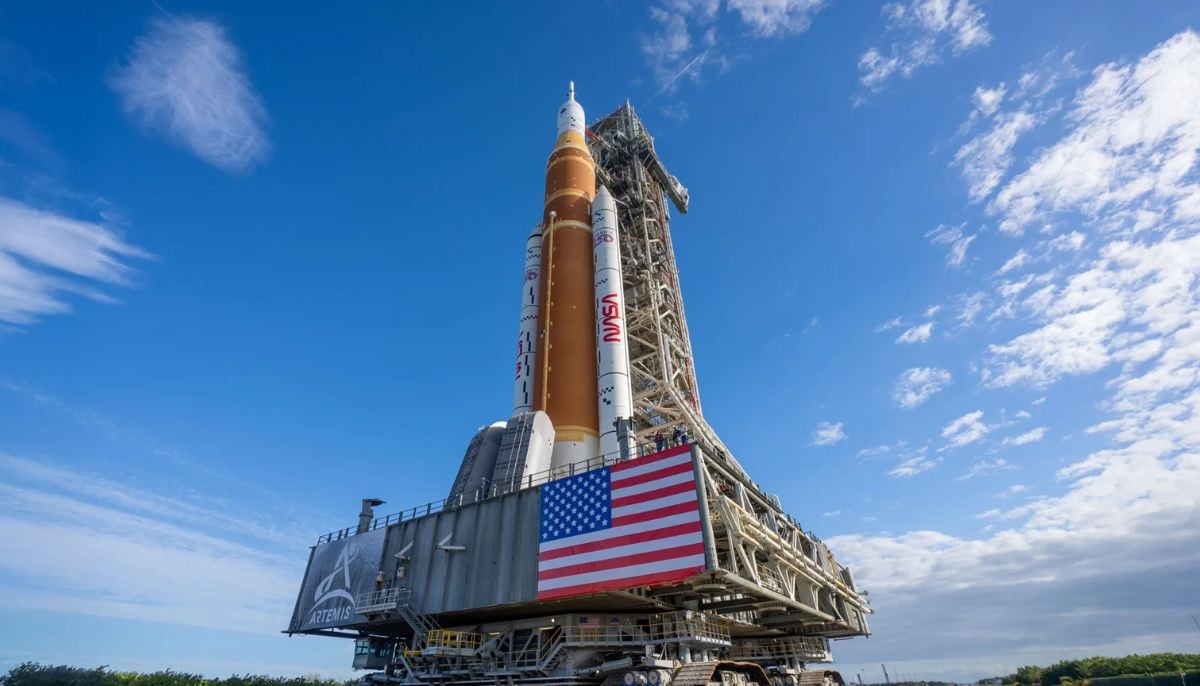
NASA has announced an array of changes in a strategic overhaul, aiming to expand the US lunar dominance and win the global space race against China.
On Tuesday, NASA chief Jared Isaacman unveiled an ambitious $20 billion plan to build a lunar base on the moon’s surface, while abandoning plans to deploy a space station, known as Gateway, in lunar orbit.
According to administrator Isaacman who took charge in December, the recent shake-up would expand humanity’s footprint in space as the US is making efforts to return to the moon before China’s attempt to send its astronauts there by 2030.
He said China has the “will and means to challenge American exceptionalism in space.”
$20B moon base
The highly-anticipated moon base will host more robotic landers and a fleet of drones, thereby preparing the base for using nuclear power on the lunar surface in the next few years.
“This revised step-by-step approach to learn, build muscle memory, bring down risk, and gain confidence is exactly how Nasa achieved the near impossible in the 1960s,” Isaacman said, referring to the US Apollo programme.
Space Reactor 1 Freedom spacecraft to Mars
NASA is also planning to send a nuclear-powered spacecraft named Space Reactor 1 Freedom to Mars by the end of 2028.
The mission will highlight the breakthrough to bring nuclear power and electric propulsion from the laboratory to deep space.
According to Isaacman, the spacecraft once it reaches the Martian planet will deploy helicopters to explore Mars.
Suspending Lunar Gateway station
In a recent overhaul, NASA also suspended Lunar Gateway station, which was meant to be a space station in lunar orbit, on the grounds of hardware, schedule and structural challenges.
“It should not really surprise anyone that we are pausing Gateway in its current form and focusing on infrastructure that supports sustained operations on the lunar surface,” Isaacman said.
The suspension of the lunar space station will bring uncertainty to the future roles of Japan, the European Space Agency, and Canada in the Artemis programme, which agreed to deliver components for the station.
Delay in lunar lander projects
Both Elon Musk’s SpaceX and Jeff Bezos’ Blue Origin are racing to develop lunar landers for NASA, with an initial crewed landing target of 2028.
Unfortunately, both companies have fallen behind their original timelines. A recent NASA inspector general report specifically noted that SpaceX is two years behind schedule.