
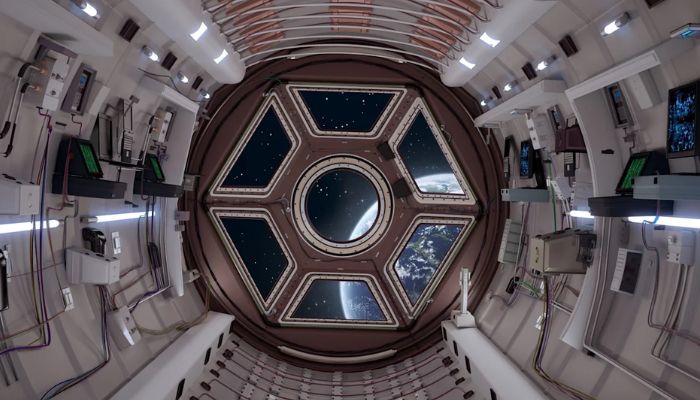
Space stations with artificial gravity could transform humans’ travel to deep space, allowing them to explore deep into the solar system.
The US company Vast is planning to turn this vision into a reality by developing a large-scale orbital habitat.
The habitat would be designed in such a way to generate simulated gravity through centripetal force. Using this technology and set-up humans can “explore further and deeper into space,” as asserted by the vice president of Vast, Tom Shelley.
Humans suffer from the harmful impacts of zero gravity during the months or years-long mission in space. However, artificial gravity will not shield them but also pave the way towards lengthy missions to Mars and beyond.
“One of the problems with the humans in space is they suffer bone loss and muscle loss because of the side effects of living in microgravity, but if you can create an artificial gravity space station, you’re now living in the gravity environment we’re in here,” Shelley said.
“Theory suggests that, therefore, you can spend longer in space, and you can therefore explore further and deeper into space.”
“We’re fundamentally a ‘keeping humans alive’ business.”
The idea of artificial gravity is not new and first proposed by Konstantin Tsiolkovsky and championed by Wernher von Braun. Later it was popularized by the film 2001: A Space Odyssey.
NASA and Stanford University proposed the massive “Stanford Torus” in 1975, and NASA later explored the Nautilus-X project in 2011, but it was cancelled due to budget constraints.
In artificial gravity, a space station rotates in such a manner that it creates an outward centrifugal force, thereby pushing the astronauts to the floor to simulate planet-like gravity. The purpose of it is to combat physiological deterioration caused by microgravity.
Upcoming ventures & goal
Vast is planning to launch the Haven-1 space habitation module in 2027, followed by Haven-2, operational by 2030, to serve as foundational science platforms.
These two stations will focus on research involving stem cells and protein crystal growth.
After Haven-2, the company plans to build an artificial gravity station that will contain a crew of 40 and create artificial gravity by rotating end-over-end at 3.5 rpm.
Several other firms are working on the plans to counter the effects of microgravity. Last year Russian state rocket company Energia submitted plans for a base that rotates 5 times a minute to mimic 50 percent of Earth gravity.
The long term goal of this venture is to allow millions of humans to inhabit the solar system, allowing civilization to thrive and preserving Earth.