
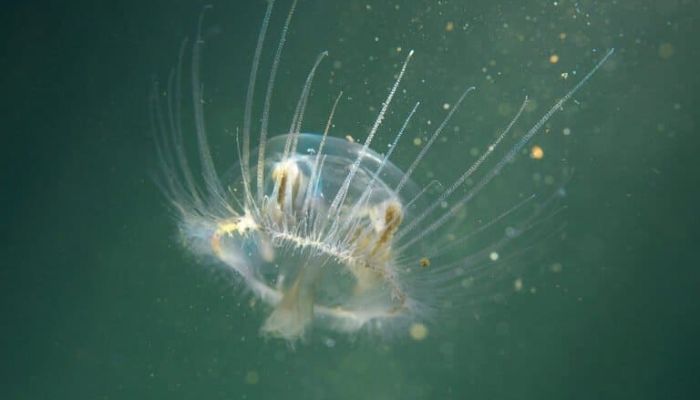
A species typically associated with lakes in Asia, Europe and North America has turned up somewhere no one expected: a flooded quarry in Paraguay.
González de Dos Santos, a researcher from the Faculty of Exact and Natural Sciences of the National University of Asunción, was able to find Craspedacusta sowerbii in the area of Ypacarai. The discovery is reported in the scientific journal “Ecosistemas” and serves as a first-ever report on the occurrence of the species in Paraguay.
Despite its reputation, Craspedacusta sowerbii bears little resemblance to the jellyfish people picture in the ocean; adults measure just one to 2.5 centimetres across with a nearly transparent bell-shaped body plus fine trailing tentacles.
Originally native to China’s Yangtze River basin, the species has, since then, spread to every continent except Antarctica, which makes it one of the most widely distributed freshwater invasive species on the planet; even so, its small size means most folks never notice it.
How did jellyfish get into an isolated quarry?
The quarry in question does not have any connections with local rivers or streams that could suggest that the jellyfish came there either swimming or carried away by moving currents.
It is more likely that the jellyfish entered the quarry through some kind of transport via water or diving equipment, which had been transferred between aquatic sites.
The problem with detecting this invasive species is that it is capable of remaining undetected for years since most of its life is spent in polyps that are invisible without proper conditions.
There is no threat associated with these organisms in terms of danger to people because their nematocysts are specifically designed to catch zooplankton.