
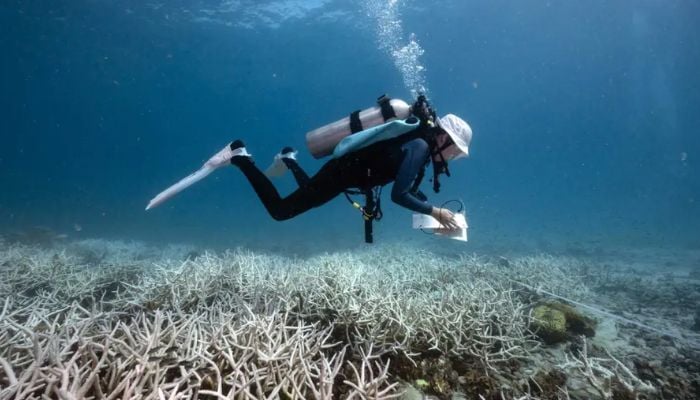
Scientists issued a dire warning regarding Australia’s Great Barrier Reef as it is facing the extreme risk of widespread bleaching and ecosystem collapse.
The Great Barrier Reef, the world’s largest living structure, is facing these dangers of unprecedented nature due to this year’s El Nino weather phenomenon.
For years, the reef has been grappling with mass coral bleaching driven by climate change and the United Nation cited utmost concern over the threats faced by the biodiversity. This year it narrowly avoided being listed as “endangered.”
Morgan Pratchett, a marine conservation ecologist at Queensland’s James Cook University, attributed these concerns to the “extreme El Nino”.
“It’s not outside of the realm of possibility that the next major disturbance will lead to localised species extinctions… and widespread ecosystem collapse,” Pratchett said.
Marine studies professor Ove Hoegh-Guldberg from the University of Queensland said inaction on the part of the government has threatened the future of coral reefs globally.
“This could be the precursor to the loss of humans. If you were on a big boat, like the Titanic, and someone comes up to you and says the boat’s going down, you bloody well get on those lifeboats and start acting and doing stuff.”
“We’re not doing that. The ship is starting to sink in a really massive way, and we’re not seeing it as what it is. It is so serious,” he warned.
For the past few months, climate experts and scientists have voiced concerns over the upcoming El Nino that would expect to break all the records. Beyond the heating oceans, the coral reefs face severe stress from following factors, including extreme weather events, land-based agriculture and industrial runoff and intensive coastal development.
UNESCO has kept a close eye on the reef every year since 2021, when officials warned it was in jeopardy of being classified as an “in danger” World Heritage site.