
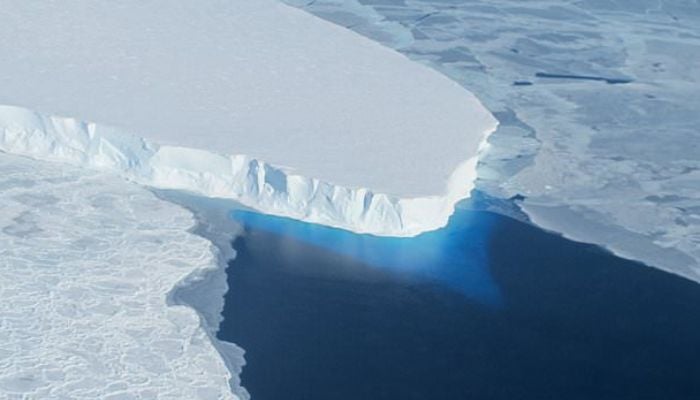
According to new research by a team of glaciologists, the planet’s widest glacier is experiencing accelerated mass loss beyond their models, meaning its significant impact on global sea level rise could be double current estimates.
Primarily Thwaites Glacier in West Antarctica nicknamed the “Doomsday Glacier” is susceptible to severe collapse triggering a huge wildcard when it comes to projecting future sea level rise.
The Florida-sized glacier which lies in one of the remote places on Earth has been persistently shrinking and currently contributes to around 4% to global sea life rise.
Thwaites’ immediate threat is fueled by processes at its grounding line, the point at which the ice lifts from the seabed and becomes a floating glacier extension.
The land on which Thawaites rests slopes downward inland, meaning that as the glacier melts, more ice is exposed to warm ocean water. However, the topography is difficult due to two main underwater ridges that anchor the ice holding it back from rapid glacial discharge into the sea.
A report author and professor of Earth system science at UC Irvine said: “We have been aware of the impacts of climate change on our planet’s sensitive ice sheets for decades.”
“The amount of realization gained in recent years of what is really happening on the undersides of glaciers like Thwaites is leading to an even greater sense of alarm.”