
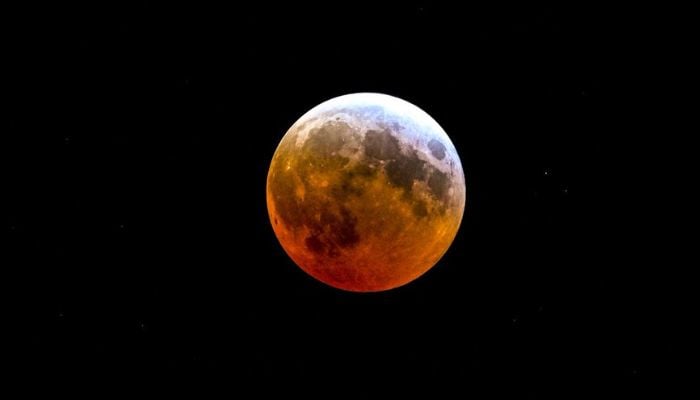
Stargazers are set to witness Earth’s shadow swallow 96% of the lunar surface on August 27-28, as the Moon enters the umbral shadow while sunlight filters through the planet’s atmosphere.
The partial lunar eclipse will occur as Earth passes between the sun and moon during the full moon phase when Earth’s. It creates the visual illusion of a curved shadow creeping across the surface while leaving a thin silver of light exposed at the point of maximum eclipse.
The partial lunar eclipse will be seen by 3.3 billion people spreading across North America, South America and parts of Europe and Africa. Crucially, each phase will be visible worldwide through the local timings for each eclipse phase will differ by region.
How to see the eclipse
Stargazers will see it on the West Coast of America in cities like Los Angeles, California, Portland and Oregon, the eclipse will occur just a few hours after sunset.
But the eclipse will be an early morning occurring pre-dawn before sunrise as the moon descends low toward the western horizon.
The maximum eclipse will be witnessed by anyone who happens to be on the right side of Earth at the time. One needs no safety glasses or binoculars to view a lunar eclipse. Further, a telescope can optimize the experience by delivering a scaled-up view as the dark segment creeps across the moon’s cratered surface.