
- PM Shehbaz seeks swift conclusion of diesel price talks.
- Local refineries produce major share of diesel consumed.
- Premier calls for immediate diesel price relief for consumers.
ISLAMABAD: Prime Minister Shehbaz Sharif on Wednesday directed Petroleum Minister Ali Pervaiz Malik to immediately travel to Karachi and negotiate with local oil refineries to secure a reduction in diesel prices and provide relief to consumers.
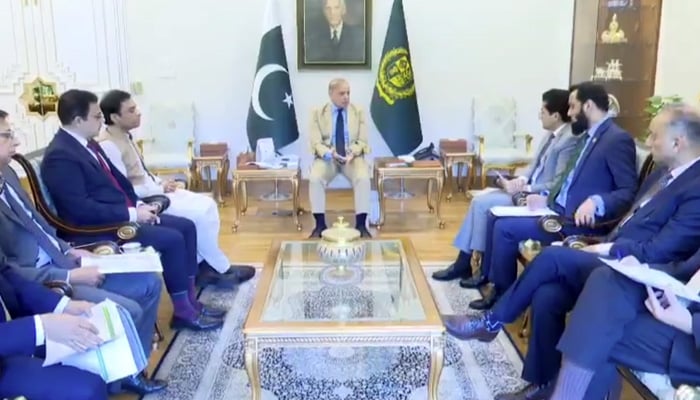
The prime minister issued the directive during a meeting with Malik, which was also attended by Information Minister Attaullah Tarar, Economic Affairs Minister Ahad Khan Cheema, Climate Change Minister Dr Musadik Malik and Member of the National Assembly (MNA) Hamza Shehbaz.
PM Shehbaz directed the petroleum minister to engage with local refineries and conclude the negotiations as soon as possible, the PM Office said in a statement.
He said a major portion of diesel consumed in the country was produced by local refineries and called for measures to reduce prices and pass the benefit on to consumers.
The premier stressed that immediate relief should be provided to the public to the maximum extent possible.
High-speed diesel is widely used in the transport sector, including goods carriers, buses and trains, as well as agricultural machinery such as tractors, tube wells and threshers.
Its price therefore has a direct impact on transportation and agricultural costs, contributing to higher prices of vegetables and other food items.
The federal government’s latest move comes amid growing public backlash over successive fuel price hikes and their impact on inflation.
The pressure intensified after the government shifted from reviewing fuel prices every 15 days to a daily mechanism amid volatility in global oil prices following renewed hostilities in the Middle East.
The government had earlier introduced a weekly fuel price review mechanism after the conflict began on February 28, when Israel and the United States attacked Iran, prompting Tehran to shut the Strait of Hormuz, a key route for global energy supplies.
The fuel price controversy has also triggered pressure from transporters and petroleum dealers.
Earlier this week, the All Pakistan Goods Transport Alliance suspended its nine-day nationwide strike for 40 days after the federal and Sindh governments gave assurances on key demands, including petroleum pricing.
The Pakistan Petroleum Dealers Association had also issued a 72-hour ultimatum to the government earlier this month, calling for the resolution of their outstanding issues and fulfilment of commitments made by the petroleum minister.
However, the protest was subsequently called off after the Economic Coordination Committee (ECC) approved an increase in dealers’ margins on petrol and high-speed diesel.
Meanwhile, the Jamaat-e-Islami (JI) continued its sit-ins in provincial capitals for a fourth consecutive day against high petroleum levies, rising inflation and increased electricity bills, as fuel prices continued to put pressure on household budgets.
Petrol is widely used by commuters travelling in cars, motorcycles and rickshaws, making price increases particularly burdensome for middle- and lower-middle-income households that rely on private and two-wheeled transport for daily travel.