
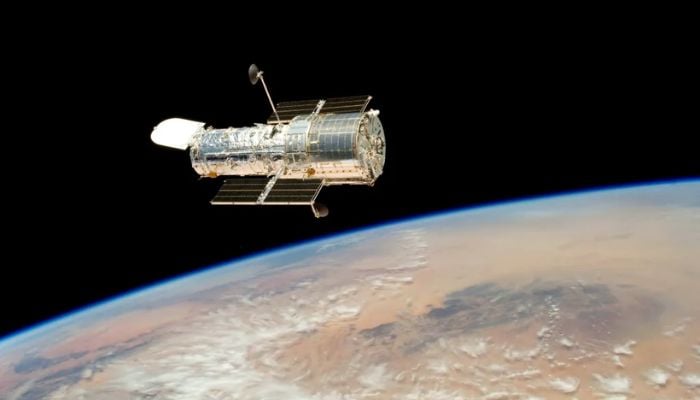
NASA’s Hubble Space Telescope marked its 36th anniversary in April 2026 by peering into the Trifid Nebula, a star-forming region 5,000 light-years away that it first observed in 1997. This comparison shows that astronomy has very rarely been able to observe changes in the birth of stars from the perspective of humans.
The horn, which is actually a plasma jet from a star forming, is much longer now than it was almost three decades ago, providing astronomers with actual proof of the influence of young stars on their environment as they grow.
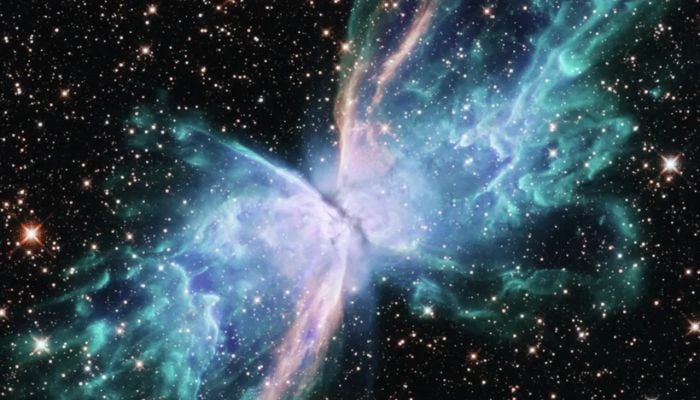
Hubble was launched into space on April 24, 1990, from Kennedy Space Center, having made more than 195,000 trips around Earth and completing more than 1.7 million observations.
A number of servicing missions to this telescope and its enhancement, including a better camera installed during Servicing Mission 4, have resulted in extending its scientific career by much. Hubble is expected to work well into the 2030s.
Close to 29,000 scientists have released almost 23,000 scholarly articles based on the Hubble’s data gathered in 36 years of its operation, including about 1,100 scientific papers published in 2025. Starting from 2022, scientists have started to combine their work with the Hubble data with the data of the James Webb telescope.
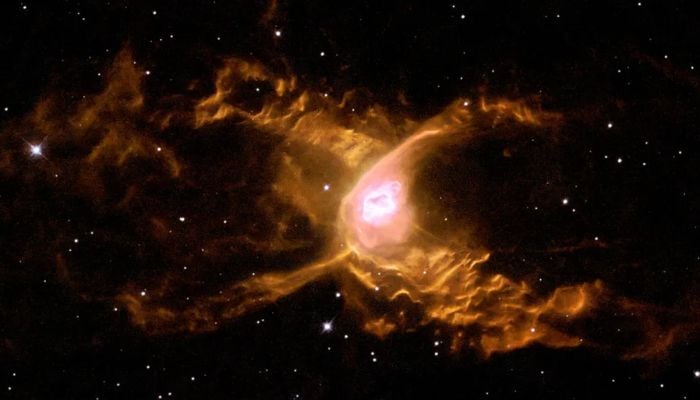
In the Trifid nebula, massive stars outside the Hubble frame shaped the area for more than 300,000 years, but due to the long service of the Hubble telescope, scientists can observe evolution on human timescales.