
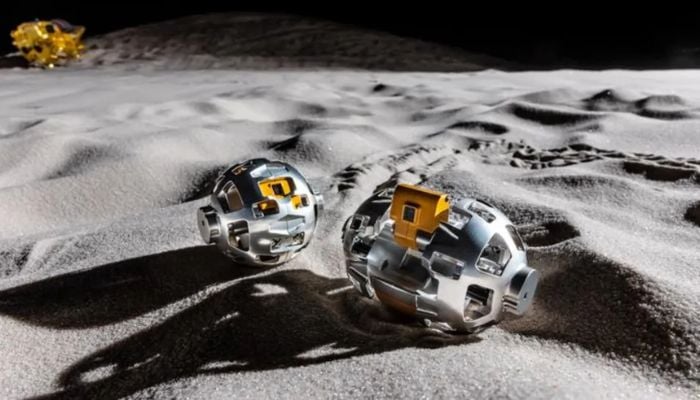
A robot small enough to fit in your palm spent 100 minutes rolling across the lunar surface, transforming from a sphere into a wheeled vehicle and beaming images back to Earth without any help from mission control, and scientists are only now detailing how it pulled this off.
A study that came out this month in the journal Science Robotics, led by a JAXA researcher named Daichi Hirano, kind of describes what went on when the rover, also called LEV-2 or SORA-Q, touched down on the moon on January 19, 2024.
Inside the SORA-Q mission results
This tiny 250 gram rover which is 80 millimeters wide could divide itself into two halves, create wheels, raise a camera and create its tail without any help from human beings.
The SORA-Q technology is inspired not only from aerospace but also from toy science. The rover is a joint venture of JAXA, Sony, Doshisha University and Takara-TOMY, the firm behind the Transformers franchise alongside Hasbro. Tricks learned from the consumer toy industry enable the rover to change from a sphere to a vehicle mode and vice versa at will.
After being mobile, SORA-Q had its cameras assess the distance between the craft and the landing module and adjust its course accordingly, taking images of not only the lander but the entire landscape.
Another interesting feature of SORA-Q was its ability to detect and resolve anomalies by itself an ability, according to the researchers, which is crucial for robots working far away from the Earth and therefore impossible to control.
What ended up being a very short mission resulted in communications being interrupted after 100 minutes, whereas SORA-Q was scheduled to operate for another two hours. According to Hirano, the reason behind this could either be physical damage caused to the robot due to the hopping of its companion, LEV-1, or the low battery level in the latter.