
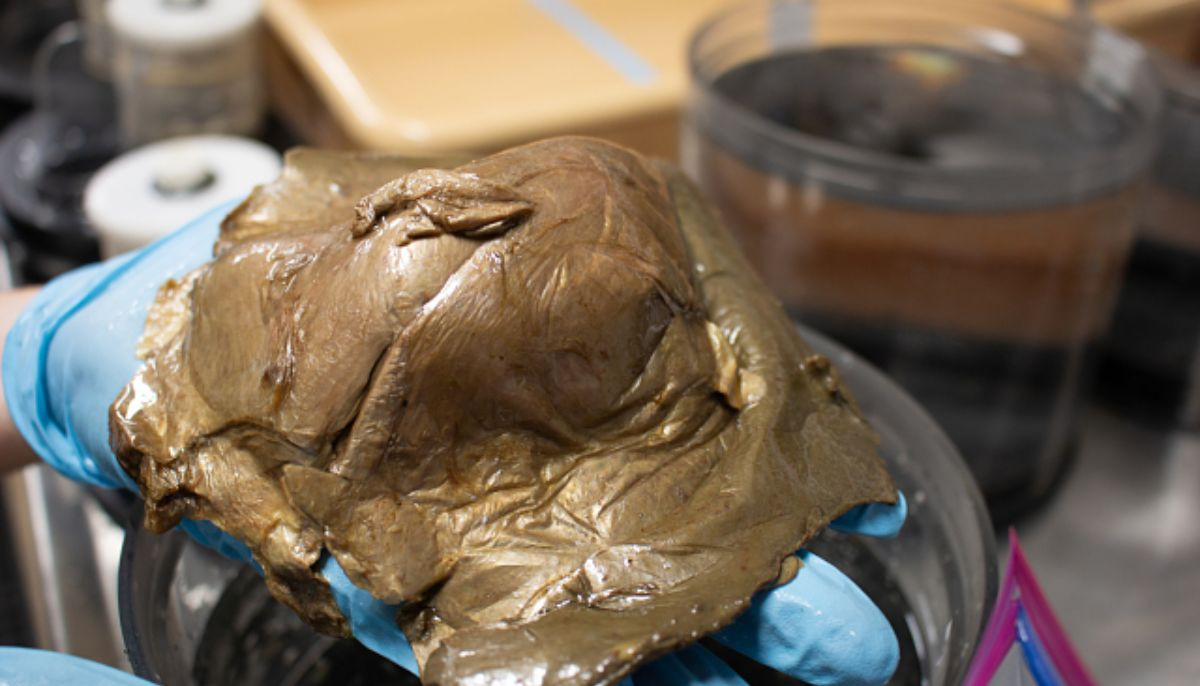
Two miles beneath the Gulf of Alaska, where sunlight never reaches and pressure crushes anything fragile, a small golden dome clung to a rock. Discovered in August 2023, the strange object quickly puzzled scientists and the internet alike. For more than two years, no one could say what it was.
Now, researchers from NOAA and the Smithsonian National Museum of Natural History have solved the mystery. The so-called “golden orb” is not an alien egg or unknown species. It is the leftover base of a rare deep-sea anemone known as Relicanthus daphneae.
The object was first spotted during NOAA’s Seascape Alaska 5 expedition. A remotely operated vehicle descended 3,250 metres to a volcanic feature and scanned the seabed. Among basalt rocks and sponges, the golden dome stood out.
The object measured approximately four inches in width and displayed a smooth surface except for its minor tear, which created an unfamiliar yet lifelike appearance. Scientists watching the livestream debated whether it was an egg case, sponge, or something entirely new before collecting it for analysis.
The specimen began its extensive research procedure, which included microscopy analysis and comparison testing and genetic examination. Initial DNA barcoding failed due to contamination from microbes living on the orb.
The researchers used whole-genome sequencing, which identified a matching result. The orb contained DNA from Relicanthus daphneae, a little-understood giant anemone whose tentacles can stretch several metres. The mitochondrial genome showed a close match to known references, which established the biological relationship.
The study concluded the orb was not a living organism but a cuticle, an outer layer shed or left behind by the anemone. The seabed anchoring process requires the cuticle to position itself underneath the body of this species.
When the animal moves or dies, the tough base can remain attached to rocks. That “golden footprint” is what researchers recovered, explaining why it lacked a mouth, muscles, or any recognisable anatomy.
The discovery did not end there. Genetic analysis showed the orb had become home to a community of microbes. Some processed nitrogen, while others resembled deep-sea sediment organisms.
In effect, the decaying anemone base had turned into a tiny recycling system on the ocean floor, where biological remains feed chemical processes and support new life.