
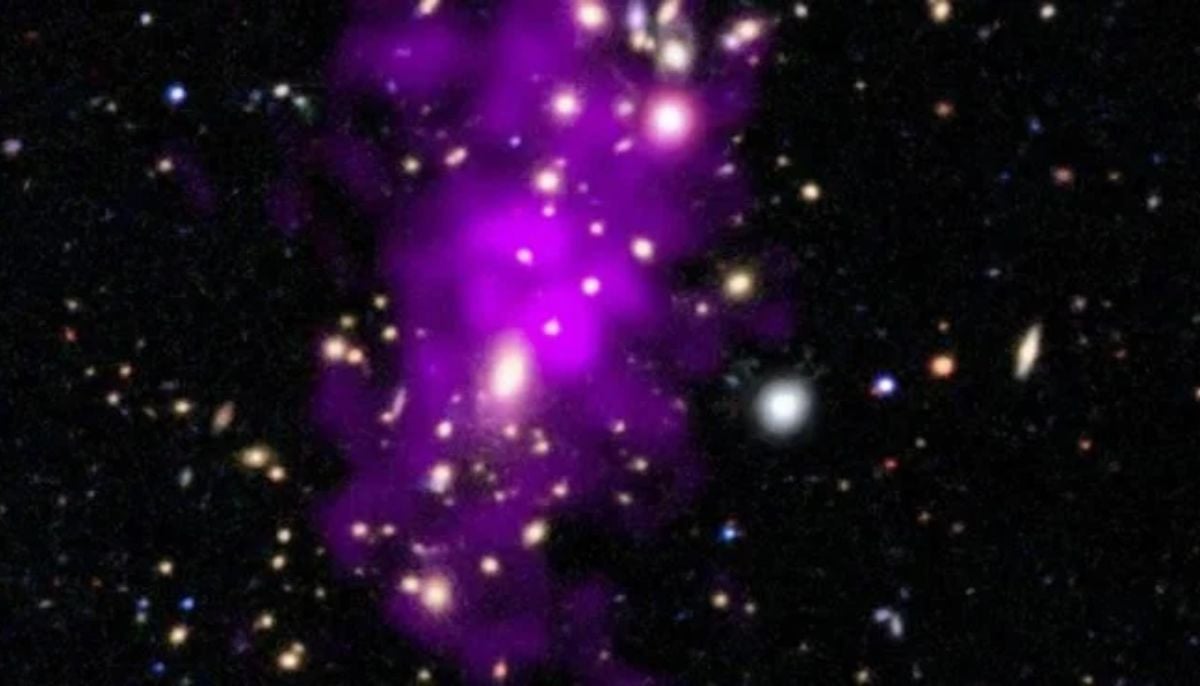
A new study published in The Astrophysical Journal by Davis astronomers reveals massive galaxy collisions through a combination of X-ray and optical light data.
The recent composite image, created using NASA’s Chandra X-ray Observatory and visible-light surveys, provides crystal clear evidence that two galaxy clusters are currently colliding.
Astronomers further utilised Chandra’s X-ray capabilities to scrutinise intense hot gas within the structure.
It has been observed that the gas in such clusters commonly serves as an aureole, however in this case, the gas is thinned out, revealing that two sub-clusters are colliding.
This gas contains a greater mass than all the galaxies combined, along with a significant amount of non-luminous, or dark matter.
Exploring the hidden secrets of dark matter
Researchers use computer models to study these clusters, which first collided over 2 billion years ago and reached a point of maximum impact or shock approximately 400 million years ago.
In spite of the specific timeline, this offers scientists a deeper understanding of how dark matter behaves during high-speed collisions.
The study will help to discover crucial insights about the mysterious substance that makes up the majority of the universe.