
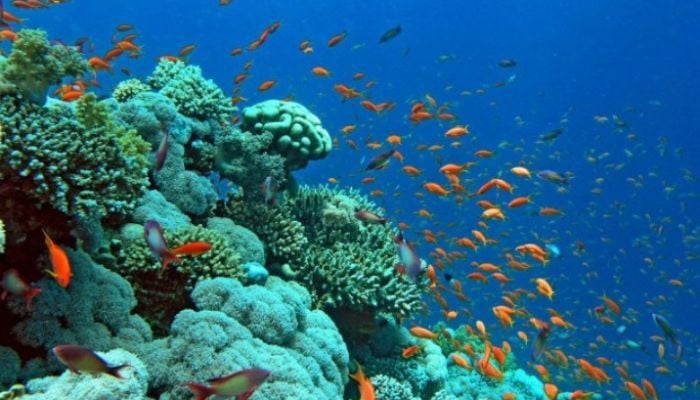
Beautiful coral reefs underneath,deep sea or oceans are basic attractions for sea explorers who love to find unique and exclusive creatures hidden beside these beautiful vibrant structures.
Coral reefs are essential for marine life, as they provide food and shelter for about a quarter of all ocean species or aquatic creatures, while scientists may fear about their existing and future damages.
A study published in Communications Biology was conducted to examine rare coral reef environments in Papua New Guinea to understand how ocean acidification may affect coral ecosystems as the climate continues to warm.
A team led by the Australian Institute of Marine Science AIMS, investigated entire reef communities located near several of Papua New Guinea’s shallow submarine volcanoes.
The researchers found that as the ocean absorbs carbon dioxide CO2 from the air, seawater becomes increasingly acidic, which can slowly erode the limestone that forms coral skeletons.
These sites are naturally exposed to higher CO2 levels because gas escapes from the sea floor, creating conditions similar to those expected in future oceans.
Senior author of the study and a coral researcher at AIMS, Dr. Katharina Fabricius, explained that the work has identified species capable of surviving long-term exposure to elevated CO2.
While the other author of the study, Dr. Sam Noonan revealed that, “These Papua New Guinea reefs are telling us that with every bit of increase in CO2, we will see fewer corals and more fleshy algae.”
“Importantly, we also found far fewer baby corals, which means reefs won’t be able to grow and recover quickly,” he added.
Dr. Sam further explained that oceans are slightly alkaline with a pH of 8.0, but their acidity has already increased by 30%.
As CO2 emissions rise, the ocean pH is predicted to decline further down to a pH of 7.8 by the year 2100.
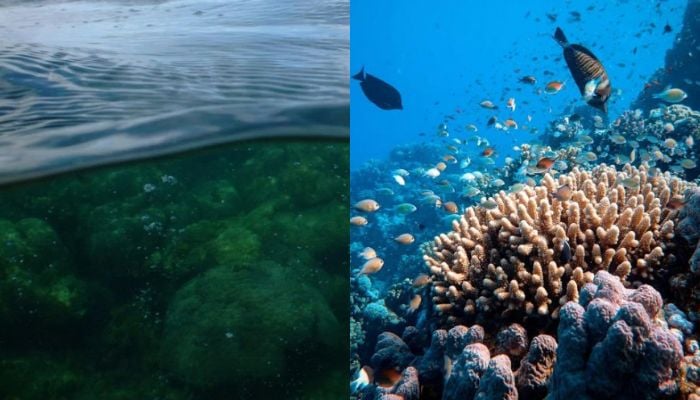
Researchers concluded that ocean acidification is a massive global problem, which has been understudied and underreported to date.
This research is the first of its kind, presenting unique field data and allowing them to assess how whole communities change in the real world.
Researchers suggest that we should control emitting more carbon dioxide in the environment, even under the sea.
“The more CO2 we emit into the atmosphere, the greater the changes will be to coral reefs and the coastal communities that depend on them. This is on top of the impact of global warming and sea level rise,” explains AIMS researchers.
Additionally, coral reefs are formed by colonies of polyps held together by calcium carbonate, while most of them are built by stony corals.
Coral reefs are characterized by underwater ‘ecosystems for marine life’ and they naturally protect a sea or ocean’s coastline.
In the event of a tropical cyclone or hurricane, any place that is surrounded by a reef has an incredible resource that will reduce damage to the shoreline.