
- New contracts valid for five years, with possibility of extension.
- Proposed new buyback tariff to be applicable on new installations.
- Rooftop solar installations result in 3.2bn unit decline in grid sales.
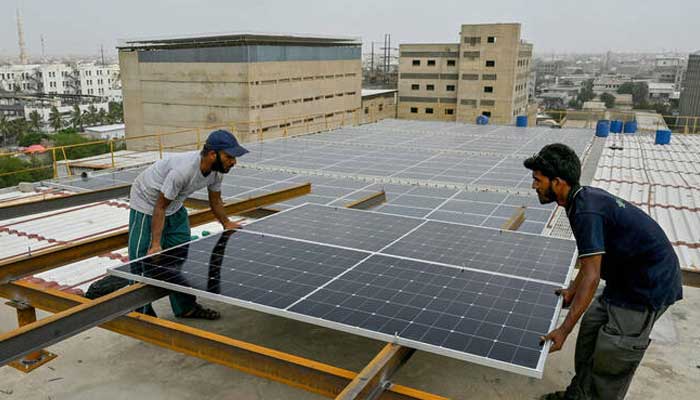
ISLAMABAD: Amid prevailing solar boom in the country, the National Electric Power Regulatory Authority (Nepra) has advised a major policy shift seeking to replace the existing net metering system with a gross metering mechanism for rooftop solar consumers, citing a growing financial burden on conventional grid users, The News reported on Monday.
Under the proposed Nepra Prosumer Regulations (NPR), a newly drafted 18-page document uploaded to the regulator’s website, future domestic solar consumers will trade electricity with their respective distribution companies (Discos) through gross metering rather than net metering.
However, existing net metering consumers with valid seven-year contracts will continue to sell their surplus electricity at Rs22 per unit until the expiry of their agreements.
For new solar installations, electricity exports will be compensated under a gross metering framework at a proposed buyback tariff of Rs11.30 per unit.
These contracts will be valid for five years and may be extended on a mutual basis. Nepra has invited feedback from stakeholders and consumers in 30 days and may hold a public hearing before finalising the regulations, an official said.
The shift follows concerns that the current net metering regime is imposing a financial burden of up to Rs2 per unit on non-solar grid consumers. In a meeting held on October 22, Prime Minister Shehbaz Sharif directed the Power Division and Nepra to review and verify the buyback tariff and its broader impact before finalising reforms.
Under net metering, electricity exported to the grid is adjusted against electricity imported, reducing consumers’ bills. In contrast, gross metering compensates consumers at a fixed feed-in tariff for all electricity generated and exported, while electricity consumed from the grid is billed separately at retail tariffs.
According to official data, the rapid expansion of rooftop solar has resulted in a 3.2 billion unit decline in grid electricity sales in FY2024, causing nearly Rs101 billion in revenue losses for distribution companies. This has contributed to an average tariff increase of Rs0.9 per kWh for other consumers.
Power Division projections warn that by FY2034, lost grid sales could rise to 18.8 billion units, translating into a Rs545 billion impact and a potential tariff increase of Rs5-6 per unit. “The grid is effectively being used as battery storage for solar consumers,” an energy official said, noting that net metering users sell surplus power at high buyback rates while avoiding fixed system charges.
Officials argue that the imbalance is evident as new utility-scale solar projects are being contracted at below Rs10 per unit, making the Rs22 per unit net metering buyback unsustainable. The proposed gross metering tariff of Rs11.30 per unit is aimed at preventing further tariff escalation for grid-connected consumers.
The rapid growth of solar net metering — now estimated at 6,000MW nationwide — has also raised operational concerns. Winter electricity demand often falls to 8,000-9,000MW, increasing the risk of excess daytime generation.
Energy planners warn that unchecked expansion could threaten grid stability, citing Sri Lanka’s experience, where a sudden solar surge triggered a nationwide blackout.
Authorities have also identified cases of misuse, including consumers with sanctioned loads of 10kW exporting up to 20kW to the grid. To address this, Discos have begun installing smart meters capable of real-time monitoring and export control.