
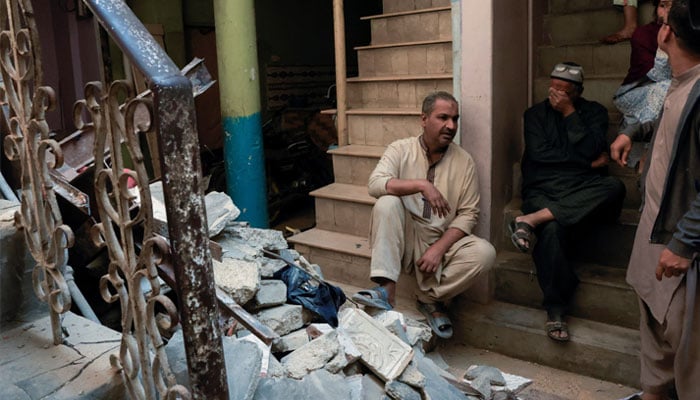
Karachi’s Soldier Bazaar No 1 was left shattered on Thursday after a powerful blast tore through the densely populated katchi abadi of Gul-e-Rana. The explosion levelled a multi-storey residential building, claiming at least 16 lives and leaving 13 others injured.
Within moments, the tightly packed neighbourhood — where some lanes are so narrow that only one person can pass at a time — turned into a landscape of rubble, dust, and anguish.
Entire families were trapped beneath collapsed concrete slabs on cramped 30- to 40-square-yard plots, where multi-storey structures had sprung up amid what residents say was unchecked and unregulated construction, The News reported.
The building where the incident occurred was similarly built on a 30-35 square yard plot, with each room occupying a separate floor. The structure had a ground plus two floors, while a family was also living on the terrace.
As rescue workers struggled to navigate the suffocatingly tight alleys, relatives cried out the names of their loved ones. Some clawed through rubble with bare hands. Others stood in shock, staring at what used to be their homes.
“A woman tearfully recounted that her aunt and her two young innocent children were also caught in the incident. Her aunt’s husband was in critical condition, having suffered severe burns.”
Preliminary findings indicate that the explosion was caused by gas leakage — a danger residents say had been looming for years. Locals claim the area suffers from chronic gas shortages and prolonged load-shedding, sometimes lasting for days.
In desperation, many households turned to gas cylinders as an alternative. At the same time, due to low pressure, several residents installed suction machines to draw gas into their homes. However, according to residents, when the gas supply resumes after outages, it often returns with extreme pressure.
“The pressure is never maintained,” said one resident, Rajab Ali. “Either there is no gas at all, or when it comes, it comes like a storm.” Residents insist that this failure to maintain pressure is the biggest issue. They argue that sudden high pressure significantly increases the risk of leakage — especially in homes lacking proper infrastructure.
Most residents belong to lower-middle-income families and cannot afford standard piping systems. During the post-blast survey, Bomb Disposal Squad officials reportedly found plastic pipes installed inside homes, many without proper fittings.
Experts say such makeshift arrangements, combined with fluctuating pressure, can easily turn a minor leak into a catastrophic explosion.
“We have just inspected the entire house. Inside the kitchen, all the gas connections are linked through plastic pipes, with joints installed at multiple places. Gas is still leaking, and gas-suction motors have also been installed, explained bomb disposal squad expert Abid Farooq.
He said that it has come to light that there had been no gas supply for several days. However, gas suddenly resumed last night, and the pressure was quite high. There may have been leaks in the pipes, and the family might have woken up at Sehri time and lit the stove to prepare the meal, which could also have triggered the incident.
Secondly, all the electrical wiring is in poor condition. A short circuit could also have occurred. If the house was filled with gas and electricity was restored, that too could have caused a short circuit and led to the explosion, says BD expert, added that it was not a cylinder blast. In Karachi, most such explosions occur due to gas leakages.
Residents also allege that when gas flows at unusually high pressure, it affects their utility bills as well. “For the past eight years, there had been no gas supply here. They had installed a new gas line and removed the old one, but still, gas was not coming. Last night, they suddenly turned on the gas, which caused the incident,” says another resident.
Poor ventilation, tightly packed housing, and congested construction further amplified the impact of the blast. Reports suggest that several surrounding houses suffered structural damage, including cracks in vacant buildings.
The tragedy has once again raised serious questions about regulatory oversight and the responsibility of the authorities concerned to maintain consistent pressure and ensure safe distribution.
As grief engulfed the area, anger simmered alongside sorrow. Some mourned silently; others openly blamed administrative failures. However, the spokesperson for the SSGC was unavailable when contacted for comments.
What remains behind are shattered families, injured survivors, and a haunting reminder of how fragile life becomes when infrastructure fails in overcrowded urban settlements. Authorities have yet to issue a final technical assessment, but for the residents of Gul-e-Rana, the damage is already irreversible.