
PUBLISHED
November 15, 2026
The Americans come and go, the Brits arrive in batches, Bollywood has its moments, and the Turks appear now and then. The Nordics and the Spanish come and go, and an odd Argentinian may make an appearance. The Koreans, meanwhile, just keep coming. We are talking shows here, not nations.
The latest Netflix figures for January–June 2026 show that non-English content accounted for more than a third of global viewing, with Korean, Japanese and Spanish content among the biggest contributors. Some Korean releases were enormous: Teach You a Lesson reached 48.2 million views, Can This Love Be Translated? 28.6 million and The Art of Sarah 25.8 million.
And this is not just a recent Korean surge. According to Ampere Analysis [a global market research and data analytics firm specialising in the media, entertainment, streaming, video games, and sports industries], South Korean content accounted for around 8-9 per cent of Netflix viewing hours globally in the second half of 2024, making Korea the second-largest country of origin for Netflix viewing, behind the US. Of Netflix’s 500 most popular non-English titles during that period, 85 were Korean — about 17 per cent.
The scale becomes even clearer with Squid Game. Across its three seasons, the series generated 231 million views in 2025, while its final season alone reached 72 million views in just four days. Other Korean titles have also pulled in millions of viewers, including When Life Gives You Tangerines with 35 million views, The Trauma Code with 34 million, and Weak Hero: Class 1 and Weak Hero: Class 2 with 22 million and 20 million respectively.
So, yes — Korea is no longer a niche corner of Netflix. It has become the largest non-US national source of viewing, even though American content still overwhelmingly dominates the platform.
And the appetite appears to be continuing. Netflix’s 2025 research found that more than 80 per cent of its viewers had watched Korean content, while 63 per cent of those already watching K-content said they intended to watch more.
So what is it about Korean shows that has made them travel so well?
A big reason is that Korean shows have become very good at combining emotional storytelling with excellent production. They don’t feel like they’re made for just one audience, hence audiences anywhere can relate to the stories and get caught by the superior production.
Even a romantic story in a Korean show usually has family, friendship, class, work, social pressures or personal struggles woven into it. There is often more going on than will these two people get together? Then there are characters you get attached to. Not just the leads, the supporting characters are often given proper personalities and story arcs. You may start watching for the lead couple and end up caring just as much about the grandmother, neighbour, colleague or an oddball friend.
Emotional without being entirely cynical: Korean dramas aren’t afraid of tenderness, sentiment, family affection and vulnerability. That can be very appealing whereas if you think of it, much Western television is more ironic or hard-edged.
The productions are overall very pleasing to the eye. This includes locations, clothes, interiors, cinematography, music and food, which are all part of the experience. Even an ordinary apartment or neighbourhood can look wonderful.
The Koreans like to experiment with genre mixing, so that a single show can move between romance, comedy, family drama, mystery and social commentary. Vincenzo, for example, is simultaneously crime, revenge and comedy. Pacing is another trick that the Koreans know so well. Most Korean dramas have a defined number of episodes and a story that is designed to reach an ending. You aren’t necessarily committing to seasons.
The Korean society and culture feels different enough to be interesting, but the emotions — parents, children, marriage, friendship, ambition, ageing, money — are instantly recognisable. However, Netflix made them global. The subtitles and dubbing removed much of the language barrier, while the worldwide distribution meant a Korean series could suddenly become everyone’s show rather than remaining a regional hit.
There’s something else I think is particularly important: Korean dramas take the mundane detail of ordinary life seriously. A family eating dinner, an old woman running a shop, neighbours gossiping, someone waiting for a bus, children growing up together — these things can become meaningful parts of the story.
If you wanted to try a Korean show, that is exactly why I would recommend When Life Gives You Tangerines to you. It isn’t just a Korean romance. It’s really about a life lived over decades — love, marriage, parents, children, disappointment, resilience and ageing. That’s where Korean television is remarkably good. Depiction of strong parent-child relationships, grandparents, family obligations, respect for elders, marriage expectations, neighbours who know everybody’s business, concern about social standing, loyalty and sacrifice, food and family meals, tightly knit communities clicks instantly and deeply with Pakistani [and other] audiences, especially Asian because of shared cultural values and camaraderie.
K-drama is not just eye-candy, the content is cerebral too. Maybe, you come for one and stay for the other. A Pakistani study of Korean-content consumption found that viewers perceived cultural proximity between Korean and Pakistani culture. Another Pakistani study of Crash Landing on You specifically identifies similarities in conservative approaches to relationships and social life. Korea gives Pakistani viewers a society that is recognisably Asian and family-oriented, while still being technologically advanced, stylish and very different.
Korean dramas are particularly liked by women audiences as often the female characters are created meticulously. Their emotional lives, careers, friendships and desires are portrayed without the entire story being built around sexualisation or gender. There is a delicate beauty, aspiration and the appeal of an Asian modernity that isn’t Western.
When Life Gives You Tangerines was widely praised as a visual and narrative masterpiece, its stellar performances, poetic voiceovers, and moving depiction of ordinary lives. The story follows the lives of Oh Ae-sun (played by IU and Moon So-ri) and Yang Gwan-sik (played by Park Bo-gum and Park Hae-joon) from the 1950s onward. Ae-sun, a bold, free-spirited dreamer wants to become a poet, while Gwan-sik is a steadfast, quiet pillar of unwavering devotion.
The story tracks their journey through poverty, societal pressures, and systemic misogyny, eventually expanding to focus on generational bonds and family sacrifice.
Gwan-sik’s quiet, unconditional support mirrors the persistent, warm nature of tangerine tea transforming life’s sour moments. The series heavily celebrates female strength, heavily highlighting Jeju’s haenyeo (sea women) and the breaking of generational cycles.
Crash Landing on You turned out to be an addictive, high-production romantic drama balancing high-stakes political tension with cozy, heartfelt charm. A freak paragliding accident drops South Korean fashion heiress Yoon Se-ri (Son Ye-jin) right across the demilitarised zone into North Korea. She is discovered by stoic North Korean army captain Ri Jeong-hyeok (Hyun Bin), who decides to hide and protect her while scheming a way back home. The mix of high-tension danger, fish-out-of-water comedy, and romance offers a fascinating, albeit dramatised, glimpse into rural and urban North Korean daily life. However, the 16 episodes with 80–90 minutes runtime might feel a little too bloated at times.
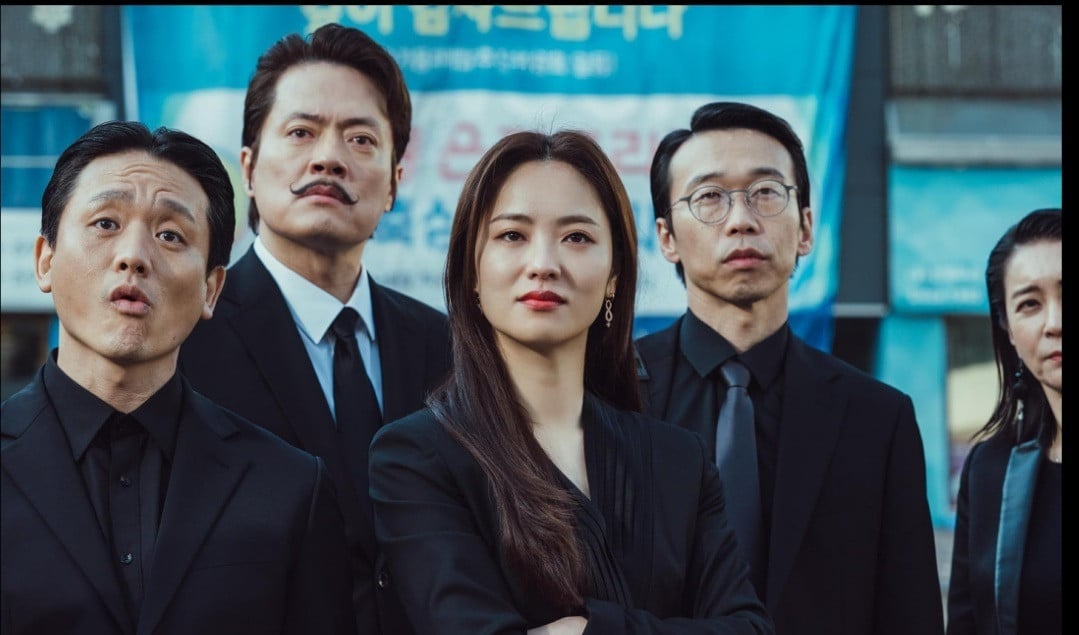
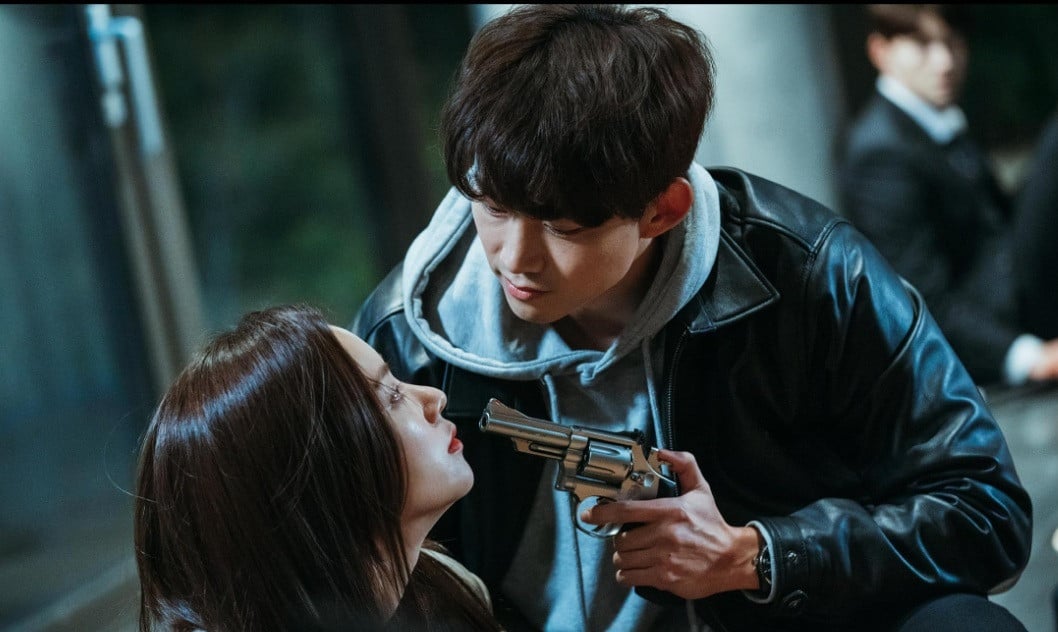
Vincenzo is a stylish, 20-episode South Korean dark comedy and action series which is about Vincenzo Cassano (Song Joong-ki), a Korean-born Italian mafia consigliere. After his adoptive father dies, a power struggle forces him to flee Italy for Seoul. His main goal is recovering a massive stash of hidden gold buried beneath the quirky Geumga Plaza. However, his plans are delayed when he must protect the building and its eccentric tenants from a massive, corrupt pharmaceutical conglomerate. Teaming up with a sharp-tongued lawyer, Hong Cha-young (Jeon Yeo-been), he dishes out ruthless, mafia-style justice. Joong-ki delivers a magnetic performance as a cold, calculating anti-hero who is unafraid to use brutal methods against corrupt villains. The show boldly mashes screwball comedy with intense, violent revenge thrillers, creating a distinct viewing experience.
With breathtaking, classical music performances directed with palpable tension, Four Hands Two Sonatas is a tense, 12-episode psychological musical drama that blends classical performance with dark, emotional stakes. Two contrasting piano prodigies forced into a high-stakes world of rivalry and complex friendship, one isthe wealthy and technically flawless perfectionist Kang Pi-o (Song Kang), crushed under the heavy expectations of his conductor grandfather, while Choi Jeong-yo (Lee Jun-young), a raw, instinctive talent is burdened by financial distress and a troubled family background. The third brilliant viola student Hong Jae-in (Jang Gyu-ri bridges the gap between the two leads. Kang and Jun-young deliver phenomenal “bromance” dynamics and intense emotional depth.
With piano competitions that feel like dramatic confrontations. The show moves past standard romantic tropes to tackle heavy themes of artistic obsession, trauma, and family pressure.
Can This Love Be Translated? blends slow-burn romance with heavier psychological drama about communication. Kim Seon-ho as Joo Ho-jin, a skilled multilingual interpreter relies on precision and emotional restraint against Go Youn-jung as Cha Mu-hee, a famous superstar actress who struggles to express her true feelings. Their paths cross internationally — spanning Tokyo, Canada, and Italy — where Ho-jin ends up translating feelings and confessions between Mu-hee and a Japanese actor called Hiro (Sota Fukushi). The lead actors deliver stellar, charismatic performances. The early episodes are widely praised as an adorable, funny, and deeply engaging while the second half shifts from a light romance into a messy psychological sub-plot dealing with trauma and an alter-ego/dissociative elements.
Perhaps another peculiarly Pakistani factor is at play too. We are remarkably porous when it comes to other cultures. We may discover kimchi, Korean sauces and Korean barbecue one day and happily make room for them on our restaurant tables the next. We borrow, sample, adapt and move on without too much fuss about where something came from. It is much the same with what we watch. Korean television has arrived not as an exotic import to be admired from a distance, but as something we have cheerfully made room for on our screens.