
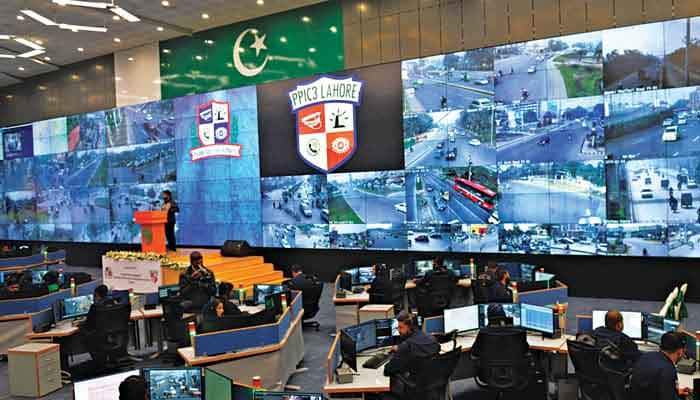
- Senators question security of Islamabad Safe City surveillance system.
- Officials assure Senate system protected by cybersecurity safeguards.
- Senate committee seeks detailed list of software used in Safe City system.
ISLAMABAD: The Senate Standing Committee on Information Technology on Wednesday voiced concerns about the security of Islamabad’s Safe City surveillance system, cautioning that any breach could endanger VVIP movements, while project officials maintained that the cameras and data servers remain protected by multiple cybersecurity measures, The News reported.
The concerns came to the surface during a meeting of the Senate committee chaired by Senator Palwasha Khan at the Parliament House, where lawmakers discussed the security of surveillance systems after reports that traffic cameras in Tehran had recently been hacked.
Many senators questioned whether software used in the Safe City system had links with Israeli technology companies, arguing that such connections could create vulnerabilities for sensitive government movements.
PML-N Senator Afnan Ullah said many global software systems had Israeli origins, and this could become a serious security concern, particularly during VVIP movements. He suggested that physical hardware-based systems might be required for such movements instead of relying entirely on software-based monitoring.
JUI-P Senator Talha Mahmood told the committee that during his tenure as chairman of the Senate Standing Committee on Interior, an inquiry had revealed that the company involved in the project had an office in Turkey, but its links traced back to Israel. Officials of the Safe City project rejected these concerns and assured the committee that the surveillance system was fully secure.
The director general of the Safe City project told the committee that firewalls had been installed to prevent cyber-attacks and separate security protocols were in place for VVIP movements. He said the system’s data servers and mobile applications were secure and the project regularly underwent technical audits.
Officials informed the committee that the BriefCam software used in the Safe City system had been deployed in 2021 and was currently owned by a Japanese company. The Director General of the National Computer Emergency Response Team (NCERT) told the committee that most technologies used in Pakistan were imported from abroad and said authorities continuously monitored cyber risks. He revealed that so far, 15 software companies had been blacklisted due to security concerns.
The committee directed officials to provide a complete list of software installed in the Islamabad Safe City system and asked the technical team of the project to brief members in detail at the next meeting.
The meeting also witnessed criticism of the district administration’s plan to install electronic M Tags on motorcycles in Islamabad.
Senator Kamran Murtaza questioned the effectiveness of the system and asked what would happen if a terrorist purchased a motorcycle already equipped with an M Tag. Senator Talha Mahmood also warned that stolen M Tags could allow attackers to bypass security checks.
Islamabad deputy commissioner told the committee that similar systems were used in many countries and the government was trying to regulate motorcycles through electronic identification. He admitted that loopholes could exist but said such systems were necessary to bring order and for monitoring.
The committee also discussed concerns about data security in government institutions. Senator Afnan Ullah claimed that National Database and Registration Authority (Nadra) data was being sold on the dark web, but Nadra officials said the database had only been hacked once in the past and remained secure. They said data leaks could occur from other institutions where people shared their personal information.
The chairman of Pakistan Telecommunication Authority (PTA), Major General (R) Hafeez ur Rehman, informed the committee that the next stage of bidding for spectrum positioning would be held soon and the three major telecom operators were ready to begin 5G testing after importing necessary equipment.
The committee was also informed that around 120,000 individuals’ tax data had leaked in 2024, while data of 79 taxpayers had recently been exposed. Officials of FBR’s IT wing said the leaks were reported to the national cyber security authorities and investigations were carried out.