
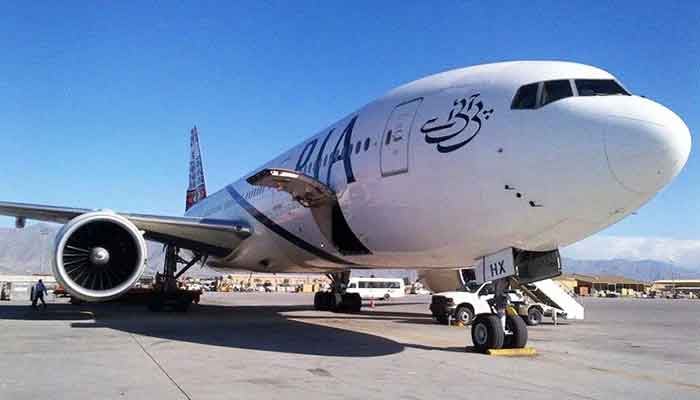
- PIA owns 30 aircraft: 18 operational, 5–6 under repair.
- Habib says he represents business community at govt level.
- High capacity charges keep power prices elevated, says Habib.
KARACHI: Pakistan International Airlines is working to expand and restore its fleet, with plans to scale up to 60 aircraft as part of its ongoing revival strategy, Chairman of the Arif Habib Consortium for Pakistan International Airlines (PIA), Arif Habib, said.
Addressing industrialists at the Korangi Association of Trade and Industry (Kati) on Thursday, Habib said that PIA currently owns 30 aircraft, of which 18 are in operation, while five to six are undergoing repairs and maintenance, The News reported.
“Efforts are being made to restore these planes and return them to service, which would raise the active fleet to 26, with a long-term goal of expanding it to 60 aircraft,” he added
He said that it was an honour to represent the business community at the government level and that he sought to apprise policymakers of the issues faced by businesses.
He said Pakistan’s economy had stabilised, with current fiscal year data showing improved revenues, expenditure management, and debt servicing. However, he stressed that reducing the cost of production remained essential for sustainable growth.
He noted that electricity tariffs were high due to capacity charges, as consumption remained low. If the available transmission system, which exceeds 22,000MW, is fully utilised, electricity prices could decline by Rs10 to Rs12 per unit, although this would require higher power consumption.
He emphasised that the business community should rise above political affiliations and speak with one voice to effectively convey its concerns to the government, adding that such unity would compel authorities to respond. He also highlighted information technology, agriculture and mining as key sectors that could help the country overcome economic challenges and support growth.
Abad Chairperson Hasan Bakhshi said the business community should unite to form a consortium to take over loss-making public sector entities such as the Water Board, Karachi Metropolitan Corporation and Sindh Building Control Authority, whose performance he described as negligible.
He said the business community, as stakeholders, had the capacity to run these institutions more efficiently.