

PUBLISHED
April 19, 2026
LAHORE:
It’s 1959, a black-and-white film about the suffering of fishermen in East Pakistan (now Bangladesh) quietly crossed the ocean and landed on the Academy’s desk. The Day Shall Dawn, written by Faiz Ahmed Faiz and directed by AJ Kardar, was Pakistan’s very first submission for Oscar consideration. The film surrounded the plight of a fisherman’s family and received recognition at the Cannes Film Festival. Almost nobody remembers it now. It was banned by the Ayub Khan regime three days before its release, and shortly after, Faiz, along with other communist artists and writers, were jailed by the regime.
That was 67 years ago. And the question still lingers, as persistent as summer in Lahore: why hasn’t Pakistan ever cracked the Oscar?
The math alone is staggering. As of 2025, Pakistan has submitted 13 films, but none of them were nominated. Thirteen attempts across nearly seven decades. Not a single nomination in the Best International Feature Film category. Countries smaller in size, with less cinema heritage, have come and gone from the Oscar stage with statuettes in hand. Pakistan keeps knocking. The door keeps closing.
But numbers, in isolation, lie. They flatten the chaos of what actually happened in between. After the submission of the first two films, there was no submission for 50 years because of the sudden collapse of Pakistani cinema.
The growth of Pakistani cinema began from 1947 to 1958 and went through the golden age of films between 1959 and 1977, where good productions were uplifted by many directors, producers and writers. In 1977, the country’s political condition became critical due to the overthrow of the government of Zulfikar Ali Bhutto by Gen Ziaul Haq who introduced Shariah compliance to performing art in Pakistan. Since then, the Pakistan film industry went through many obstacles. According to the Federal Bureau of Statistics, there were at least 700 cinemas operating in the country, but the number had declined to less than 170 by 2005. The industry didn’t just decline. It evaporated.
The 50-year vacuum period provides better insights into storytelling and production budget evaluation than any individual storytelling critique or budget assessment of production costs. The national film industry cannot compete with global markets because cinemas are closing, filmmakers are departing the country, and political unrest together with conservative religious movements are erasing the concept of a national film culture.
And then came 2013. Something shifted.
Zinda Bhaag came out in 2013, the year that Pakistani cinema’s new wave officially arrived. It accompanied the blockbuster Waar, the horror film Siyaah, and the sports drama Main Hoon Shahid Afridi. While Zinda Bhaag’s box office collection was modest, it was noticed as an offbeat comedy focused on the issue of illegal immigration and brain drain in Pakistan. It was submitted to the Academy. It was Pakistan’s re-entry to the Oscar race after the country had stopped sending films for consideration since the 1960s.
What followed was a run of films that said something, even when the world wasn’t listening. Dukhtar, Afia Nathaniel’s thriller about a mother saving her daughter from a forced marriage to a tribal leader. Jami’s Moor, which won two Lux Style Awards in 2016, revolved around a railway station master forced to sell railway infrastructure, beautifully capturing the landscapes of Balochistan. Hollywood Reporter called Moor the dark horse of the Oscars’ Foreign-Language category in 2015, hailing it as “offering an alternative voice in the country’s landscape.” There was Cake in 2018. Laal Kabootar in 2019. Zindagi Tamasha in 2020. Each one carried its own weight. None made the shortlist.
The film that finally broke through, even slightly, was Joyland.
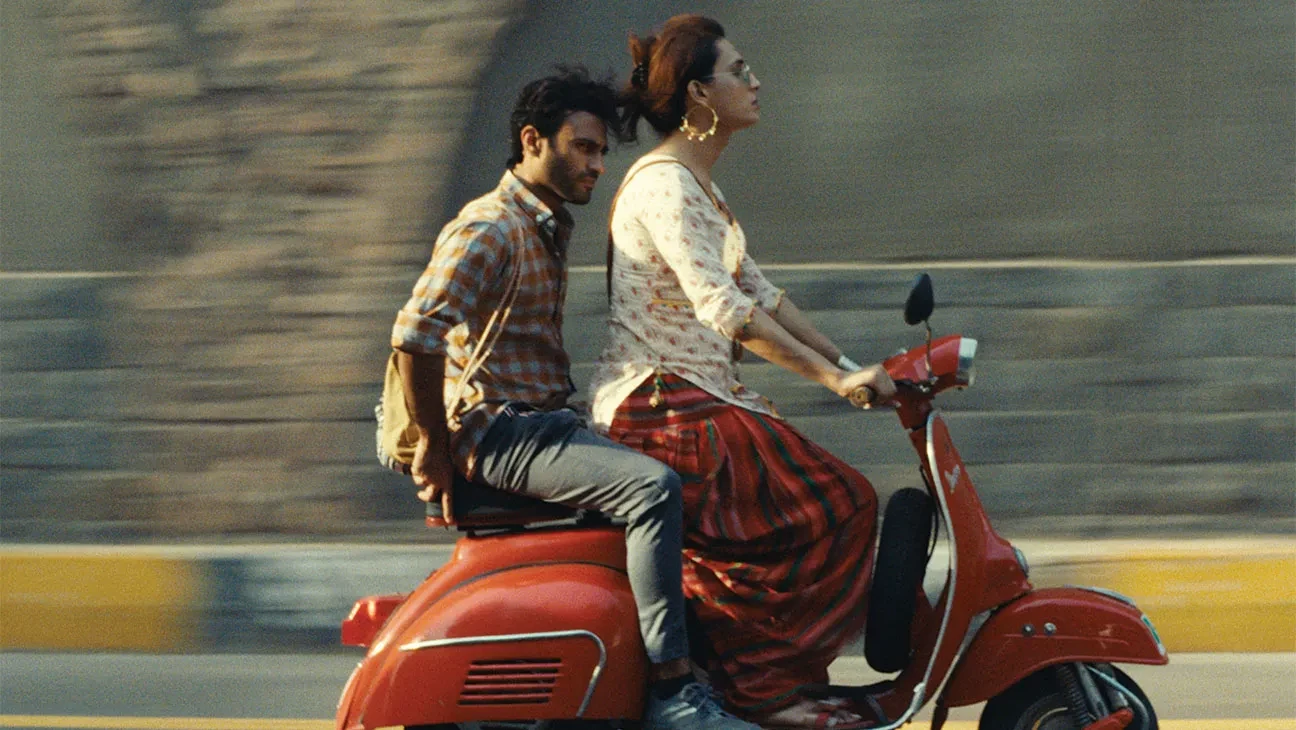
Saim Sadiq’s debut feature didn’t just arrive at the Oscars. It became the first Pakistani movie to debut at Cannes, where it was awarded the Jury Prize in the Un Certain Regard category, and the Queer Palm, and then the film made more history by becoming Pakistan’s first film to make the Academy longlist for Best International Feature. Joyland had left Cannes audiences slack-jawed, receiving roughly an over 10-minute standing ovation from the opening night’s crowd. The film went on to gross over $1 million in French theaters alone, a record-breaking box office score for a Pakistani movie.
But here’s the part that stings. Joyland was Pakistan’s official submission for Oscars in the Best International Feature category, but just a week ahead of its local theatrical release, the film was banned by Pakistan’s Ministry of Information and Broadcasting, saying the movie contained “highly objectionable material” and could not be shown in cinemas. A film celebrated across the world was nearly silenced at home. Amid backlash criticising the ban, the Censor Board’s decision was finally overturned, allowing the movie to come out.
Saim Sadiq spoke about the weight and opportunity of representing Pakistani cinema of the moment. “I am humbled, thankful, and excited about this immense honour to represent Pakistan at the Oscars with a film that I truly believe is an honest and compassionate representation of who we are as people,” he said, adding, “I hope that the joys and sorrows of these characters foster empathy amongst the viewers in Pakistan and abroad. In the coming months, we will need many duas and good wishes from our people for the road ahead.”
Joyland made was shortlisted among the 15 finalist films, but was not nominated. Close. Not close enough.
This is where it helps to look sideways, at the countries that did make it. Iran built a global reputation through decades of consistent festival-circuit presence before Asghar Farhadi’s A Separation won the Oscar in 2012. South Korea took Parasite to the Palme d’Or and then to the Best Picture stage, a feat no non-English language film had ever achieved. India’s RRR stormed the original song category. These weren’t accidents. They were the products of ecosystems built over years, sometimes generations.
Pakistan doesn’t have that ecosystem. Not yet. The film industry produces a fraction of what India or South Korea releases annually. The festival pipeline is thin. International distribution networks barely exist for most Pakistani films. Most of the films sent to the Oscars have either appealed to a niche audience, been banned or censored, or have never been seen by Pakistani audiences.
That’s the paradox. How do you win an Oscar when the films representing your country at the Academy can’t even reach your own people?
And yet, individuals have punched through. In 2012, Sharmeen Obaid-Chinoy became the first Pakistani to win an Oscar, winning the Academy Award for Best Documentary Short Subject alongside co-director Daniel Junge for their film Saving Face. She won again in 2016 for A Girl in the River: The Price of Forgiveness, becoming the first female filmmaker to win twice in this category. Her second win was particularly powerful. The film highlighted the issue of honour killings in Pakistan, and is said to have prompted Prime Minister Nawaz Sharif to change the law on honour killings in the country. During the live telecast, Obaid-Chinoy said “This is what happens when determined women get together!” as she lauded “the power of film” for reaching a global audience.
Winning an Academy Award would allow “people to see a different side of Pakistan, even if it is just for one night,” she had said before her first win.

That line holds more truth than any industry analysis. The Oscars, for a country like Pakistan, aren’t really about trophies. They’re about the narrative. A single nomination can reshape how the world perceives an entire culture. It did for Iran. It did for South Korea. There’s no reason it couldn’t do it for Pakistan.
By 2023, the mood had evolved further. “In 2012, when I was at the Oscars, there were three South Asians!” shared Sharmeen on her socials. “A decade later over 100 of us came together to celebrate South Asians in cinema, and amongst us were so many Pakistanis. I watched Saim get up on stage and make a speech about Joyland. Malala spoke about her support for cinema and Ali Sethi brought the house down with Pasoori. This is our time, we felt, and we had arrived!
The most recent chapter of this story centres on something unexpected. The Glassworker, produced by Geo Films in collaboration with Mano Animation Studios, was officially selected as Pakistan’s entry for the 2025 Oscars in the International Feature Film category. As the country’s first-ever hand-drawn animated film with an anti-war storyline, it marked a significant milestone for Pakistani cinema. Director Usman Riaz who has a love for 2D hand drawing, spent a decade bringing to life his Ghibli-inspired original feature film.
“Pakistan has no industry for animation, so I started my own hand-drawn animation studio,” Riaz explained in an interview to a different publication. “I love the earlier works of Disney like Pinocchio, a big influence on the story, but it was not possible in Pakistan. So, I thought that the Japanese aesthetic was a more pragmatic approach.”
The Glassworker represents a historic milestone as Pakistan’s first animated film submitted for the Oscars, standing among 31 entries vying for the Animated Feature category and 85 films in the International Feature category. The inclusion marked a significant achievement for Pakistan’s nascent animation industry on a global stage. But again, the outcome was familiar. Pakistan’s first animated feature selection, The Glassworker, was snubbed from the shortlist.
So where does Pakistan go from here?
The talent clearly exists. Saim Sadiq, Sarmad Khoosat, Usman Riaz, Zarrar Kahn, Afia Nathaniel; these are filmmakers with international ambition and the skill to match. The problem was never just about artists. It’s about infrastructure. It’s about distribution. It’s about the kind of sustained government and private-sector investment that countries like South Korea have poured into their film industries for decades.
It’s also about the relationship between art and state. When your most Oscar-worthy film gets banned before it can release in your own country, you’re fighting with one hand tied behind your back. When your selection committee’s email is a Gmail account, as some have pointed out, the institutional seriousness feels, at best, aspirational.
Oscar-winning international films tend to share a few invisible qualities beyond technical polish. They travel through the festival circuit, from Cannes to Venice to Berlin, building momentum and critical mass before the Academy vote even begins. They carry universal themes wrapped in local specificity. And they benefit from aggressive international campaigns that ensure voters actually watch them. Pakistan has recently started placing films at Cannes. That’s real progress. But festival presence alone won’t be enough.
What Pakistan needs is a complete rethinking of how it approaches global cinema. Not just which film to send each year, but how to build the pipeline years before any film reaches the Academy’s screeners. Film schools. Funding bodies. Festival strategy. Co-production treaties with countries that have strong Oscar track records.
The growing number of South Asian films making waves internationally reflects a broader shift in the global market, with increasing collaboration between international filmmakers and distribution companies. For example, The Glassworker partnered with the French sales agent Charades. The tides are slowly shifting in the subcontinent too, where mature homegrown stories are impacting domestic support.
Still, there’s something deeply encouraging about the trajectory. Pakistan went from zero submissions across half a century to thirteen and counting. From zero festival presence to winning prizes at Cannes. From zero Pakistani Oscar winners to Sharmeen holding two statuettes. From live action only to hand-drawn animation contending alongside Pixar.
A pattern is forming, even if it doesn’t yet include a Best International Feature Film nomination. The ceiling keeps rising. The films keep getting better. Somewhere in Pakistan right now, probably in a cramped editing room in Karachi or Lahore, someone is working on the film that might finally break through.
And when that happens, it won’t just be a win for one filmmaker. It’ll be a reclamation of a story that was interrupted for fifty years and is only now finding its voice again.
Hafsah Mazhar is a writer and educator at Lahore Grammar School
All facts and information are the sole responsibility of the writer